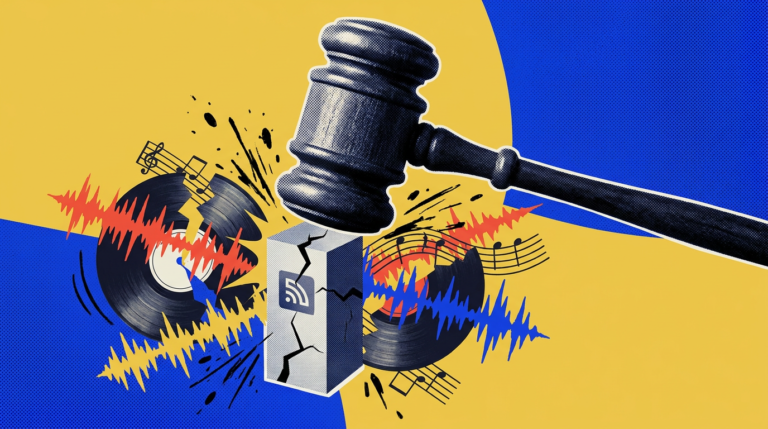
A German court has ruled that Suno used copyrighted songs during its training process and can reproduce them when prompted correctly.
The judge also found that the US fair use doctrine does not apply to this case. Before the judgment, one of Suno’s own investors admitted that tracks generated by the platform compete directly with music made by human artists. This matters in fair use cases, which consider whether copyrighted data has been used for a new and transformative purpose.
Suno’s response
Suno co-founder and CEO Mikey Shulman outlined four guiding principles and a set of new measures in a blog post. The company says it follows a training strategy called “Original Creation, By Design” that is meant to reduce the risk of unauthorised reproductions.
Specifically, Suno says it deliberately left artist names out of its training metadata. The company also says it has never allowed prompts targeting specific artists or copyrighted songs. On top of that, Suno works with Audible Magic, Musixmatch, and other third-party services to check uploaded audio files and lyrics for potential unauthorised use.
Changes to downloads
Suno acknowledges that its technology should not be abused to export content at scale. Most music created on the platform is personal, the company says. Still, it is rolling out a new download policy designed to limit the ability to push songs onto streaming platforms in bulk.
Most users will not be affected, according to Suno, but large-scale abuse will become much harder. The company says it first announced such a step last year. In March, a man was convicted after uploading hundreds of thousands of songs made with AI and fraudulently collecting $8 million in royalties.
The company also plans to add transparency tools based on standards now taking shape across the music industry. These tools will let other platforms identify songs created with Suno as AI-generated.
Alongside these changes, Suno says it has made its community guidelines more explicit. The company says it has always banned attempts to replicate existing songs, uploading material without proper rights, and using someone’s voice or likeness without permission. Its rules also prohibit spam, fake engagement, bots, and deceptive audio presented as authentic.
What it means
Creators using the tool face stricter limits on how they can distribute their output. Bulk uploading to streaming services is now harder to do, and the platform will label its own AI-generated tracks more clearly for other services. This aims to stop fraud while trying to satisfy the legal requirement that the company does not simply copy protected works.