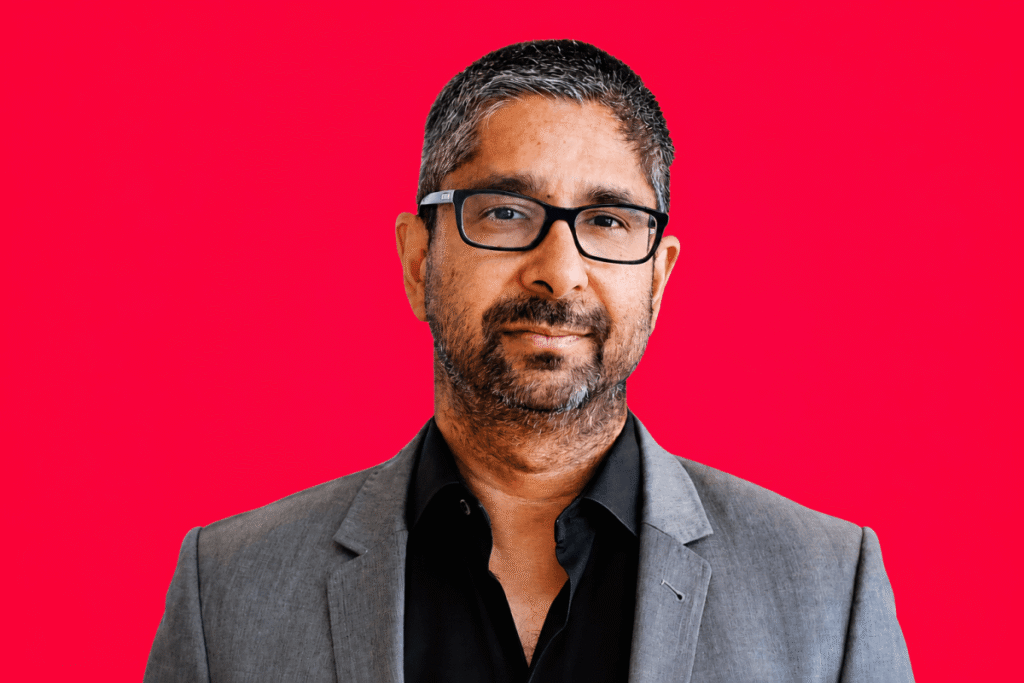
Vijay Pande, a Stanford chemistry professor known for the Folding@home distributed-computing project, left a16z in June last year after managing a portfolio worth nearly $4 billion. He now runs VZVC, a new firm co-founded with Zach Werner that makes only a handful of concentrated bets annually and relies on AI for daily operations.
Engineering biology
Pande argues that biology is shifting from a science of discovery to one of engineering. Historically, drug development involved a significant element of fortune. AI and machine learning now allow computers to model complex biological systems, identify targets for specific diseases, and assist in clinical trials, which remain the most expensive phase of the process.
The cost and time to reach clinical trials are shrinking with AI, but trials can still cost hundreds of millions of dollars. The probability of a drug succeeding from the first trial to the end of the third is just 20%. When eight out of 10 fail, the amortized cost becomes extremely high. Failures typically occur because experiments were designed on animal models like mice, which are not very predictive of human responses. Pande believes AI models will be far better than animal models once they cross a certain threshold.
The next question is whether the drug is the right one for a specific patient. This is precision medicine. Currently, doctors often guess when a patient presents with a non-trivial condition, prescribing a drug, then another if it fails. This is common in cancer and other areas. Comparing blood test values to population averages is insufficient. The goal is to understand what is right for the individual.
The path to this moment involved many factors coming together. Precision medicine was long based on genomics. However, a genome is like a blueprint for a house on day one, while the house changes over time. Proteomics and other measurements are now more relevant for understanding disease and the current state of the body. Automation in robotic measurements also ties naturally into AI.
There have been significant advances over the last decade in both AI for biology and AI for chemistry. The biology part asks how to treat a disease. The chemistry part asks how to create a drug to target a specific protein.
Data silos and open source
Unlike text, biological data cannot be scraped from the internet. Nearly every company must build its own walled dataset. This means there is no single dataset to train one model that everyone can use. Data cannot be distilled from one model to another.
This mirrors the problem of doctors operating in territorial silos. For instance, oncology and endocrinology specialists often do not sync well. AI can, in principle, act as a specialist in everything and see patterns no single human could. It would be equivalent to having a team of the best doctors clamouring together.
Is there enough data sharing for this vision to be realized? Founders and investors want to protect their findings. Pande sees a shift toward building atlases of biological information. These are typically foundation models. As they become more common, open-source foundation models in biology will have a broad impact, similar to how open-source LLMs perform against corporate ones.
Investing style
Pande is involved with Genesis Therapeutics, which came from his Stanford lab, and Insitro, launched by former colleague Daphne Koller. He is also incubating a company with a founder he has known for 20 years. He looks for founders with high integrity who do what they say they will do. He expects relationships to last five to 10 years or more, ideally into the next company. He wants people thinking long term about how to win together, not just about beating others.
Pande recalls resistance 10 years ago when people said AI in medicine would never happen. That resistance is largely gone. He learned that while technologies are seductive, it always comes back to go-to-market. Founders coming from science or product must apply their brilliance to go-to-market, which is at least as hard as the technology side.
VZVC is intentionally small. On the investment side, it is just Pande and Werner. They intended to hire associates but found that agents they have built up make it unnecessary.
The firm is not making 30 bets per year. They are making perhaps five. Adding a company at a typical fund is like adding a Facebook friend, done quickly. For Pande and Werner, it is like wanting another child. It is a big deal.
With this structure, they are not competing for hot rounds. People make room for them. They are not trying to get the hot Series A or Series B. Investors want them because of what Pande and Werner can do and how hands-on they are. Antonio Gracias at Valor is an inspiration, known for the SpaceX deal after 20 years of work. Thrive Capital, with its concentrated portfolio, is also an inspiration. a16z is in Pande’s DNA, but these other firms are new additions to how they think about things.
What is overhyped right now? AI can find insights humans cannot get alone. The tricky part is when there is a call that AI will cure everything. Hesitance is not about doubt of AI, but doubt of the data. LLMs work because there is so much data to learn from. When the data is not there, AI cannot magically solve the problem.
What it means
The move to fewer, deeper investments suggests a market correction where speed is no longer the primary metric of success. Pande’s focus on integrity and long-term relationships indicates that the industry is maturing beyond the speculative boom of the early AI era. The reliance on proprietary datasets and the rise of open-source biological models could reshape how medical research is conducted, potentially lowering barriers for smaller players while demanding higher standards for data quality.