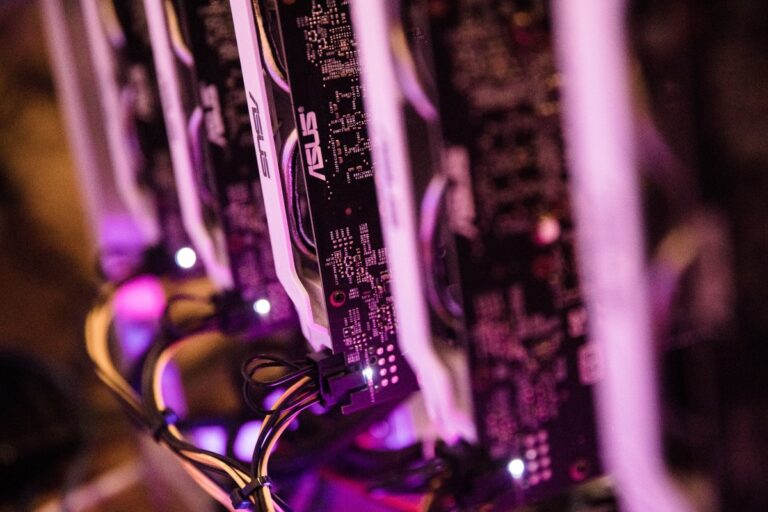
High-frequency trading firms including Jane Street and Hudson River Trading are investing billions in cloud contracts, private data centers, and chip startups to secure artificial intelligence computing power. These companies rely increasingly on machine learning to predict market movements, driving compute spending to ten or twenty times its pre-ChatGPT levels. Jane Street operates a facility in Texas with over 4,000 Nvidia GPUs and invested $1 billion directly in CoreWeave alongside a $6 billion commitment to its services. XTX Markets is constructing a data center in Finland, while Hudson River spends approximately $1 billion annually on AI after signing a multiyear deal with CoreWeave. Jane Street also led funding for chip startup Etched and became its first customer for a processor designed to deliver higher performance at lower voltage. Executives at Optiver, such as CEO Jan Boomaars, argue that inaction poses greater risk than rising costs or rapidly aging hardware.
This shift highlights how quantitative finance is moving beyond standard cloud subscriptions to control infrastructure directly. Firms are attempting to mitigate latency and ensure access to specific hardware capabilities that public providers may not prioritise. The strategy involves vertical integration to guarantee compute availability for their proprietary models. Without this direct control, traders risk losing speed advantages to competitors who secure better hardware access first.
- Jane Street invested $1 billion in CoreWeave and $6 billion in computing services
- Hudson River spends $1 billion annually on AI infrastructure
- Optiver CEO Jan Boomaars warns that doing nothing is more dangerous than rising costs