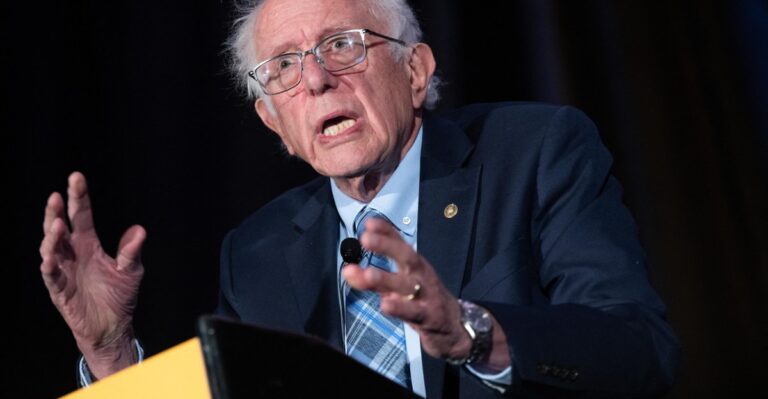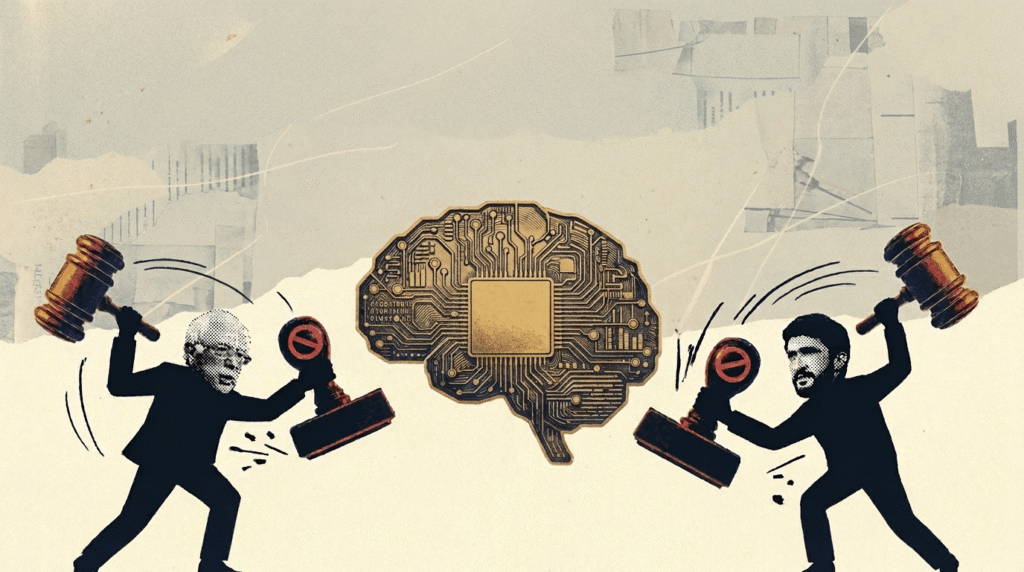
Senator Bernie Sanders and Representative Greg Casar introduced the Ban Artificial Superintelligence Act on September 23 to permanently prohibit the development and use of artificial superintelligence. The legislation would immediately freeze advanced AI systems until a new federal agency establishes clear safety rules. Current models can already hack computer systems, create viruses, and build new AI independently, yet companies invest hundreds of billions despite known risks. Sanders argues this poses an existential threat to humanity, while Casar warns superintelligence could kill countless people. Donald Trump reportedly wants to speed up development, creating a sharp policy divide. The bill proposes a cabinet-level AI agency with severe penalties for violations. Companies breaking the law could face forced dissolution, while individuals might serve up to 20 years in prison. This penalty matches punishments for illegal nuclear weapons development. The text also pushes for international agreements to stop superintelligence creation worldwide. Recent efforts from US and Chinese experts show growing global interest in AI regulation.
The measure highlights a fundamental disagreement on how to manage high-risk technology. It attempts to override corporate autonomy through state control and criminal law. The proposed agency would centralise safety oversight rather than letting industry self-regulate. Such strict measures could slow innovation significantly. International cooperation remains difficult to enforce across borders. The threat level depends heavily on how superintelligence actually develops in practice.
- Penalties include forced dissolution for companies
- Individuals face up to 20 years in prison
- International agreements aim to prevent global development