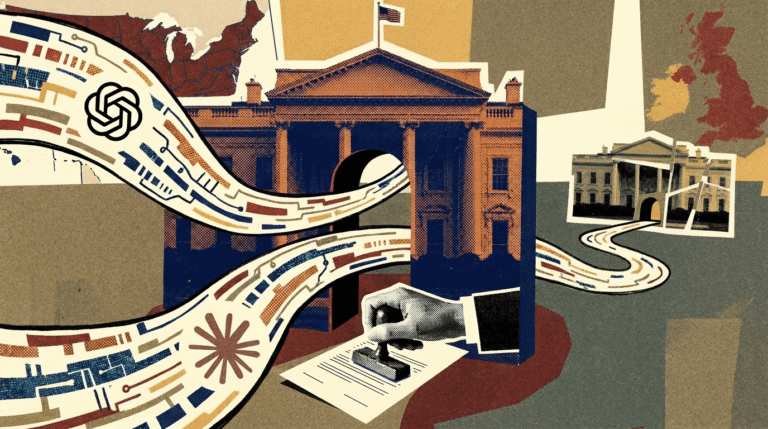
For makers and artists building on frontier models, the current standoff between Anthropic and the US government signals a shift from open experimentation to a regime of pre-approval. If you rely on cutting-edge tools, expect that immediate access to your latest iterations may soon require prior sign-off from Washington. The uncertainty surrounding export controls means that even domestic deployment of advanced models could be halted overnight if regulators deem them a security risk.
The Unspoken Rules of the American AI Wild West
It has been nearly a week since the Trump administration issued an export control directive to Anthropic, compelling one of the world’s leading AI laboratories to take its most advanced models offline. Following days of negotiation between the company and the White House, a resolution remains elusive regarding the return of Claude Mythos and Fable 5. The impasse stems from a fundamental disagreement on how to reintroduce these systems.
According to a source close to the company, Anthropic maintains it did not breach any specific procedures or rules established by the administration. Conversely, the White House argues that Anthropic acted recklessly, proving itself untrustworthy in the safe deployment of frontier technology.
This conflict highlights that the US is now operating in a Wild West era of AI regulation. While few laws currently govern frontier AI development, companies risk severe repercussions from the Trump White House for crossing unspoken lines.
One former White House technology official, who requested anonymity to protect professional relationships, noted the disconnect between the administration’s stance and reality.
“The problem here is that the White House has been in this extreme anti-regulatory posture, and they’re now faced with the real AI capabilities that people have been predicting for many years,” the official said. “There should have been preparation and policies to systematically deal with this, managing the benefits and risks, but instead it’s just this slap-dash approach that puts the AI industry in a real quandary.”
Blocking Innovation Under the Guise of Protection
The Trump administration has repeatedly obstructed efforts to impose guardrails on the AI sector, often citing fears that regulations would stifle US innovation and allow rivals like China to gain an edge. Since returning to the White House, President Trump signed executive orders reversing a Biden-era national AI framework and established a federal task force to challenge state laws deemed onerous.
Despite reports from WIRED and other outlets detailing the negotiations, the dispute remains opaque. The US government has not clearly stated what Anthropic did wrong; the most detailed public explanation comes from a post on X by White House technology adviser David Sacks.
Ironically, the administration’s actions may hinder the very innovation it seeks to protect. The White House demanded that Anthropic ban all foreign nationals from accessing Mythos and Fable 5. This restriction prevented many of the lab’s own employees from using the models, which the company states have accelerated recent research and development. Furthermore, all customers, including Apple, Meta, and much of the Fortune 500, have been locked out.
Security Concerns and the Reality of Jailbreaking
The White House may have had legitimate grounds for concern. As reported previously, US officials became alarmed when they learned Anthropic shared Mythos with SK Telecom, a South Korean telecom giant alleged to have ties to China. Separately, Amazon CEO Andy Jassy raised concerns with US Treasury secretary Scott Bessent that guardrails on Claude Fable 5, a safeguarded version of Mythos, could be circumvented.
Even if these worries are valid, the administration’s handling was flawed. In the SK Telecom case, Anthropic claims it coordinated with the government on the rollout of Mythos, suggesting officials could have raised alarms earlier. The company has worked with the Korean entity for years without prior national security issues. When the White House expressed concerns, Anthropic revoked access immediately.
Regarding the jailbreaking issue, every large language model can be bypassed to varying degrees. Anthropic and independent cybersecurity researchers argue that solving jailbreaks is not a simple or isolated problem. Because AI models are probabilistic rather than deterministic, companies cannot guarantee specific outputs for given prompts. If the White House refuses to allow the release of Claude Fable 5 until the jailbreaking issue is fully solved, the outcome is unlikely to be positive.
The New Reality for Industry Leaders
Ultimately, the core issue is not that the government wants safeguards or to keep advanced models away from adversaries. It is that the Trump administration must now make these regulatory decisions in real time.
AI labs such as OpenAI, Google, and Meta have been watching Anthropic’s situation closely. Executives are now asking how to avoid a similar fate. The emerging consensus is that companies must provide the White House with early access to their latest models and be highly proactive in sharing information about upcoming launches. The risk of catching officials off guard is considered too great.
“Advance notice, advance access. I think those are the primary asks that we’ve heard, not just from the US, but others around the world,” said Aidan Gomez, CEO of the Canadian AI lab Cohere. “I think those are good things in many respects. It shows strong engagement and consideration by authorities on a super important technology.”
President Trump signed an executive order last month creating a “voluntary” system for AI labs to submit models for early testing. This included a carve-out stating it would not become a mandatory licensing regime, a major concern that had delayed the order. However, following the Anthropic incident, the administration appears to have created an ad hoc version of such a regime.
“The Trump administration, frankly, should not have said that this was a voluntary regime,” says the former White House technology official. “It seems very clear that what they are now doing is a licensing regime.”
Key takeaways
- Anthropic’s models are currently offline because the White House views their deployment as reckless, while the company argues it followed all rules.
- The Trump administration has effectively created a mandatory licensing regime despite claiming the system for model submission is voluntary.
- Industry leaders are now prioritising early access and advance notice for regulators to avoid being blocked from releasing new models.
- Security concerns regarding foreign ties and jailbreaking have led to a freeze on access for both employees and major customers like Apple and Meta.