For creators and builders, the US AI regulatory landscape is currently a battlefield of shifting priorities
Inside the Trump administration, a significant internal conflict is brewing over whether to reinstate an executive order on artificial intelligence that was abruptly cancelled last month. Multiple sources familiar with the situation describe the recent weeks as a period of confusion, leaving Silicon Valley leaders and government officials alike unsure if a new directive will ever be signed.
The sudden cancellation and its implications
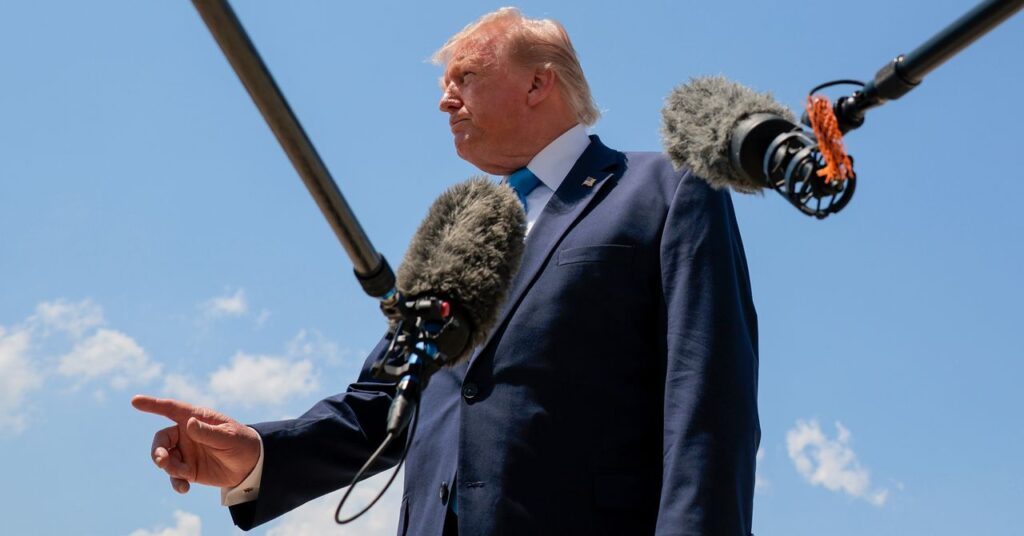
On 21 May, President Trump called off a planned signing ceremony just hours before it was due to happen. He explained to reporters that the original order risked stifling domestic competition and eroding the United States’ strategic lead over China in the global AI race.
The section that caused the most friction involved a voluntary framework. This would have required major labs, including OpenAI, Anthropic, and Google, to grant the White House early access to their models before public release. The goal was to allow the government to evaluate cybersecurity capabilities ahead of time.
Why the administration is reconsidering
At its core, the renewed interest in regulation stems from a growing realisation within the White House that AI poses a direct national security threat. Officials are particularly concerned about the capabilities of Anthropic’s Mythos and OpenAI’s GPT-5.5 models, which are exceptionally skilled at identifying vulnerabilities in legacy software systems.
The draft order previously suggested labs could submit models up to 90 days before public launch. However, several executives have told WIRED that their companies may not be prepared to share data that far in advance. Despite these hurdles, some leaders remain hopeful that a revised version of the order could return, preserving some of the less controversial provisions.
Factions at war: Wiles versus Sacks
Whether a new order emerges now depends largely on the ability of top officials to manage competing factions. White House chief of staff Susie Wiles has taken charge of a group pushing for the order’s revival. This team includes Treasury Secretary Scott Bessent and National Cyber Director Sean Cairncross, a former Republican political operative.
Bessent has become a notable figure in AI policy, recently meeting with Anthropic CEO Dario Amodei and other executives to forge a path forward. He is also expected to play a leading role in negotiating cross-border regulations with China.
Standing in opposition is David Sacks, Trump’s former AI czar. Sacks reportedly convinced the President to cancel the signing by arguing the order was too burdensome. In a post on X last week, Sacks wrote: “President Trump understands that unnecessary regulation is the biggest threat to innovation in America. Winning the AI race means not only beating China but also clearing bureaucratic hurdles thrown up by state legislatures and woke politicians in DC.”
One administration official, speaking on condition of anonymity, noted that resolving this infighting is futile without the President’s final approval: “Resolving the infighting only matters if it gets Trump to yes.”
Other agencies take a back seat
White House spokesperson Liz Huston stated that the administration is working to balance AI regulation while executing the President’s bold agenda. Meanwhile, other officials have distanced themselves from the process.
Commerce Secretary Howard Lutnick has played a minimal role despite his interest, largely because he already has early access to new models through the Center for AI Standards and Innovation. This programme serves as the main clearinghouse for testing frontier models without formal preapproval requirements.
Similarly, the Pentagon has adopted a back-seat approach. Undersecretary Emil Michael, a former top executive at Uber, has focused primarily on ensuring the military gets early access to frontier models rather than leading the regulatory charge.
A senior official emphasised that the dynamics remain fluid since the cancellation. “We’re back to the drawing board, so everything is still to play for,” they said.
Key takeaways
- The Trump administration is deeply divided on AI regulation, with Susie Wiles pushing for a revived executive order while David Sacks opposes it as a threat to innovation.
- Security concerns regarding Anthropic’s Mythos and OpenAI’s GPT-5.5 models are driving the push for early model access, though companies remain hesitant about sharing data 90 days in advance.
- While agencies like the Treasury and Cyber Command are actively negotiating, the Commerce Department and Pentagon have taken a more passive role due to existing access programmes.
- Final approval rests entirely with President Trump, whose own stance on regulation remains the primary bottleneck for any new policy.