Relay has launched a new voice-to-text application for macOS, though its dedicated microphone, the Relay Q, will not arrive until early 2027.
The startup was founded by Cookie Xu, the former head of AI and services at Nothing, and Raymond Zhu, a hardware product manager. The pair previously used Wispr Flow software to transcribe their own messages while working at the electronics brand. They found that typing was often faster than speaking, but the volume required for clear dictation created awkward situations in open-plan offices. Zhu demonstrated this by holding an earbud to his mouth to simulate the difficulty of whispering loudly enough for a computer to hear without disturbing colleagues.
The software is currently exclusive to macOS. The company plans to expand support to Windows, iOS, and Android. Zhu believes complex conversations, such as brainstorming or drafting professional emails, happen most frequently at a desk rather than on a mobile device. The current beta runs on Google’s Gemini models.
Users trigger the app by holding down a designated hotkey, such as the Fn key, while the cursor is in a text field. The engine can execute contextual actions, known as Skills. For example, asking Relay to message a colleague in Slack will prompt the app to launch, find the recipient, and draft the text. I encountered issues with the Slack integration during testing, but it successfully created calendar events in Google Calendar. The software includes presets for apps like WhatsApp and Gmail, but users can create custom connections.
These automated tasks require system permissions. Relay requests access to the microphone and a snapshot of the screen when activated. The company states that data is stored locally on the user’s device and can be edited or deleted. When processing occurs, data passes through Relay servers before reaching Google, and Relay does not retain the information. This architecture mirrors the privacy trade-offs seen in other system-level AI features.
Transcription accuracy in the beta version is inconsistent. It does not match the precision of Google’s Rambler feature on the Pixel 11 series. Punctuation is sometimes incorrect. The system understands when a user misspeaks and will restate sentences to remove irrelevant parts. Emoji insertion is also erratic. Asking for a heart emoji in the middle of a sentence worked, but adding it at the end resulted in the text “heart emoji” being written out.
The app does recognise when a user wants to perform an action separate from the message. I asked Relay to send a message to my wife about a restaurant and simultaneously request a Google Maps link. It executed both requests, though the reliability varies. I attribute these inconsistencies to the beta status.
Users can customise the software to adapt to their speaking style. I configured it to avoid adding periods to my Slack messages, and it followed the instruction. The app detects who you are speaking to, allowing you to set different tones for your boss versus your friends. It can also translate messages to a coworker in a different country.
I am currently using a Mac Mini and the microphone from an Apple Studio Display monitor. Some latency exists between pressing the function key and Relay activating. This delay would be shorter once the dedicated hardware arrives.
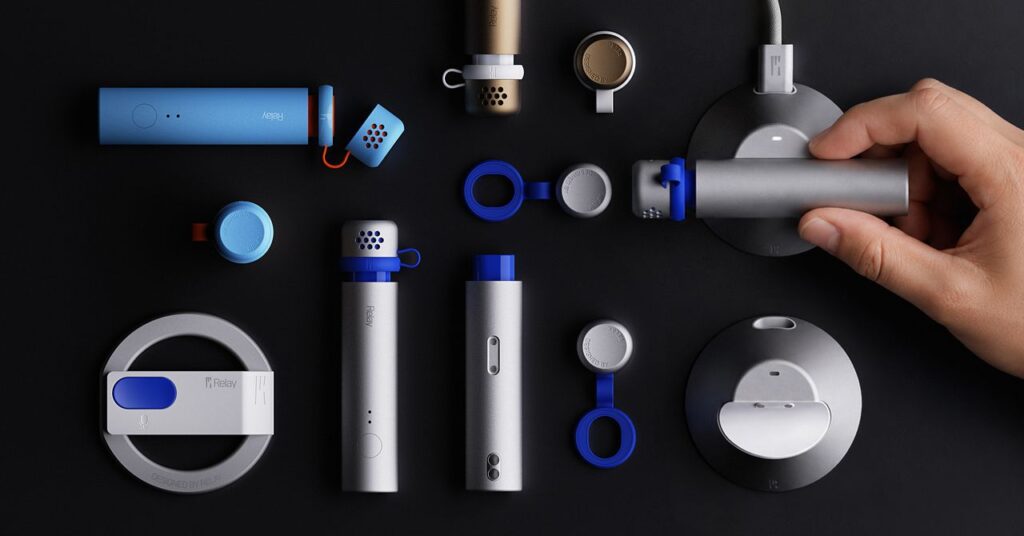
The Relay Q is a cylindrical device with a microphone at the end. Holding the top triggers the app, matching the hotkey function. The button can be removed and clipped to a shirt. A double-tap sends the message. The device is designed to pick up quiet speech without requiring the user to shout.
Zhu noted that a common question during development was how long a person could work without touching a keyboard.
Wearable voice-to-text devices are not new. Sandbar launched the Stream Ring last year, and Pebble followed with the Index 01. Both are rings designed for whispering thoughts and are starting to ship now. Zhu explained that Relay considered a ring design but decided against it given the existing market for smart rings.
The Relay Q includes a charging dock for storage. The company is also creating a MagSafe grip for iPhones and Qi2-enabled devices. This allows the Relay Q to attach to a phone, making it easier to trigger voice-to-text on mobile. The hardware and mobile software are scheduled for release in the first quarter of 2027.
The device costs $150 and includes one year of the software subscription. The monthly fee is $15. Users can use the software without purchasing the hardware.
What it means
The software offers a practical way to reduce keyboard interaction for those who think better by speaking. The dedicated microphone addresses the volume and clarity issues that plague current on-device dictation in office environments. However, the accuracy and feature set of the current beta suggest the final product will need more time to refine its understanding of context and user intent.