
“`html
SearchGPT Prototype
OpenAI announced a waitlist for the SearchGPT prototype this week and offered a few sneak peeks at what the new search experience may look like.
We’re testing SearchGPT, a prototype of new search features designed to combine the strength of our AI models with information from the web to give you fast and timely answers with clear and relevant sources. We’re launching to a small group of users and publishers to get feedback. While this prototype is temporary, we plan to integrate the best of these features directly into ChatGPT in the future.
Getting answers on the web can take a lot of effort, often requiring multiple attempts to get relevant results. We believe that by enhancing the conversational capabilities of our models with real-time information from the web, finding what you’re looking for can be faster and easier.
This sentiment is exactly right. Traditional search is significantly inferior to generative AI-enabled search. The ability to have a conversation with your search results is a significant benefit in extending your research or clarifying your results. It eliminates the need to start over when traditional search just isn’t sending you the right backlinks.
In addition, traditional search assumes that users will become their own information archeologists. Google or Bing may point you to a potential source of an answer to your query, but not the answer. It also may ignore some important nuances that could significantly improve the results. Generative AI-enabled search gives you an answer. No more information archeology is required. If you want to consult the sources, they are provided. That is useful for verifying the results. However, as these searches have improved, errors have become less and less frequent You get an answer instead of a link to find an answer on your own.
These results save users time and often provide additional context that they might have missed. When you summarize the best information from three to ten search results, you typically receive a more well-rounded result. To do that on your own is very time-consuming as you could easily be required to read 1,000 to 10,000 words before figuring out doing your own summary.
New Search User Experience
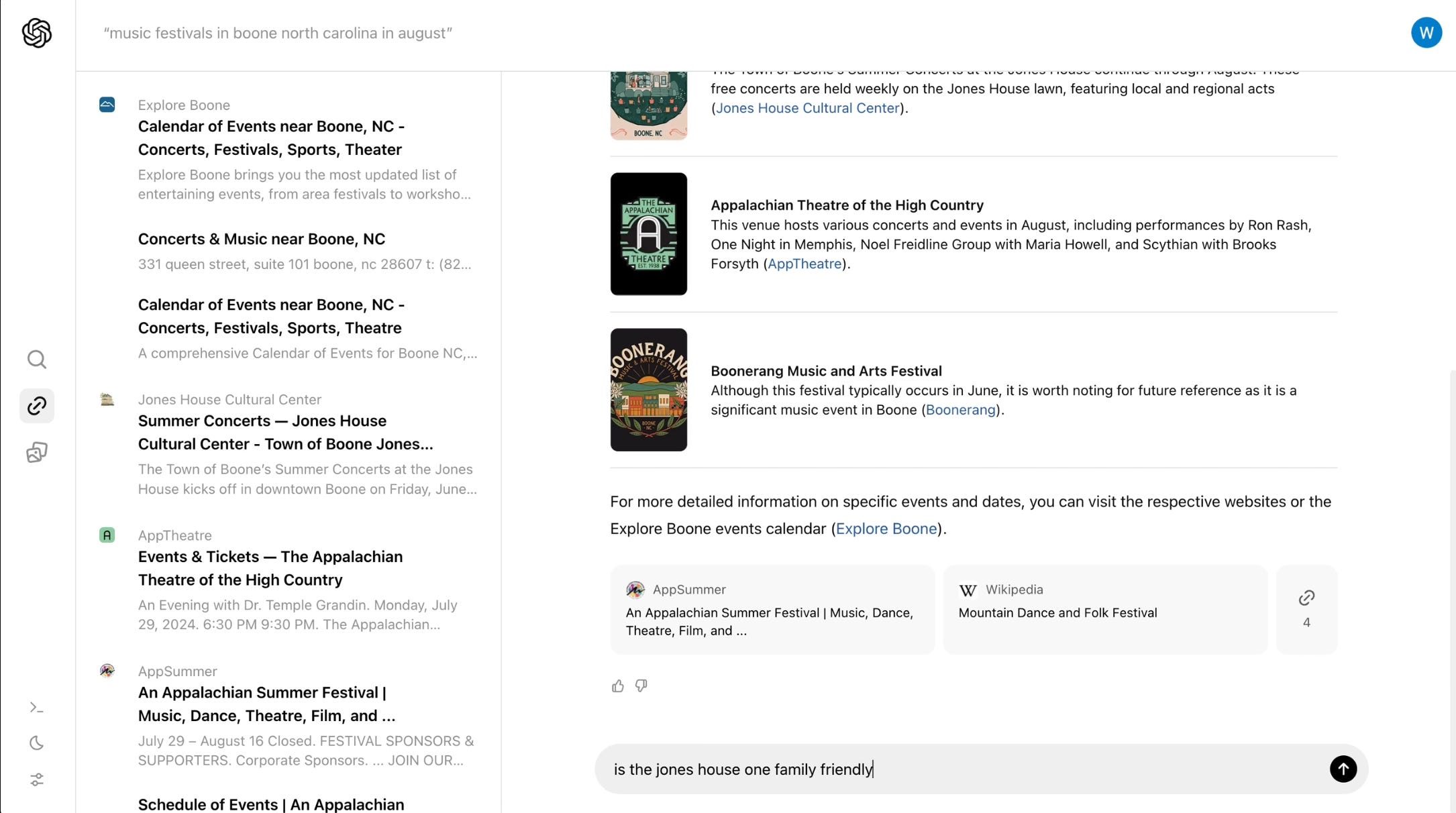
Anyone who has used Perplexity or Google’s Search AI Overviews will recognize some familiar output formats. However, there appear to be some new user experience layouts that may offer slight improvements to existing styles.
