For creators and makers, the latest science news offers a reminder that the world is full of invisible patterns waiting to be decoded, alongside the quirky behavioural adaptations that shape life from the ocean depths to the urban sprawl. While we often focus on tools to build our own worlds, nature is constantly rewriting its own code, from the way animals navigate social hierarchies to how ancient carcasses become incubators for new life.
A geometric mystery in the sky
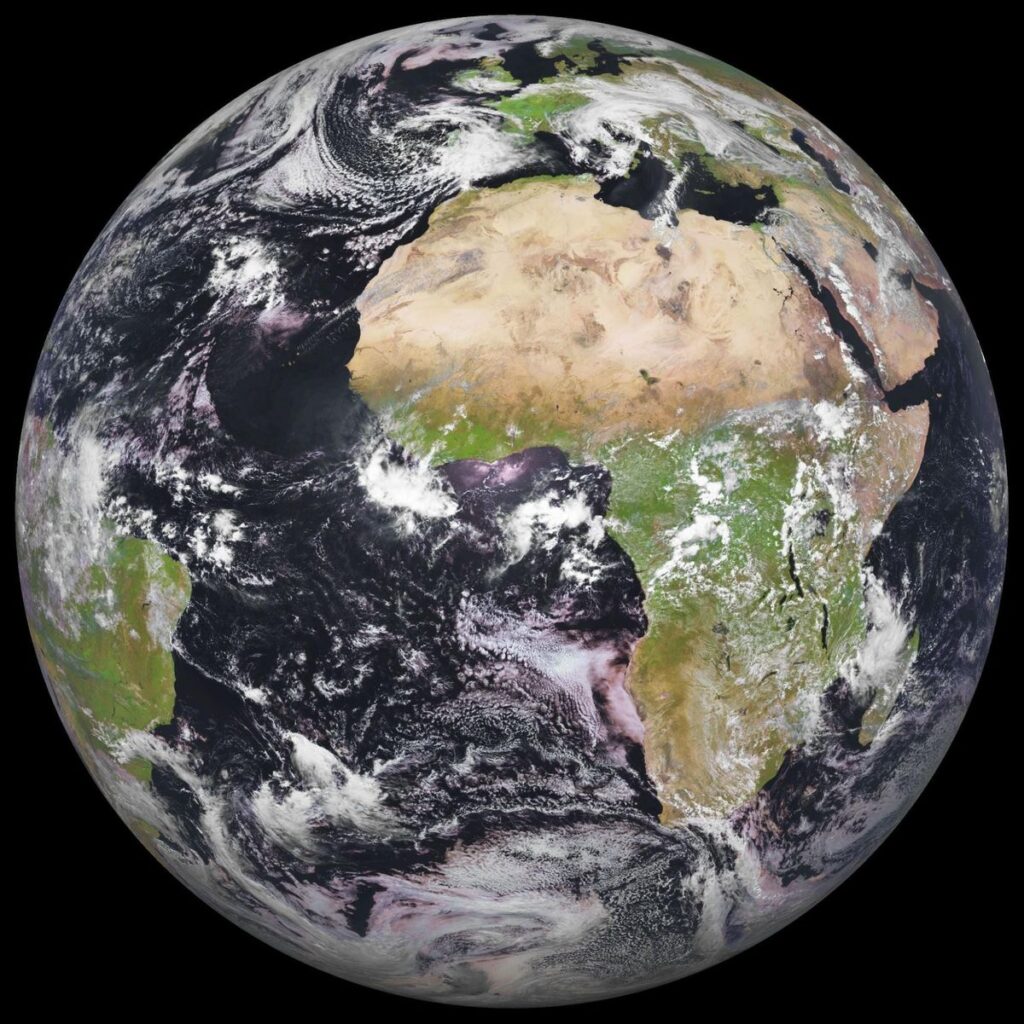
A team of researchers has identified a baffling “triple symmetry” in how Earth reflects sunlight, a finding that deepens our confusion rather than solving it. While scientists have long noted that the northern and southern hemispheres share a remarkably similar albedo-the measure of how much light a surface reflects-this new discovery adds a third axis to the equation.
Leading the study, Jianhao Zhang from the University of Colorado Boulder, points to a specific meridian at 27° East. This line splits the planet into Eastern and Western halves that reflect nearly identical amounts of solar energy. Unlike the north-south split, which divides the globe by latitude, this east-west symmetry is bisected by longitude, creating a unique alignment of ice-free ocean, cloud cover, and planetary brightness.
The data supporting this anomaly comes from 25 years of observations (2001–2025) gathered by NASA’s Clouds and the Earth’s Radiant Energy System (CERES) program. These satellite instruments track the solar energy bouncing back into space.
The symmetry holds steady across the dataset, though its intensity fluctuates with the El Niño-Southern Oscillation (ENSO). The researchers warn that this pattern is currently missing from all climate models. “All models fail to capture…the triple-symmetry feature,” the study notes, suggesting this omission contributes to the persistent uncertainty in climate projections for a rapidly warming planet.
What drives this alignment remains a total mystery. It could be a strange coincidence or a hidden planetary equilibrium. “We cannot yet rule out the possibility that these hemispheric symmetries are simply coincidental features of the present climate state,” the team admitted. However, they emphasised that the discovery offers a vital constraint for Earth system models, forcing a re-evaluation of our fundamental understanding of the climate.
Dolphins use whistles to blacklist bullies
In the waters of Shark Bay, Australia, female Indo-Pacific bottlenose dolphins have developed a sophisticated social strategy to avoid sexual coercion. Researchers led by Alice Bouchard of the University of Bristol found that females track the signature whistles of aggressive males to keep them at a distance.
Coercive males employ a range of tactics to control female movement, including biting, hitting, charging, and producing threat vocalisations known as “pops.” These pops act as an agonistic “come-hither” signal, designed to intimidate the female and keep her close. Interestingly, “pops” are produced exclusively by males.
The study reveals that females exhibit aversive responses when hearing the recorded whistles of males who have a history of coercion. “Females appear to use ‘individual vocal labels to guide reproductive decision-making based on their experience of individual male behaviour’,” the researchers concluded. It is a whistle-based blacklist, ensuring that the most aggressive suitors remain on the outside looking in.
Urban birds upgrade their love nests
While some creatures rely on intimidation, male great bowerbirds rely on elaborate architecture to attract mates. These birds construct bowers-decorative shelters designed to impress potential partners. A new study suggests that urban bowerbirds have an evolutionary advantage over their rural counterparts, thanks to the abundance of discarded human materials.
Scientists Caitlin F. Evans and Laura A. Kelley from the University of Exeter compared bowers in rural settings at Dreghorn Cattle Station with those in the city of Townsville. They catalogued nearly 4,000 decorations collected by the birds.
The results indicate that urban males are more likely to incorporate anthropogenic items into their displays. “Decorations on urban bowers were over 10 times more likely to be anthropogenic…than decorations on rural bowers,” the authors noted. While rural males rely on green glass and leaves, their urban cousins utilise green glass alongside red wire and other shiny, human-made trinkets.
This adaptation suggests that city birds have found a way to enhance their courtship signals using the very trash that defines their environment. However, this upcycling comes with risks; the same plastics and glass shards that create dazzling displays can pose fatal dangers through entanglement or ingestion for other species.
Dead dinosaurs as beetle hotels
Following the era of titanosaur giants, the largest land animals in history, the scene shifts to their fossilised remains. These colossal creatures, which could weigh up to 30,000 pounds, eventually became the foundation for complex ecosystems long after their death.
At the Lo Hueco site in Cuenca, Spain, paleontologists have mapped the fossilised evidence of insect life that colonised these carcasses. Small insects, specifically the flesh-eating *Cubiculum* beetle, bored into the bones to create pupation chambers for their larvae.
These structures, known as ichnofacies, reveal that the titanosaur skeletons were exposed to the open air for weeks or even months on ancient floodplains. The sheer volume of decaying organic matter provided a stable environment for these insects to breed and thrive.
Zain Belaústegui of the University of Barcelona noted that the large size of the carcasses supported specific, stable ecosystems for extended periods. In effect, the dead titanosaur skeletons served as luxury mansions for beetle colonies, leaving behind “we were here” marks in the rock record that have survived for 70 million years.
Key takeaways
- Scientists have identified a “triple symmetry” in Earth’s albedo, dividing the planet into Eastern and Western hemispheres with identical sunlight reflection, a pattern currently missing from climate models.
- Female dolphins use individual vocal labels to identify and avoid coercive males, effectively maintaining a social blacklist based on aggressive behaviour.
- Urban great bowerbirds have adapted their courtship displays by utilising human-generated trash, such as red wire and glass, making their nests significantly more attractive than those in rural areas.
- Fossilised titanosaur bones in Spain reveal extensive burrowing by *Cubiculum* beetles, indicating that these massive carcasses supported stable insect ecosystems for months after death.