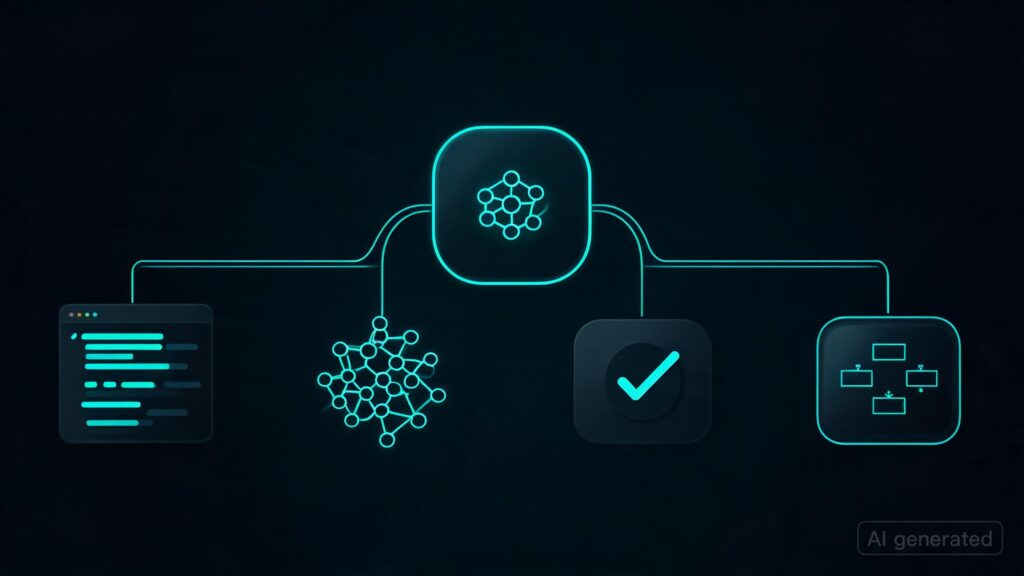
Hi there! I’m building a small “Orchestration as Code” repo for LLM workflows. Does this concept make sense?
What is Orc (working name)?
I’m at the stage where I’m mainly trying to gauge whether the concept is interesting/useful to other people, especially those running local models like Ollama, llama.cpp, LM Studio, or mixed local/cloud workflows.
The basic idea is: instead of building LLM workflows as Python orchestration soup, ORC lets you describe workflows declaratively in .orc files. It’s a bit like Terraform for LLM agents and tool use.
- Agents
- Models/providers
- Tools
- Schemas
- Inputs
- Ordered execution steps
- Validation rules
- Output artefacts
The goal is not to build a magical autonomous agent framework. The goal is more boring: make LLM workflows easier to read, version, review, validate, and run repeatedly.
A Rough Example of an Orc Workflow
agent researcher:
provider: ollama
model: gpt-oss:20b
schema Report:
type: json
path: “report.schema.json”
workflow dockerReport:
input:
docker_status: string
step analyse:
agent: researcher
input: docker_status
produces: Report
What Have I Been Experimenting With?
- Local Ollama agents calling MCP tools
- Structured report generation
- Validating model outputs with JSON Schema
- Docker/container status summarisation
- Simple multi-step research/editorial workflows
- Publishing/posting via MCP tools
- Mixing local and cloud models depending on the step
This is still early, and the repo is not something I’d call polished or production-ready yet. I’m mostly trying to understand whether this direction is worth hardening further.
What Would You Like To See?
- Does the “Orchestration as Code” concept resonate?
- Would a declarative DSL for LLM workflows be useful to you?
- Is this solving an actual pain point, or is it just a neat abstraction?
- What would you expect to see in the repo before taking it seriously?
- Are there existing projects that already cover this well?
I’m close to making the repo public and allowing people to use it if there’s any value!
Key Takeaways
- The concept of an “Orchestration as Code” for LLM workflows is being explored.
- The goal is to make LLM workflows more readable, versionable, and maintainable.
- This tool aims to help people who are already working with local models and tools.