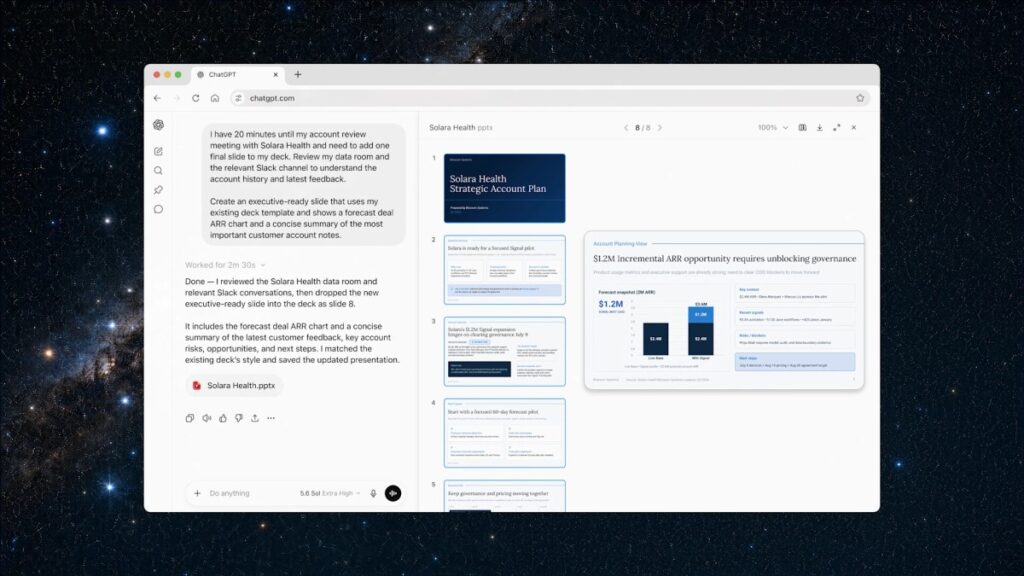
OpenAI is ending Atlas, the artificial intelligence browser it launched in October, while shifting its focus to integrating those capabilities elsewhere. The company will move agentic browsing features into the ChatGPT desktop application and a new Google Chrome extension instead of maintaining a standalone browser product. This decision follows instructions from CEO Fidji Simo to reduce non-core projects, a directive that previously resulted in the shutdown of the video generation tool Sora. The industry has seen several competitors attempt to replace Chrome as the primary online environment, yet OpenAI now views the browser as a utility rather than a final destination. Consequently, the firm is embedding its agent functions directly into the environments where users already work. The new Chrome extension allows access to page context for summarising content or initiating tasks, directly competing with Google’s Gemini Side Panel. Simultaneously, the desktop app gains a more capable browser for logging into accounts and downloading files without leaving the interface. A separate cloud browser runs on OpenAI’s servers to let agents complete work on a user’s behalf. These updates combine to turn ChatGPT into a continuous workspace spanning Chrome, the desktop application, and an AI agent.
- The Chrome extension competes with Google’s Gemini Side Panel
- Agents can log into accounts and download files remotely
- Cloud browsers run tasks on OpenAI’s servers