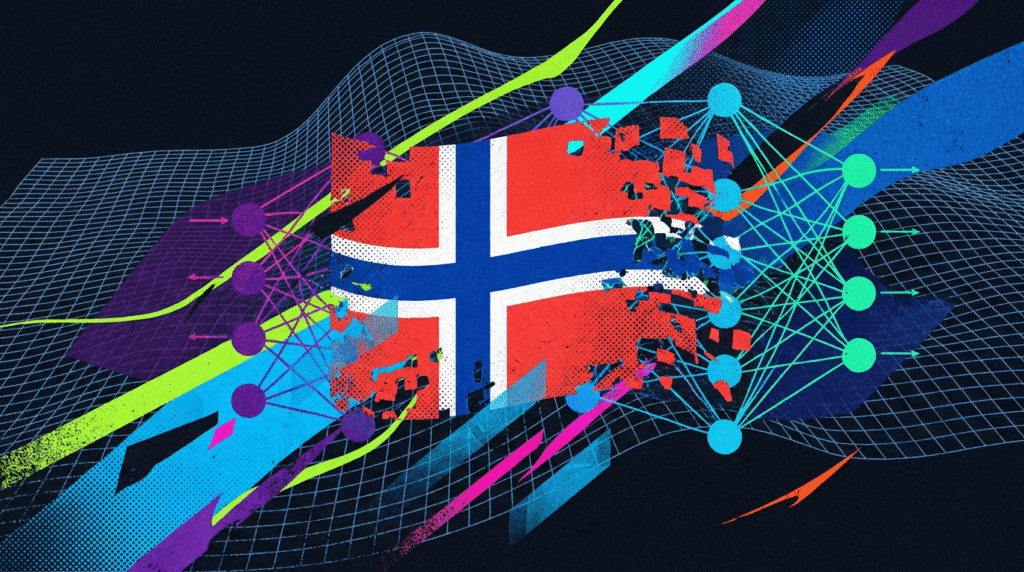
For creators and artists, the global debate over artificial intelligence often centres on copyright and creative output. Yet, a significant regulatory shift is occurring in education, where the primary concern is the erosion of fundamental human skills. Norway has moved to restrict generative AI tools in primary schools entirely, while imposing strict supervision on their use in secondary education. Prime Minister Jonas Gahr Stoere argues that the most critical educational goals remain reading, writing, and mathematics. He warns that unthinking reliance on algorithms encourages students to bypass essential cognitive steps in their development.
Protecting core competencies
The new regulations come into force at the beginning of the school year in late August. Pupils in grades one through seven, covering ages six to thirteen, will generally be barred from accessing AI systems. In lower secondary education, spanning ages fourteen to sixteen, these tools may be employed only under close supervision. The government’s intent is not to forbid technology permanently, but to ensure older students learn how to wield it correctly.
Beyond software restrictions, the administration plans to legislate that municipalities must supply physical teaching materials. This move aims to return more books to classrooms, countering the belief that previous governments placed excessive weight on digital media. Norway has already implemented bans on smartphones in schools and granted teachers greater authority within the classroom. Furthermore, plans are underway to prohibit social media access for children under sixteen.
The impetus for these measures stems partly from data suggesting a decline in learning outcomes since around 2015. Prime Minister Stoere has attributed this trend, in part, to smartphones, screens, and algorithms. Research conducted as early as 2024 by Swedish academics examined the relationship between AI usage and student learning ability, revealing a complex mix of potential benefits and significant risks.
A divided international approach
Norway is not the only nation tightening its grip on digital tools in education. Japan issued guidelines in 2023 calling for special caution regarding children under thirteen and classified AI-generated schoolwork as cheating. In the United States, a court ruled in 2024 that schools are permitted to penalise the unauthorised use of AI. Meanwhile, UC Berkeley Law School will ban AI for nearly all graded assignments starting in the summer of 2026, permitting its use solely for research purposes.
Conversely, some nations are integrating AI more aggressively into their curricula. The United Arab Emirates will make AI a mandatory subject from kindergarten through twelfth grade beginning in the 2025-26 school year. In Germany, the Conference of Ministers of Education has advocated for weaving AI into the classroom, describing a total ban as unrealistic and untenable.
Key takeaways
- Norway is enforcing a ban on generative AI in elementary schools to prevent students from skipping fundamental learning steps in reading, writing, and math.
- The government is simultaneously prioritising physical textbooks and planning further restrictions on smartphones and social media for minors.
- Global responses remain split, with Japan and the US tightening restrictions while the UAE and Germany push for mandatory AI integration.