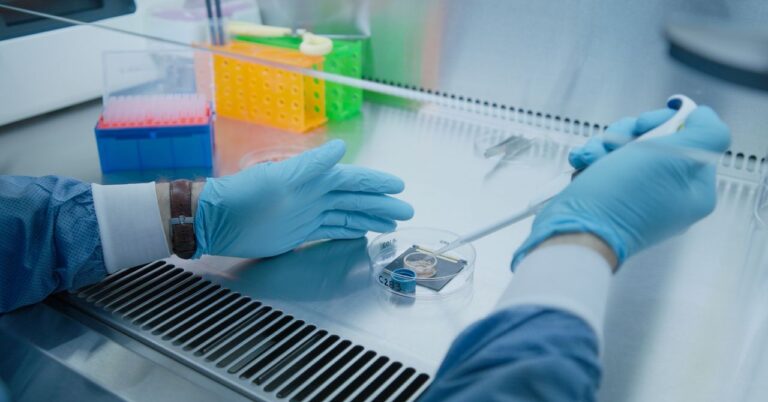
Scientists have found that mice retain memories of a maze even after their brain activity drops by 70 per cent during artificial hibernation.
Researchers led by Y. J. Lin at the Okinawa Institute of Science and Technology placed mice in a state of suspended animation to test how neural connectivity affects memory. The results suggest that the brain preserves information through higher-order structural architecture rather than just the strength of individual connections.
Other studies
A lot of water under the bridge
Scientists have reconstructed a series of 16 major floods that swept across Europe between 1342 and 1343. The Magdalena Flood, which struck central Europe in the summer of 1342, remains the most famous of these events. It killed thousands and wiped out entire villages, leaving high watermarks on buildings in Germany more than 20 feet above the ground.
Andrea Kiss of the Vienna University of Technology and her team noted that the other 15 events have largely been forgotten. They believe this is because local authorities in Germany mounted memorial plaques and flood marks on iconic buildings, whereas no such markers exist for the Candlemas Flood in Prague.
“It is…surprising that, out of the 16 events described here, only the Magdalena Flood survived in public memory,” said the researchers.
The team warns that current flood management is not necessarily prepared for sequences of very large floods more extreme than those seen in recent decades.
The supplementary materials for the study include dozens of historical accounts from people who endured the disaster. One fragment translated from Latin, written in Magdeburg in 1342, reads: “People barely escaped in the uppest parts of houses; but many people and animals died, as they could not – had no time – run to the hills.”
The Polyfroggic Spree
Female frogs struggle to choose a mate when faced with a cacophony of different male calls at once. Claire Hemingway of the University of Tennessee, Knoxville, and her team studied Cope’s gray treefrogs (Hyla chrysoscelis) in an enclosure.
They played recorded male calls from speakers in different locations. Females prefer longer calls and will hop toward those sounds when fewer voices are present. However, as more calls were added to the chorus, the females became unable to identify the preferred target signal.
“We found that as the number of calling males increased, receivers became less likely to choose the preferred target signal, took longer to decide, and became more likely to defer their decision,” the team said.
The study concludes that choice overload exerts a strong influence on female decision-making.
You cynodont say
Scientists have pushed the timeline of mammalian birth back by 90 million years. Leandro Carlos Gaetano of the National Scientific and Technical Research Council in Argentina and his team examined adult fossils of Chiniquodon theotonicus, a cynodont that lived 236 million years ago in the late Triassic period.
The researchers identified a preserved “neonatal line” in the fossils, a growth ring associated with viviparity. This discovery suggests that the ancestor of all mammals giving birth to live young was capable of it far earlier than previously thought.
“Our results provide evidence of viviparity in Chiniquodon theotonicus, which ties in with recent findings showing that other remarkable features of present-day mammals” originated with these early Triassic ancestors,” said the researchers.
What it means
The mouse study implies that memory storage is more resilient than previously assumed, surviving even when the brain’s electrical activity nearly flatlines. For the other studies, the flood research highlights how physical markers shape collective memory, while the frog and cynodont papers update our understanding of reproductive strategies in nature.