In Sunday’s edition of the New York Times, Marissa Mayer asked an AI assistant to name three things she loves about her ten-year-old daughter because she could not think of them herself. The tool responded that the child is empathetic, creative, and an animal lover. This moment went viral, yet the part of the interview where Mayer discusses gender in technology is far more problematic than the anecdote about her daughter.
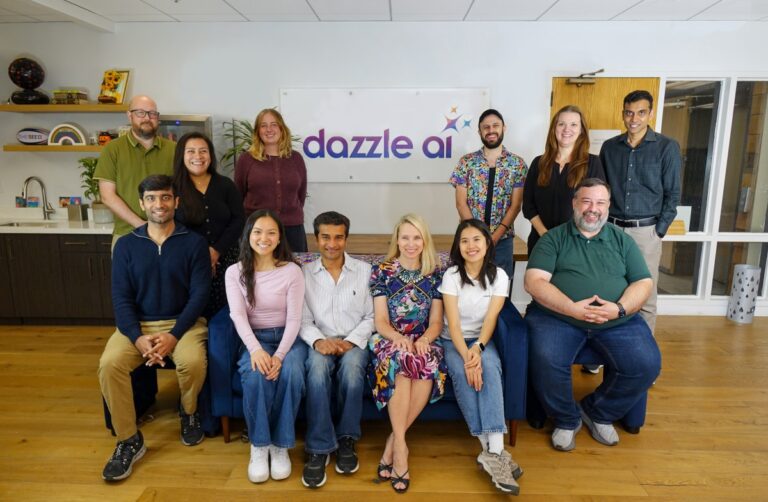
Telling a sensational story on the record is a calculated move for someone with Mayer’s media training. She is promoting her new app, Dazzle, which scans a user’s camera roll to analyse their life. It is concerning to hear her suggest handing over basic cognitive tasks, such as planning a birthday party, to artificial intelligence. The rest of the conversation, however, revisits a stance she has held for more than a decade: “the gender card”.
“I never play the gender card,” she told Steven Levy in a 2015 interview. “The moment you play into that, it’s an issue. […] In technology we live at a rare, fast-moving pace. There are probably industries where gender is more of an issue, but our industry is not one where I think that’s relevant.” She repeats these sentiments in the recent New York Times piece.
The peak of Mayer’s career coincided with the height of the “girlboss” era, when slogans like “well behaved women rarely make history” were ubiquitous. She has been asked about gender in tech countless times and has mostly dismissed it. A decade after that period, her views appear unchanged.
Later in the article, she dismissed the idea that gender affects who gets to work in the tech industry. She also brushed aside questions about bias baked into AI models, a problem that has been studied and proven extensively. Instead, she named female AI executives like Fei-Fei Li as the reason well-documented bias does not exist. She asserts that passion overrides gender, as if being “passionate” enough erases decades of women’s experiences in the tech workforce.
“To me, gender fades into the background. I talk about passion as a gender neutralizing force,” she told the New York Times. “If you’re excited about something, gender doesn’t matter.”
Meanwhile, male figures in the AI industry are posting content about sperm on social media. Half of women in tech leave the industry by age 35, earn 84 cents for every dollar their male counterparts earn, and women founders receive half the funding that male founders do.
Earlier this month, event organizers canceled one of the largest gatherings of women and non-binary technologists, the Grace Hopper Celebration. “Unlike past events, this year, both individual registrations and sponsorship commitments came in significantly below our expectations and, ultimately, below the level needed to cover critical operating expenses,” the organizers wrote in a statement. Bloomberg reported that this follows years of declining attendance, with around 15,000 people attending in 2025, making it the fewest since 2016.
In 2023, GHC attendees reported standing in lines for hours to talk to recruiters, being shoved, harassed, and cut in front of by hundreds of men who suddenly flooded the conference. “They trampled over attendees, shoved their way into the recruiter’s booth to wave their resumes in front of their faces, verbally assaulted attendees, and physically pushed and shoved attendees in line,” one attendee said.
After the GHC 2026 cancellation was announced, Kayley Seow, a tech worker who attended the 2023 conference, contacted me to discuss what it meant to her. She said she felt “pretty shattered” when she heard the conference would not happen this year. “GHC is such a pillar of the community that you don’t expect to fall, or in this case, not run. Despite its flaws, it continues to be an important space for people hoping to get into tech and those already in it. I’d been recommending it to every undergrad or woman technologist to attend.” There are other, similar conferences held around the country, but GHC is hard to recreate, Seow told me. “Other organizations exist but they operate virtually, there’s events here and there in the Bay, but it’s impossible to find something as concentrated as GHC.” The people she knows who are most affected are current undergrads who planned to go to GHC to connect with recruiters, find internships, and land graduate jobs, Seow said. “They’re disappointed, and a little scared, since it’s October and we’re coming up on the end of internship recruiting season, especially for the international students who were hoping to talk to the bigger companies at GHC that have the resources to take on international students as interns.” It is still unclear whether there will be a conference in 2027.
GHC‘s cancellation this year follows a string of blows to organizations that support women technologists. Women Who Code, a nonprofit that awarded more than $3.5 million in scholarships and supported a community of 360,000 members, shut down in 2024 after 11 years, citing funding issues.
Things are very different today than they were when Mayer was the first-ever pregnant CEO of a Fortune 500 company. In 2025, at the direction of President Donald Trump’s executive order “Ending Radical and Wasteful Government DEI Programs and Preferencing” and other orders, civil servants across the federal government from NASA to the Social Security office and the CDC had to drop everything to scrub mentions of diversity, equity and inclusion from their systems. This was not just symbolic or semantic. The National Institutes of Health terminated billions of dollars worth of nearly 2,300 federal research grants, cuts that disproportionately affected women and early career researchers. Led entirely by inexperienced men in their early 20s and spearheaded by Elon Musk, the now-defunct Department of Government Efficiency canceled funding that would have advanced potentially lifesaving research projects focused on pregnancy and reproductive health, chronic illness, and vaccine safety for women. The damage done by DOGE cuts to the advancement of science and technology that would have been done by women and would have improved women’s lives around the world is immeasurable and widespread; it is hard to imagine believing gender plays no role in STEM today in light of what we have seen under the Trump administration over the last year and a half, especially.
But in a way, Mayer is right: Drinking one’s own Kool-Aid is a non-gendered issue. Earlier this year, Sam Altman suggested AI generating podcasts to interact with your kids about their days and got similarly roasted for a week straight. He deserved it, and so does she.
What it means
The cancellation of major industry gatherings and the reduction of federal research funding show that structural barriers for women in technology are not fading. Mayer’s insistence that passion alone solves these issues ignores the reality of the current environment.