
LinkedIn has added a new option in its reporting menu to flag content that “seems like AI slop.”
The feature appears when a user clicks the three dots at the top of a post. It is the first time the platform has acknowledged the term directly in its interface.
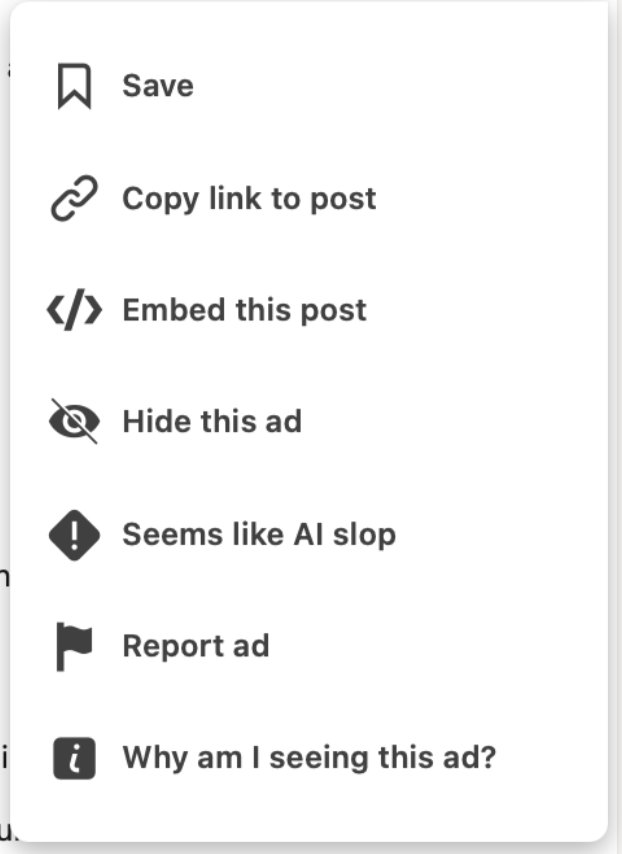
Testing the button reveals a simple workflow. Clicking the option displays the message, “Thanks for letting us know. Your feedback helps improve the feed.” The post then disappears from the user’s view immediately.
Identifying the content was straightforward during the test. The post featured excessive spacing between sentences, a list of takeaways, heavy emoji use, and a sentence structure built on “X is not Y” comparisons. These are common markers of automated text.
Earlier this month, 404 Media reported that Pangram estimated 41 percent of long-form posts and 30 percent of short-form posts on the site are likely AI generated. LinkedIn referred inquiries regarding that report to a policy change made in May.
That policy states professionals visit the site for real people and unique insights. The company aims to reduce low quality, automated or generic content. They note that while AI can help beat the blank page problem, their focus is on surfacing professional conversations that help people advance their careers.
Guides on how to use AI for LinkedIn posts are available via a simple Google search. Some of these guides appear directly within the platform.
LinkedIn also offers its own generative AI writing assistant. This tool provides personalized suggestions for a profile to help a user stand out and get noticed.
What it means
Users now have a direct mechanism to report low quality content without needing to explain their reasoning. The platform treats these reports as feedback to improve the feed, though the immediate effect is simply the removal of the flagged post from the viewer’s screen.