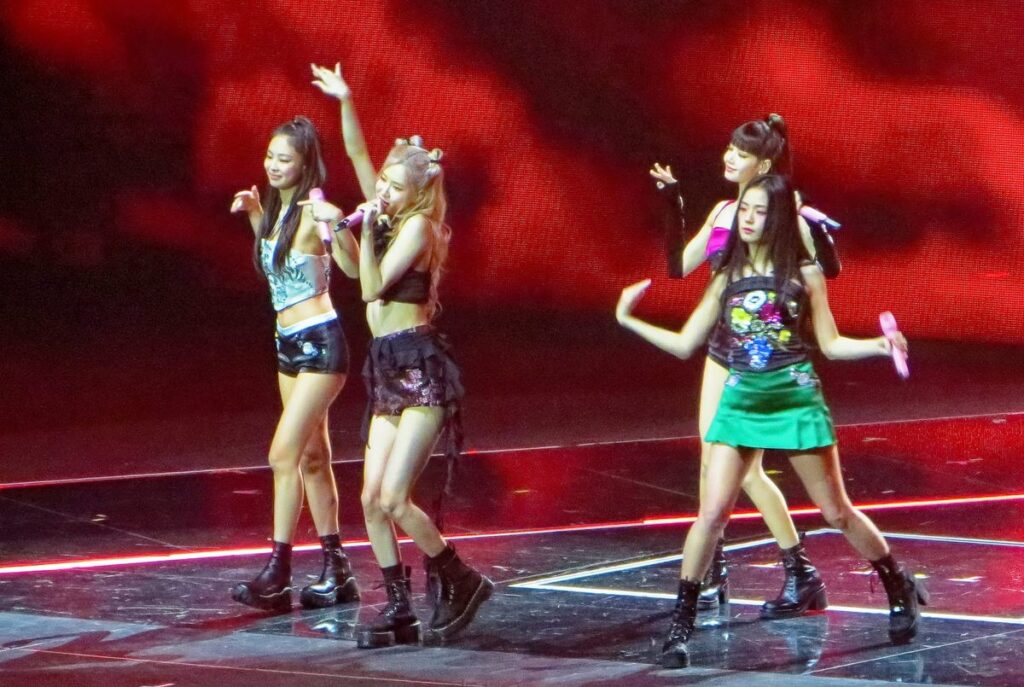
K-pop fans are widely recognised as a formidable digital force, yet a disturbing new trend within their communities is causing significant distress. Obsessive supporters are increasingly using generative AI to craft self-insert fan fiction that crosses ethical boundaries, producing unsettling videos and images of themselves engaging in intimate acts with their favourite idols. This represents a modern, technology-fuelled distortion of idol culture that pushes fan art into uncomfortable territory, leaving many within the community deeply concerned.
Fans demand accountability for non-consensual content
Discussions on Reddit and various K-pop forums have erupted with outrage as users call for the reporting of those creating non-consensual deepfakes. In one thread on the K-pop Uncensored subreddit, a user shared redacted screenshots of an AI-generated video depicting themselves being hugged and kissed on the cheek by Keonho from the boy group CORTIS, who is a minor. “Some fans may think it’s harmless but if you tolerate this, you’re opening doors to much worse things in the future,” Reddit user wbu_lizzie wrote. “The idols didn’t consent to this, they are real people living their lives, not a bunch of wattpad / ao3 characters.”
Another contributor, Goldie_Prawn, highlighted the psychological risks involved. “People have been cutting and pasting these kind[s] of things forever but the more realistic the images get the more dicey it gets psychologically,” they noted. “I think even with traditional photoshop the work and skill required gives some level of mental buffer to the creator that isn’t there with AI.”
When fan culture collides with artificial intelligence
Dr Sarah Keith, a professor at Macquarie University in Australia who specialises in K-pop fandom, explains that these deepfakes stem from a long tradition of fan-created content. While fan fiction and art have historically operated on the fringes of copyright law without being viewed as exploitative, the advent of generative AI tools has created a technical loophole for consent. These tools allow for the rapid production of realistic media involving real people, bypassing social norms that previously protected individuals.
“K-pop fans (like all pop culture fans) have long been active producers of fan materials about their preferred idols. However, these to date have not been ‘convincing’ as artefacts that might have involved the idol themselves,” Keith told 404 Media. “It’s a parallel issue involving both fans and AI tools. Because of these two factors, there is now an increased facility for fans to create large volumes of content, which do not respect the idols’ personal integrity, and which can be distributed online in ways that undermine the idols’ reputation (e.g. sexualized deepfakes).”
The industry’s contradictory stance
While many fans condemn these behaviours, others argue the root cause lies in the K-pop industry’s business model, which fosters parasocial relationships at the expense of artist and fan well-being. “This is a sad side effect of an industry that for years [has] pushed parasocial relationships on their fans,” wrote Serious-Wish4868 on r/kpopthoughts. “When idols and companies are constantly pushing you to live out your romantic and sexual fantasies with idols in everything they do from social media posts to live interactions, what do [you] expect to happen?”
Major entertainment agencies and the artists themselves are equally unhappy. Members of groups like BTS and Tomorrow X Together have publicly criticised the use of generative AI to create digital simulacra of their likenesses. In March, OA Entertainment, the label representing Blackpink member Jennie, issued a warning that it would pursue strong legal action against acts infringing on an artist’s reputation and portrait rights. This statement, made in response to harassment and stalking, heavily implied the threat of AI-generated content without explicitly naming it.
Conversely, many of these same agencies are aggressively adopting AI to cut costs. SM Entertainment, which manages acts like Girls Generation and Super Junior, has integrated generative AI into its core strategy and previously released a fully AI-generated music video for Aespa. Additionally, a fully synthetic idol group called GLXE was launched last December, combining AI vocals with uncanny avatars.
“They’d automate the whole industry if they could make money,” Lindsey Knuth, a K-pop fan and associate editor at Tangle News, told 404 Media. “Pornographic deepfakes of minor idols is an issue, as is the industry’s (lack of) response, to me.”
Regional divides and the limits of social pressure
Cultural attitudes toward this content vary significantly by region. South Korea currently ranks number one in the consumption of AI slop content, driven by a tech industry that pushes for rapid adoption. In the US, however, polling indicates that the majority of young people hold extremely negative views of AI tools and are becoming increasingly resistant to their use as institutions mandate their integration.
Keith observes that while labels protect artists primarily to safeguard investments, fans tend to defend idols as human beings from both abusive individuals and corporate entities. Ultimately, the lack of technical or legal safeguards against the documented harms of this technology means that social shaming remains the only effective deterrent in the K-pop world.
“It’s reassuring that many fans are openly calling out non-consensual uses of AI and deepfakes, because in the absence of technical guardrails on this kind of content, social acceptability is really what’s important,” said Keith. “So yes, it is reassuring that many active fans online are building a culture of respect where idols’ likenesses are not used in non-consensual ways.”
Key takeaways
- K-pop fans are using generative AI to create non-consensual deepfakes of idols, a practice that has sparked outrage within communities and raised concerns about the psychological impact of hyper-realistic imagery.
- While the industry promotes parasocial relationships that may fuel such fantasies, major agencies are simultaneously pursuing legal action against infringers while embracing AI to reduce operational costs.
- In the absence of robust technical or legal guardrails, social shaming by the fanbase currently serves as the primary deterrent against the misuse of artists’ likenesses.