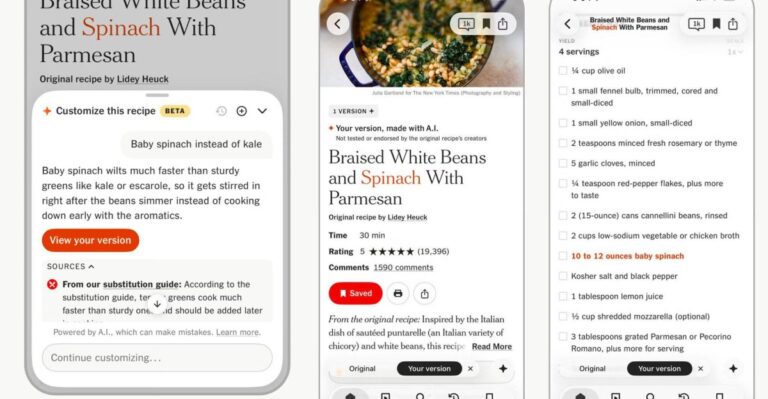
On October 23, the New York Times Cooking app introduced an iOS-only beta allowing subscribers to modify recipes with artificial intelligence. The launch triggered immediate backlash, with over 170 angry comments appearing below the announcement within four days before the commenting section was disabled.
While the site reported 514 million visits in 2025 and the YouTube channel holds 1.4 million subscribers, the initial reaction suggested users feared a loss of the section’s human warmth. Jordan Cohen, the executive communications director for the Times, noted the high traffic but did not disclose specific subscriber counts.
The feature
The tool sits above the ingredient list. If you lack a loaf pan, the system asks what you have and adjusts the instructions accordingly. Changes appear in red-orange text. If a request is too extreme, such as converting Eric Kim’s gochujang buttered noodles into cookies, the system offers a redirect to a more suitable recipe, like Kim’s gochujang caramel cookies.
Camilla Velasquez, general manager of NYT Cooking, explains the logic. “We put a lot of effort into trying to tell you when not to do something if it’s no longer in the spirit of the recipe,” she says. The large language model checks the recipe text, the ingredient substitution guide, user comments, and internal expertise in that order. Velasquez insists the AI is a helper, not the main event. Users should not be chatting with it.
Recipe editors helped build the original rule set and evaluated the output. Velasquez stated there is zero intention of publishing fewer recipes, despite the 60 editors, writers, and video journalists on the team. Currently, most users employ the tool for ingredient swaps, equipment changes, and dietary adjustments. Some scale recipes to match available ingredients, such as adjusting oil quantities.
Testing the tool
I tested the feature with a five-star Alison Roman chicken and dumplings recipe. I requested boneless, skinless chicken breasts instead of bone-in, skin-on thighs. The system suggested “Chicken Breast and Dumplings,” marking the change in red-orange. A note appeared below the title: “Joseph’s version made with AI. Not tested or endorsed by the original recipe’s creators.” I could toggle between the modified and original versions.
Cooking proceeded smoothly. The app flagged that simmering time would reduce for breasts and added butter to the roux since breasts render less fat. One suggestion did not work for me. It advised returning shredded breast meat to the pot for 30 minutes to thicken the sauce. I reserved some meat and followed the instruction with the rest. The texture was notably less succulent than the reserved portion and far inferior to thighs.
I also tested a Francis Lam roasted mushroom and broccoli grain bowl modified to include cauliflower and delicata squash. The app sliced the squash into half moons to ensure even cooking and increased olive oil. Lam’s poetic instructions remained intact, including heating oil until it slips around the pan like water. I used the result for a pregame dinner.
The system also transformed Yewande Komolafe’s Toasted Sesame and Scallion Waffles into a yeasted version requiring an overnight fridge rest. A friend suggested Colu Henry’s pasta and chickpea stew. I asked to swap canned diced tomatoes for whole and add more vegetables. The tool offered carrots, celery, onion, zucchini, mushrooms, and greens, inserting the chosen items at the correct times in the procedure.
I used the tool to modify Lidey Heuck’s sauerkraut recipe to include grated carrots, minced garlic, and thinly sliced kale, along with extra salt. Finally, I turned Sue Li’s peanut noodles with spicy tofu into peanut udon with tofu, whitefish, and cucumber. The system instructed me to cook the fish, set it aside, wipe the pan, then cook the tofu. It also customised noodle-cooking guidance since I swapped bucatini for udon.
What it means
The backlash stemmed from the fear that AI would diminish the human connection readers feel with the Cooking team. Velasquez confirmed that users can now hide the AI feature within the app if they wish. The tool remains in an iOS-only beta with no set release date for other platforms. It serves as a practical aid for substitutions and dietary needs without replacing the original creators’ intent.