**Editorial Brief**
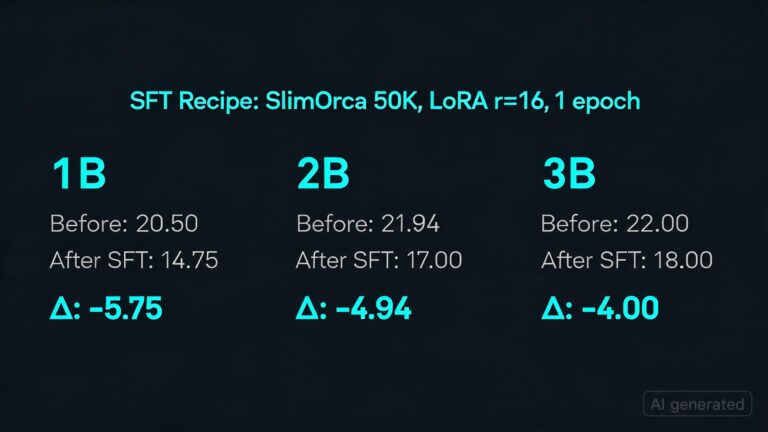
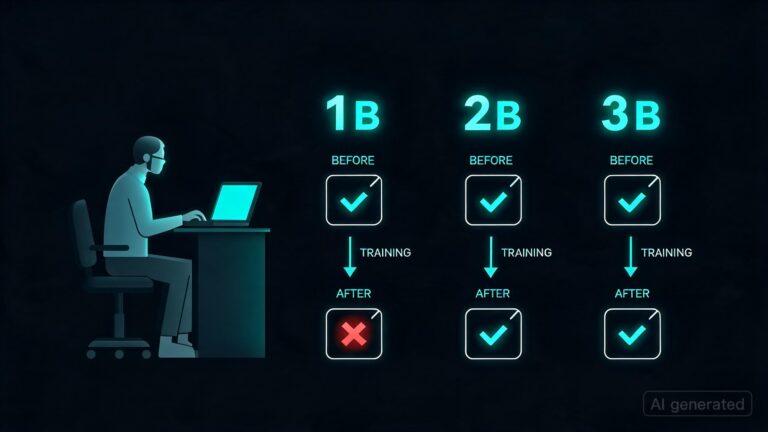
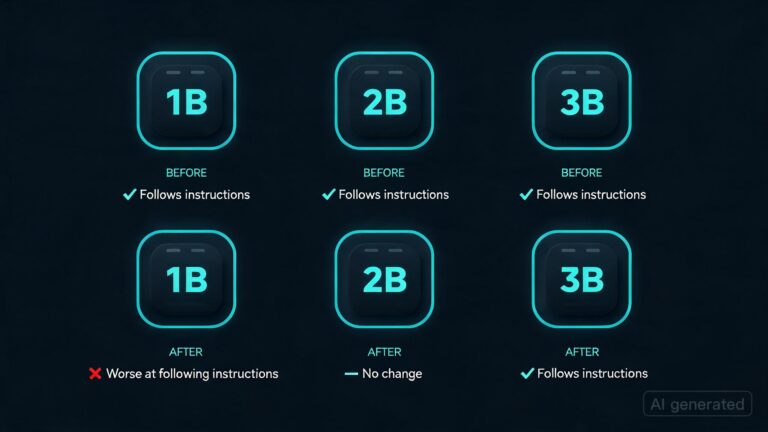
A recent post on Reddit highlights a peculiar observation about the performance of large language models (LLMs) following instructions. The author, who experimented with training three different versions of an LLM-each scaled from 1B to 3B parameters-the results were unexpected. Specifically, they found that the smallest model (1B parameter size) actually performed worse in terms of instruction-following after being trained using a standard strategy known as self-supervised fine-tuning (SFT). This is contrary to expectations and could have implications for how models are deployed.
**Why It Matters**
This discovery underscores the complexity of training large language models, particularly at smaller scales. The results suggest that finer-grained control over model behavior might be necessary when working with models of limited capacity. Understanding these nuances is crucial as LLMs continue to play a significant role in various applications from customer support to academic research.
**Takeaways**
– **Model Scales**: There may be distinct challenges in training and fine-tuning smaller LM variants compared to larger ones.
– **Instruction-Following**: The effectiveness of SFT on smaller models warrants further investigation, possibly requiring more refined techniques or different strategies for optimal performance.
– **Deployment Considerations**: These findings highlight the need for careful model selection and fine tuning when deploying LLMs in critical applications.