Shanghai hosted a public robot carnival on a recent holiday, drawing families to an R&D centre on the city’s outskirts.
The scene
Humanoid robots are currently central to China’s strategy for embedding artificial intelligence into daily life. This approach, known as embodied AI, was a key component of the nation’s latest five-year plan. Companies here already lead the global market. Nearly 90% of the more than 13,000 two-armed, two-legged robots delivered worldwide last year were manufactured in China.
“Look, it is trying to do a handstand!” an 11-year-old boy shouted while watching his new mini robotic dog perform stunts. His mother had bought the toy at the event. The child could not stop showing the device to passersby.
The venue houses more than 100 companies researching, developing, manufacturing, and marketing robotic technologies. Many build specialised bots capable of practical tasks, such as transporting heavy loads or inspecting sewage pipes.
Today, however, most displays were for show. Meters from where parents and children queued to buy the robotic dog, two staffers taught youngsters how to make a quadrupedal robot walk up a flight of stairs. Farther along, a tense battle broke out between two remote-controlled robots firing water beads at each other. Boys and girls cheered them on from around a temporary ring. A staffer declared the duel a draw.
Why the spectacle matters
These showcases invite the public to experience robots up close. Some of China’s prominent robotics firms are building humanoids. These machines “can free people from physical work and mundane chores,” says Yang Duan, a product manager at DexForce. The company was exhibiting a model capable of making coffee. A few booths down, a pair of robotic arms attempted to fold a basket of T-shirts.
Exposure matters because progress elsewhere has been slow. Safety challenges due to weight and the need to balance on two legs have hindered development. High prices and short battery life have also limited appeal. Plenty of roboticists are skeptical that a human form is the best shape for a robot to take.
Chinese firms are pushing forward and showing off their latest models. As this carnival took place in Shanghai, shopping malls and tourist attractions in several other cities hosted humanoids performing for crowds. In Beijing, bipedal robots ran half-marathons. The PR campaign seems to be winning over hearts and minds—at least on this particular weekend.
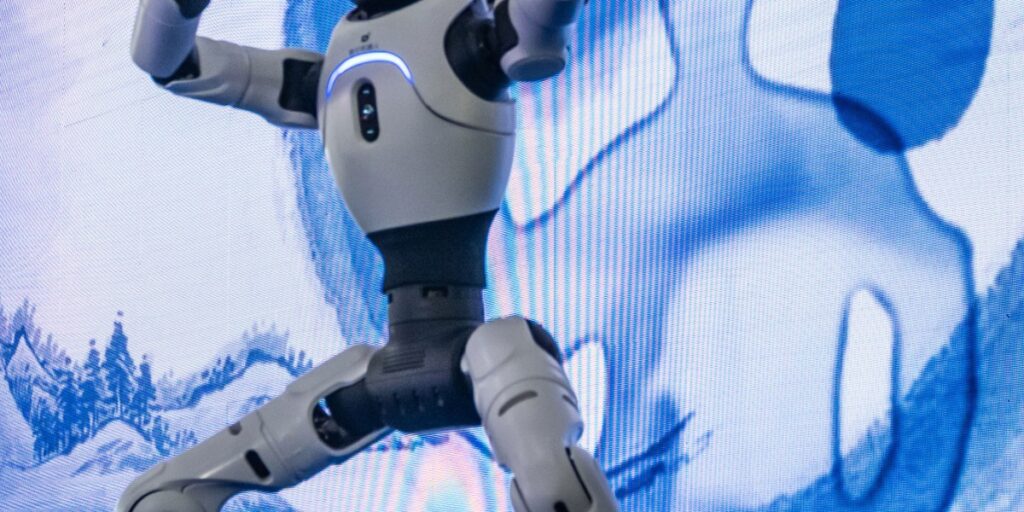
Applause rang out from the festival’s main tent. There, a humanoid wearing a blinged-out top showed off a martial arts style known as drunken boxing. A fellow humanoid performed a front flip to woo the crowd. Alongside the stage, a squad of small robotic lions lined up waiting to perform.
The audience could not get enough. They chanted: “More, more, more.”
You Xiaoying is a London-based freelance journalist focusing on China.