Key Takeaways
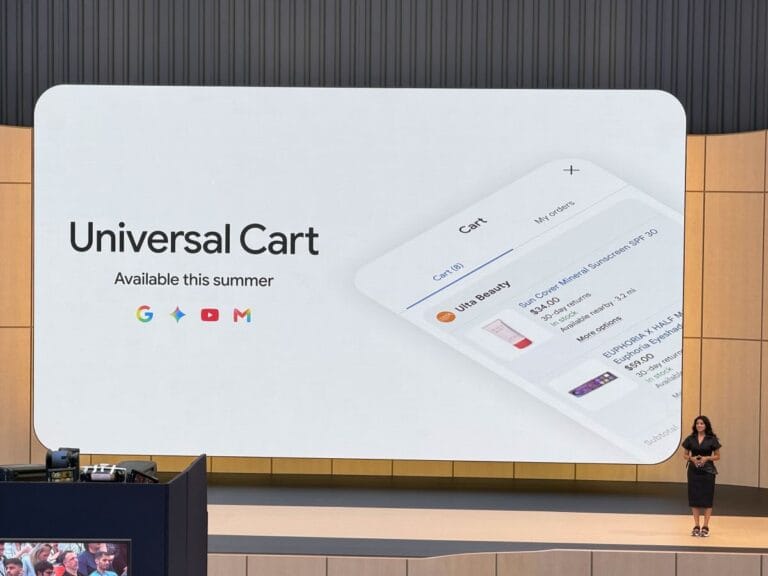
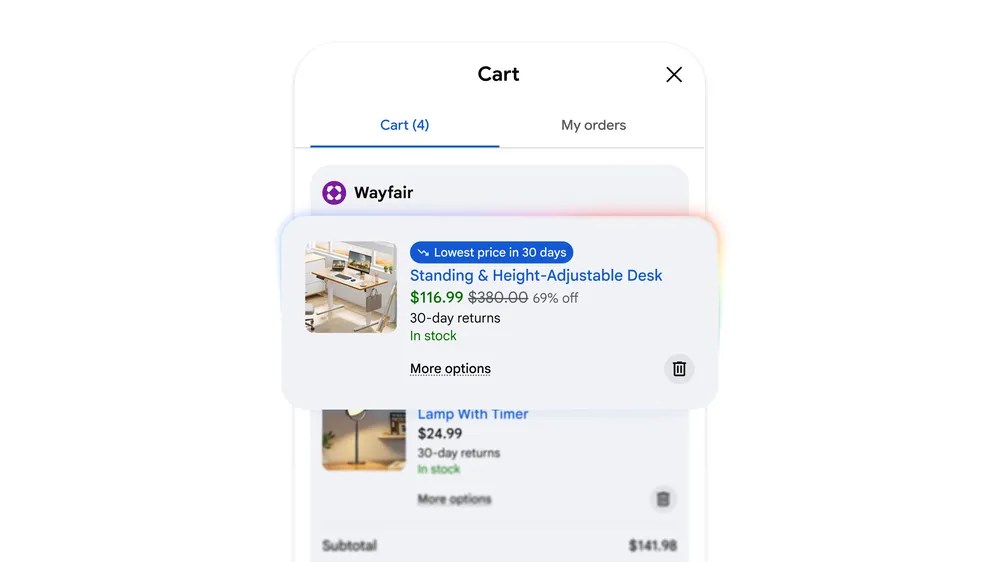
- Google introduced Universal Cart at Google I/O, a centralized shopping hub to manage purchases across multiple devices and retailers.
- The feature is built on the open-standard Universal Commerce Protocol (UCP) allowing users to check out directly with participating merchants or transfer items to merchant sites for completion.
- Google also unveiled AP2, its protocol designed to let AI agents securely make payments on behalf of users within defined limits. This integration would provide Google direct visibility into consumer behavior and purchasing decisions.
Universal Cart is currently available in the U.S., with Gemini app updates coming this summer, and support for YouTube and Gmail following. AP2 will be integrated into Google products soon, giving users greater control over their shopping journeys while enabling more seamless transactions between consumers and merchants.
How it works:
- Users can add items to the cart from various sources like Search, Gemini, YouTube, or Gmail.
- The cart tracks deals, monitors price drops, and alerts users when products are back in stock.
- AI helps shoppers make better decisions by flagging compatibility issues (e.g., processor not compatible with selected motherboard).
For frequent travelers or rewards maximizers, Universal Cart can surface hidden savings and suggest ways to stretch points further. Users can transfer items to merchant sites for checkout.
What it means:
The introduction of Universal Cart marks Google’s strategy to integrate more deeply into the shopping experience, potentially controlling more of the consumer journey. This move positions Google as a key player in managing and facilitating online commerce transactions, from discovery to completion.