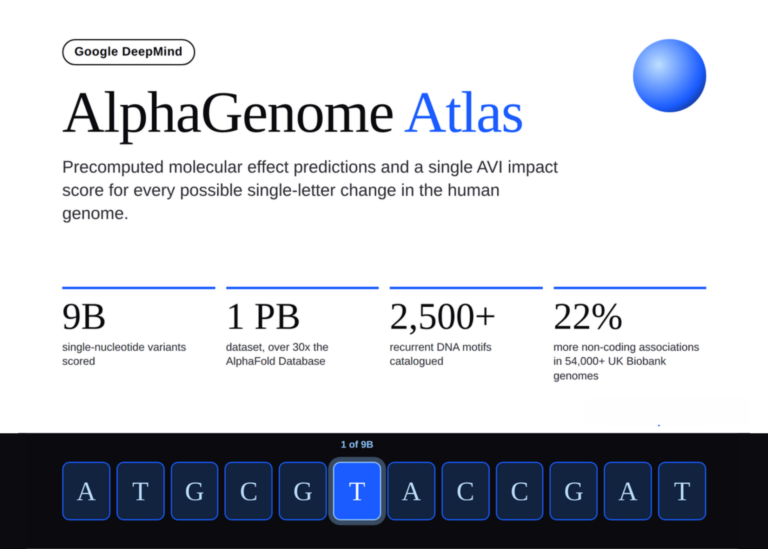
Researchers at Google DeepMind have released AlphaGenome 2, a new artificial intelligence model intended to predict how specific DNA mutations alter gene expression within individual cell types. The system addresses a persistent challenge in biology where identical genetic code produces vastly different cellular functions depending on context, such as the difference between a healthy heart muscle cell and one affected by disease. By simulating these regulatory changes, the tool aims to provide scientists with clearer insights into the cellular mechanisms driving various illnesses.
This development matters because it offers a computational method to study gene regulation without requiring extensive physical experimentation on every possible mutation. The model helps researchers identify which genetic variants are likely to disrupt normal cellular activity, potentially accelerating the discovery of drug targets for conditions where the root cause lies in how genes are switched on or off. The approach focuses on prediction accuracy for specific cell lines rather than making broad claims about curing diseases or modifying patient data.
- The model predicts gene expression changes for specific cell types.
- It builds on the original AlphaGenome release from last year.
- Targeted applications include understanding disease mechanisms at a cellular level.