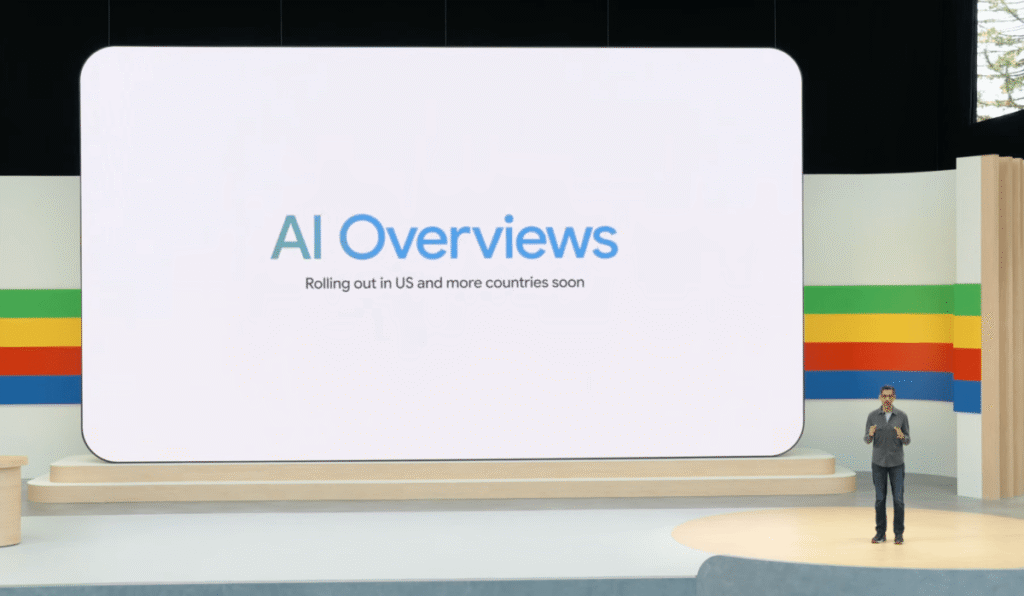
Google’s AI Overviews now appear in 43% of searches, up from 15% a year ago. Similarweb data confirms this jump occurred between June 2025 and May 2026.
The shift in usage
What started as an optional layer on top of standard search is now the main event. Users land on AI Overviews and often stay there to continue their research via Google’s conversational AI Mode. Visits to that mode climbed from 126 million in June 2025 to 279 million by May 2026.
The change moves users away from clicking blue links and reading them to treating Google itself as the final destination. The average length of a search has grown as people swap short keywords for longer, conversational prompts designed for the AI.
Impact on publishers
Publishers are losing referral traffic because AI citations do not always lead to clicks. Last year, Similarweb highlighted how damaging this was for news sites. Cloudflare has since released tools that let publishers block AI crawlers unless the AI companies pay for access through its marketplace.
Despite this, the number of AI responses containing a citation has risen more than fivefold over the past year. However, only 6.8% of U.S. ChatGPT desktop queries included citations as of May 2026. Travel, retail, and sports queries generate cited responses more often than other categories.
A glimmer of hope
There is some relief for publishers in the ChatGPT space. A search update on May 7 doubled the proportion of visits landing on webpages, rising from 25% in March 2026 to nearly 60% by May 30, 2026. Users seem to use the prominent blue links when they are available.
What it means
The internet is no longer just a place to find links. Google is becoming the end of the line for many queries, sourcing answers directly from its index rather than sending users elsewhere. This centralisation changes how information is consumed, but it also concentrates control over traffic and revenue in the hands of the search engine.