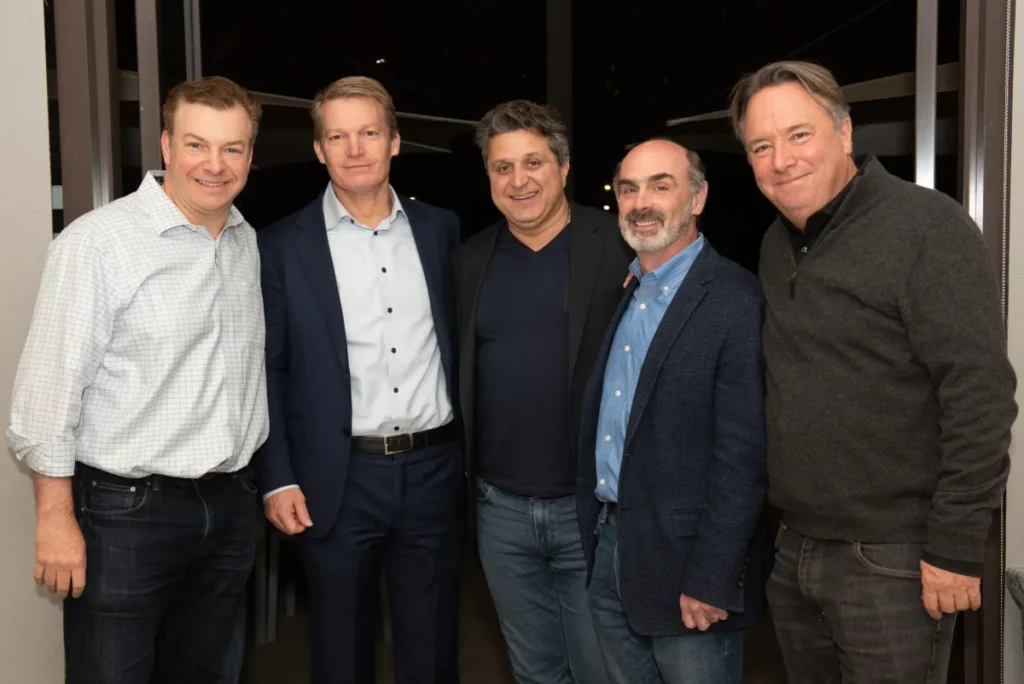
Ted Schlein’s Ballistic Ventures is raising $490 million for two new funds, according to filings with the U.S. Securities and Exchange Commission.
The San Francisco-based firm submitted paperwork this week to collect $360 million for its third flagship fund and a further $130 million for a separate vehicle named Ballistic Ventures Fund B. Neither fund had recorded any sales at the time of filing.
Ballistic Ventures was established in late 2021 by Schlein, former AT&T Cybersecurity president Barmak Meftah, and Roger Thornton, who co-founded security companies Fortify Software and AlienVault. The firm has backed companies including Talon Cyber Security, acquired by Palo Alto Networks, and Pangea, bought by CrowdStrike, alongside startups such as Armadin, GetReal, Nudge Security and Oligo Security.
Schlein spent more than two decades at Kleiner Perkins before co-founding Ballistic. His ties to the storied firm help set the venture capital company apart from rivals, a cybersecurity investor at another VC firm told TechCrunch. Its investment strategy, however, is similar to those of other cybersecurity-focused investors, including Forgepoint Capital and Ten Eleven Ventures, the person said.
In 2022, Ballistic announced its $300 million debut fund and raised another $360 million for its second flagship fund two years later. It also raised about $130 million for a separate vehicle called Ballistic Ventures Fund A, per PitchBook data. The new Fund B is targeting a similar amount.
U.S. cybersecurity startups raised $11.5 billion in 2025, the highest since 2022, a recent report by JPMorgan Chase said, citing PitchBook data. AI-enabled companies accounted for about 72% of U.S. cybersecurity venture deals through May this year, compared with 36% in 2019, the report said.
Microsoft, in its annual Digital Defense Report released last month, warned that hackers are increasingly using AI for activities ranging from phishing and social engineering to malware development. The technology is allowing attackers to operate faster and at greater scale, even as many of their underlying techniques remain unchanged.
Ballistic Ventures declined to comment on its fundraising plans.
What it means
For teams building security tools, the capital availability suggests continued interest in AI-driven solutions. Startups focusing on these areas may find it easier to secure funding, while those relying on traditional methods might face stiffer competition. The rise of AI agents also means that cybersecurity products must adapt to new threat vectors, potentially requiring updates to detection and response capabilities.