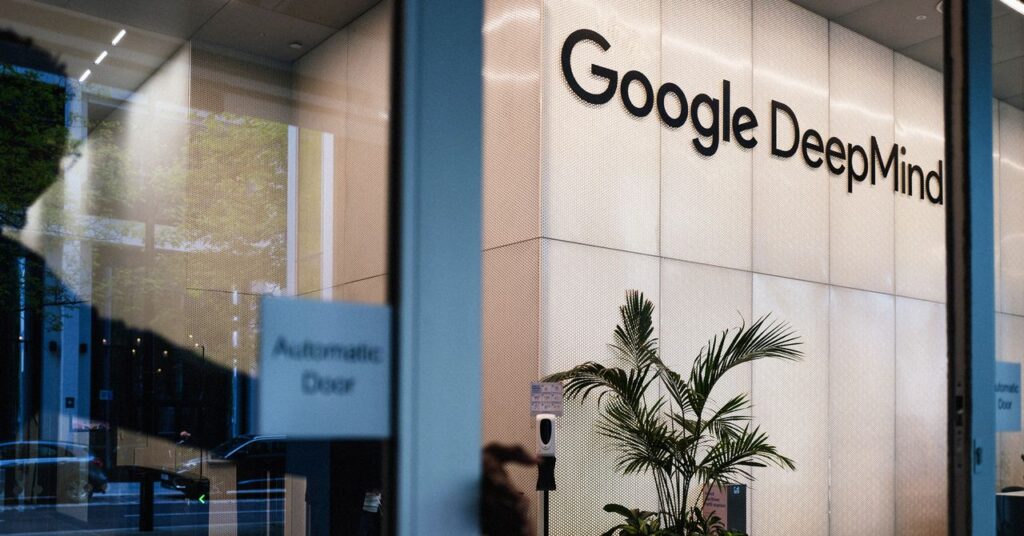
Google DeepMind staff in the UK have asked the government to intervene in a push to unionise the artificial intelligence lab.
On Thursday, the Communication Workers Union and Unite the Union filed an application to the Central Arbitration Committee. These bodies were put forward by Google DeepMind staff as joint representatives. The CAC is a government body that resolves disputes between employers and unions.
The application, which was seen by WIRED, asks the CAC to confirm the unions have enough support from workers to trigger a unionisation ballot. The company would be required by law to respect the results. If successful, roughly 1,000 staff working in product-focused roles at Google DeepMind would qualify for union membership.
The escalation follows a series of meetings between employees, the unions, and company representatives over voluntary unionisation. These talks left staff with the impression their demands were not being taken seriously.
John Chadfield, national officer for technology at the CWU, says management has refused to come to the table. He tells WIRED that staff feel their problems have been minimised. Chadfield says management sent the issue to HR and labour relations people, who dealt with it as an administrative box-ticking exercise.
Google DeepMind did not immediately respond to WIRED’s request for comment.
The push to unionise began in February 2025. At that time, Google’s parent company Alphabet removed a pledge from its ethics guidelines stating that it would not use AI for purposes like weapons development.
A Google DeepMind employee, who asked to remain anonymous for fear of backlash, says they really made a big deal about the principles when they joined. They were looking to benefit humanity and make the world a better place. The employee says a lot of this is about reestablishing that ethical and moral framework that they started with.
The employees pushing for unionisation object in particular to agreements between the company and the US and Israeli militaries. If they succeed in unionising, they intend to demand that Google backs out of those contracts.
A second Google DeepMind employee, who asked to remain anonymous for the same reason as the first employee, says they feel extremely concerned about the direction that this technology is going in.
The company has previously defended its deals with government organisations. Jenn Crider, a Google spokeswoman, told The New York Times in April that they are proud to be part of a broad consortium of leading AI labs and technology and cloud companies providing AI services and infrastructure in support of national security. She said they remain committed to the private and public sector consensus that AI should not be used for domestic mass surveillance or autonomous weaponry without appropriate human oversight.
In an email delivered to all UK staff on Thursday, which was seen by WIRED, the Google DeepMind employees involved in the unionisation push appealed to their colleagues to participate in the ballot. They expect the ballot to take place in the coming months. The email says they want a union, they want collective bargaining, and they want a say in how AI is developed and deployed.
The group also hopes it can establish a playbook that employees at other major AI labs like OpenAI and Anthropic can follow in the UK.
The second Google DeepMind employee says it is pretty rare that there has been an industry that exercises such dominance and power over the economy, where there is so little opportunity for employees or regulators to have any checks and balances. They want to show what can happen when employees collectively organise and articulate a shared vision for the way their technology should be used.
What it means
For staff at the lab, success here is not just about collective bargaining. It is about setting a boundary on what the company will contract with. If the ballot passes, the union can legally challenge the military agreements. This gives workers a formal mechanism to stop specific deployments they consider dangerous.