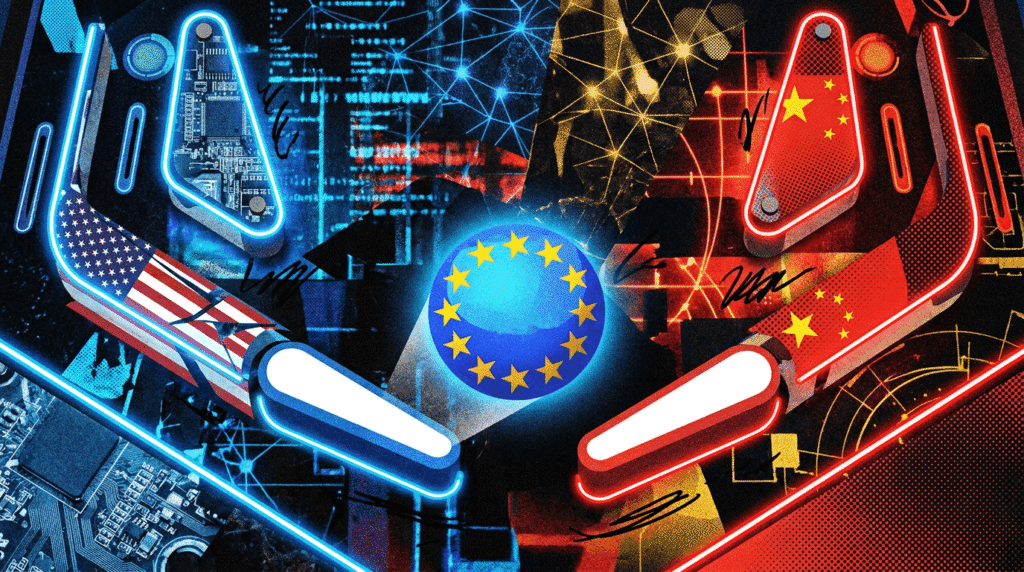
The United States government has blocked European access to the latest models from OpenAI and Anthropic. Austria’s State Secretary for Digitalization, Alexander Pröll, is now proposing to move Anthropic’s headquarters to the EU.
Pröll argues that technology which requires permission to use is a dependency, not a tool. He suggests the EU could attract the company by offering legal certainty, market access, and capital aligned with European values.
Pröll wants Anthropic’s headquarters in Europe
Pröll wrote to EU Commissioner for Technological Sovereignty Henna Virkkunen regarding the situation. “Overnight, the world’s largest single market—our EU single market with 450 million people—was cut off from cutting-edge innovation,” the Austrian official stated in a letter seen by the Kronen Zeitung.
He highlights Anthropic’s specific philosophy. “Anthropic is a company that views the ethical use of AI not as a marketing ploy, but as a core conviction. One that prioritizes safety over speed,” Pröll wrote, according to the report. “This company would not be constrained in Europe; it would be set free.”
It is unlikely the Commission will act on this request. The proposal reads more like an act of desperation from an EU whose dependency built up over 20 years of digital policy failures.
Even if the option existed, Anthropic is unlikely to move. The company may look cosmopolitan and values-driven by U.S. standards, but it is deeply patriotic. During a Pentagon dispute over AI deployments, Anthropic’s main concern was protecting U.S. citizens. Mass surveillance abroad was not on the agenda. The models are reportedly already in use by the NSA.
OpenAI, Anthropic, and others do count on European revenue to fund billion-dollar training runs and data center buildouts. The U.S. market alone might not be enough to cover those costs. This gives Europe some leverage at the table, even if it is not much.
China looks like a backup, but it’s just another leash
AI investor Xiaoyin Qu sketches an alternative scenario. European companies, and for cost reasons, U.S. companies too, could adopt Chinese AI models instead of deepening their dependence on OpenAI and Anthropic. Companies could host Chinese models on their own GPUs, fine-tune them with their own data, and retain control, Qu argues. Trust in Anthropic has already taken a hit after incidents like its handling of Fable, she adds.
Qu also flags a worst case for the U.S. If Chinese open-source models keep gaining market share and get optimized for Huawei chips instead of Nvidia, China could dominate both the model and chip layers. Export controls alone will not fix that. The U.S. would need its own open-source push.
For Europe, though, this scenario just swaps one dependency for another, trading Washington for Beijing. Locally run Chinese AI looks self-sufficient at first glance, but the situation could flip overnight. Open-source models could get new licenses slapped on them, or the best models could be withheld entirely.
The Cold War rhetoric some Chinese AI experts already lean on does not suggest generosity ahead. China will not give the EU gifts long-term, only while it hurts the U.S. Real sovereignty requires Europe’s own AI and, above all, its own infrastructure.
What it means
European creators and artists face a choice between American tools, Chinese tools, or building their own. Moving Anthropic is unlikely to happen. Switching to Chinese models trades one foreign power for another. The practical reality is that Europe must build its own AI infrastructure to avoid relying on decisions made in Washington or Beijing.