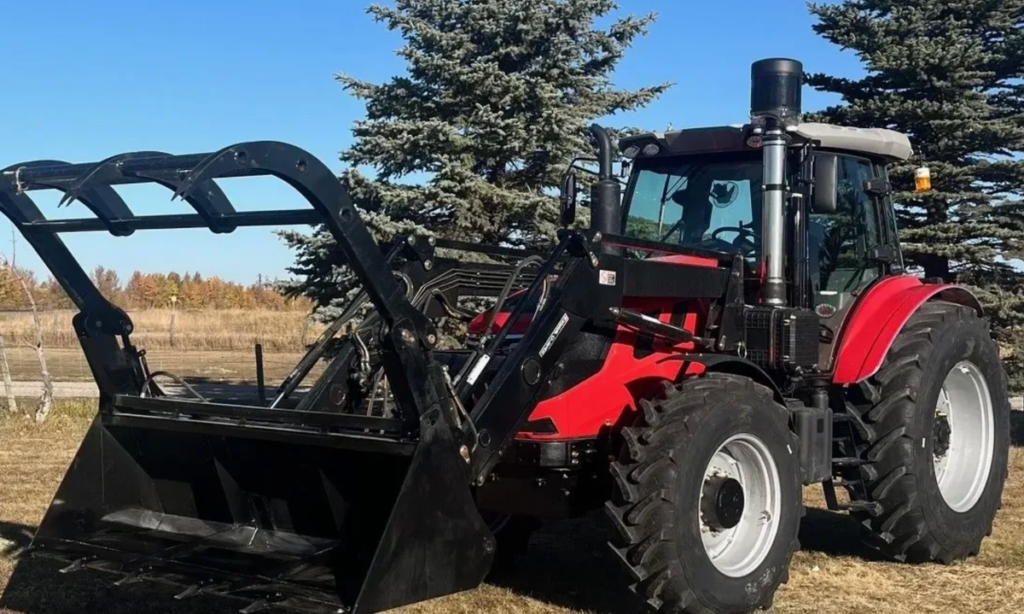
The secondary market for vintage, low-tech John Deere tractors has enjoyed a prolonged boom as farmers increasingly seek reliable machinery they can actually fix without being held hostage by the manufacturer’s repair monopoly. A Canadian enterprise has identified this gap and proposed a radical solution: a new, repairable, “no-tech” tractor designed to eliminate a persistent pain point for agricultural workers.
A backlash against digital lockouts
Ursa Ag, based in Alberta, reports being inundated with inquiries following the announcement of its tractor, which costs roughly half as much as a Deere model and avoids the reputation of being a repair nightmare. For years, we have chronicled the frustration farmers feel as they are locked out of their own machinery by digital rights management systems. These systems prevent owners from fixing their equipment, causing tractors to fail due to minor sensor issues and resulting in crops dying in the field while farmers wait for an “authorised” technician to arrive during critical harvesting windows.
Ursa Ag markets its machines as “no frills” and “built to last.” Doug Wilson, a spokesperson for the company, explained that the design was driven by a clear market need for a machine unburdened by unnecessary technology and easy to maintain. This approach mirrors the strategies of consumer electronics pioneers like Fairphone, which builds repairable smartphones, and Framework, which creates modular, repairable laptops. The surge in demand for Ursa Ag’s product represents a growing backlash against manufacturer repair monopolies and the injection of internet-connected sensors and restrictive terms of use into even the most basic tools.
“I talk to farmers every day and I hear from farmers every day about how they went out and bought machinery from 1987 so that it wouldn’t have a computer on it,” Wilson said. “All of this came from a simple discussion with a customer who wanted to be able to turn [the tractor] on at the start of the day, to use it, and shut it off at the end of the day. It needed to work, so that’s what we built.”
The tractor has gained significant traction in agricultural circles after Wilson showcased it at a Canadian farm show, where it was subsequently featured by Farms.com. Following this demonstration, Wilson reported that more than a thousand farmers from approximately 30 countries had contacted him. He recalled receiving a handwritten letter from a farmer in France who does not own a computer and requested that Ursa Ag mail him information about the tractors.
Filling the void left by repair monopolies
Currently, the company has manufactured fewer than 100 units but is working to triple its production capacity, having observed substantial demand over recent months. For years, critics who failed to grasp the nuances of the repair monopoly issue-where John Deere controls parts production, software distribution, diagnostics, and repair guides-have advised farmers to simply vote with their wallets by purchasing from competitors. The problem was that, until now, there was no viable alternative company that did not employ similar restrictive repair practices. Ursa Ag is now filling that niche. It remains to be seen if other manufacturers will follow suit to sell low- or no-tech, repairable appliances.
“Given the number of my customers that carry flip phones, I would say there is consumer pressure to back away from some of the technology that is unnecessary to perform everyday tasks,” Wilson noted. “So that is definitely transferable to dishwashers and washing machines, refrigerators. Refrigerators that have screens on them that’ll tell you what’s inside. It’s a little crazy.”
Wilson acknowledged that high-tech, million-dollar tractors like those from John Deere have their place for specific, advanced applications. However, he argued that such technology is required for only 5 percent of what a farm actually does. There are countless applications for tractors that do not require digital intervention; the technology found in a basic calculator is unnecessary for most farming tasks.
Key takeaways
- Ursa Ag is capitalising on a booming demand for repairable, low-tech machinery as farmers reject the digital lockouts and high costs associated with John Deere’s repair monopoly.
- The company has already received inquiries from over 1,000 farmers across roughly 30 countries, prompting plans to triple its current production capacity of fewer than 100 units.
- Industry leaders are beginning to question the necessity of complex technology in everyday appliances, suggesting that consumer pressure could soon extend to dishwashers, washing machines, and refrigerators.