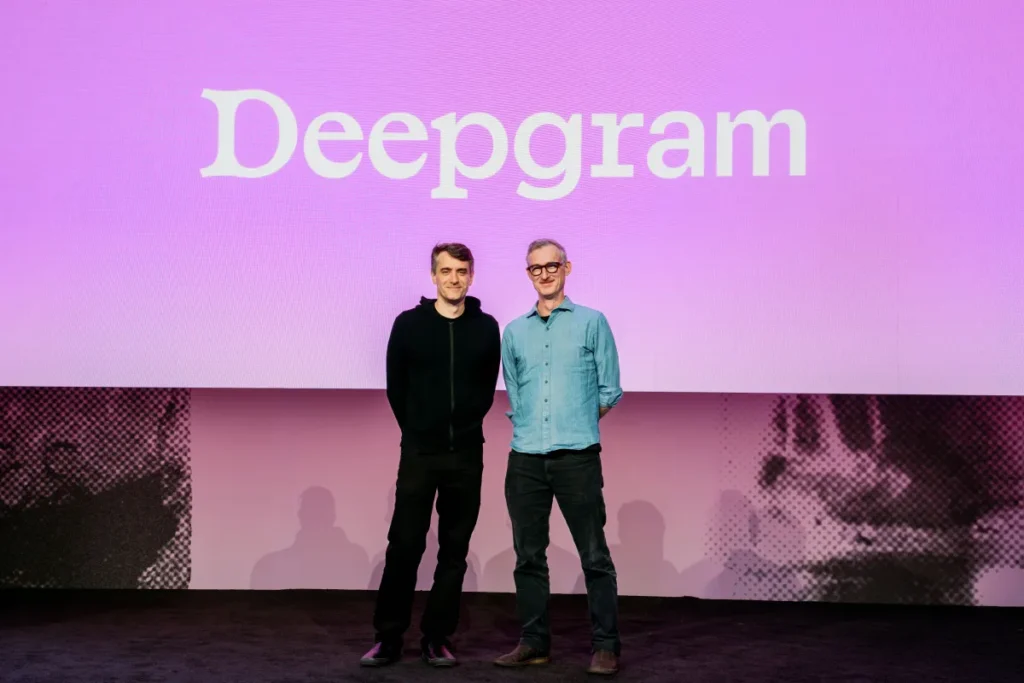
Deepgram has acquired Daily, the company behind the open-source voice infrastructure framework Pipecat.
The announcement came on Thursday. The deal value was not disclosed, but the companies confirmed Pipecat will remain open-source.
What Pipecat does
Pipecat manages voice and video streams alongside other pipeline components like speech-to-text, large language models, and text-to-speech. It is designed to reduce latency. Daily provides hosted infrastructure for various types of voice and video calls.
By adding Pipecat, Deepgram expects to gain a deeper understanding of real-time voice and video infrastructure.
Background and funding
Daily has raised more than $62 million from investors including Tiger Global, Highfield Capital, Nat Friedman, Lachy Groom, and Kevin Weil, according to PitchBook. Earlier this year, Deepgram reached unicorn status with a $130 million Series C round. Both companies were in the same Y Combinator batch in 2016.
Why the deal happened
Kwindla Kramer, co-founder of Daily, noted that the company began experimenting with AI-to-human communication over voice and text around the time GPT-4 launched. This work eventually produced the Pipecat framework.
Kramer said he preferred Deepgram’s CEO Scott Stephenson because of his commitment to keeping Pipecat open-source forever. The engineering cultures of both organisations matched, giving Daily’s team the freedom to work on different parts of the stack within a larger group.
“Scott was super committed to Pipecat being open-source and vendor-neutral forever. I think there is both a personal commitment and commercial driver there. If you sit in the middle of an ecosystem that’s growing very fast, and have many parts of that ecosystem that are genuinely the best from your company, then everything being as open as possible is like a commercial advantage,” Kramer told TechCrunch.
Stephenson said Deepgram has wanted to work in open source for a long time. The company identified an orchestration framework for agents as a potential area, which drove the decision to partner with Daily.
“We want to open up the ecosystem so everybody can build voice agents. It’s great if you’re using Deepgram models, but I want you to be using the best models for your use case. And if Deepgram notices that we have some ground to catch up on in a certain area for our own models and products, that’s great. We want you to use partners, and then we’ll also work on becoming better in those areas,” he said.
What changes for developers
Stephenson said the acquisition allows developers to build agents with expressivity and end-to-end speech systems by plugging in different models and a context bus that connects all parts.
For Deepgram, the deal lets it explore areas beyond voice through Pipecat, as the framework caters to real-time communication in different formats.
“We never thought about Pipecat as a voice toolkit. We thought about it as the toolkit we needed to build this new kind of AI-native software. Because of where we came from, we just always assumed real-time,” Kramer said.
New protocol launch
Deepgram is launching the Real-Time Context Standard (RCS), an open protocol for voice agents co-developed with the Pipecat team. The protocol defines metadata such as context from audio, like a whisper, instructions for a language model on how to use those signals, and guidance on how a response should sound.
Market context
Voice AI has seen significant investment from both model and infrastructure sides. Model makers like ElevenLabs, Gradium, and Fish Audio have raised millions of dollars. Infrastructure companies like LiveKit and Vapi have also raised multi-million-dollar funding rounds this year.