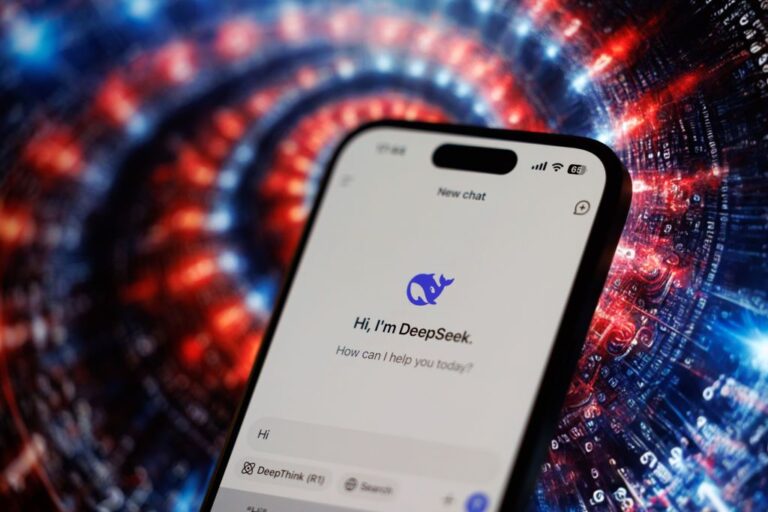
The US Department of Homeland Security ordered civilian federal agencies to remove all software from Deepseek, a Chinese firm, from their IT systems. This ban covers products from other vendors built on its open-source models and prohibits future purchases.
Beijing has responded by calling the move discrimination and promising countermeasures. The Foreign Ministry accused Washington of stretching national security too far, while the Commerce Ministry demanded the order be lifted. Officials in China have vowed to take resolute action.
Washington fears sensitive data could flow to Beijing through these tools. China’s stance, however, lacks consistency. The nation blocks Western services like ChatGPT, Claude, and Gemini across the entire country since 2023. The Cyberspace Administration requires all AI services to comply with political guidelines. State bodies and state-owned companies must gradually replace foreign hardware and software with domestic products. Reports suggest restrictions on iPhones for government officials.
According to the New York Times, Beijing proposed its own export and licensing controls for AI technologies last week. These rules mirror the American approach.
The reality of the ban
US concerns have a concrete basis. China’s 2017 National Intelligence Law requires companies and citizens to support intelligence services. Chinese models carry a political slant, steering clear of certain topics and repeating state propaganda less critically than Western counterparts. AI companies, the FBI, and other US agencies have repeatedly accused Chinese firms of copying top US models on an industrial scale. Beijing denies this.
What it means
The protest serves several purposes. It signals to domestic companies that the state supports them. With other nations, it feeds the narrative that the US wants to monopolise the AI industry. Most importantly, it lays the groundwork for later retaliation. Beijing can frame future actions as a mere response to the initial ban.
Both sides invoke national security to protect their markets and technology. The US also ties security and economic policy together through strict chip export controls. China’s outrage is not very credible, but the political signal behind it deserves to be taken seriously.