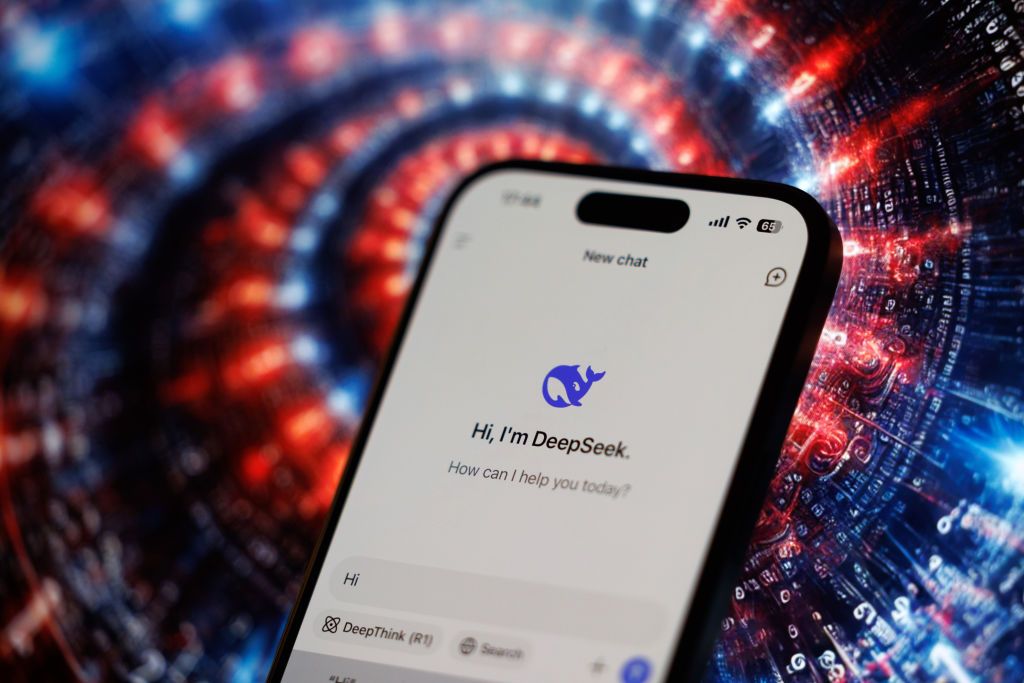
The Department of Homeland Security has ordered federal civilian agencies to stop buying services from Chinese AI startup DeepSeek and to delete the model from government IT systems. The directive cites national security risks linked to the company’s operations in China. It also bans third-party products built on DeepSeek technology, although agencies may ask for exceptions.
Officials warn that sensitive data from US government users could fall into the hands of Chinese authorities. This risk stems from Chinese law, which the DHS says might allow access to that information.
The move arrives as tech competition between the US and China intensifies. DeepSeek challenges American rivals like OpenAI and Meta by offering low-cost, open-weight models.
China rejected the US action. Foreign Ministry spokesperson Mao Ning stated Tuesday that Beijing opposes “overstretching the concept of national security and politicizing technology and trade issues,” according to an official briefing. The spokesperson added that China will “resolutely safeguard the legitimate rights and interests of Chinese enterprises.”
Restrictions on DeepSeek began earlier. A law passed in December 2025 already targeted its use in intelligence national security systems. The latest order extends these rules to federal civilian agencies, covering both new purchases and existing IT systems.
Meanwhile, reports suggest China is considering export restrictions on 23 AI-related technologies, including chip designs and certain advanced models, to address security and misuse risks. Bloomberg noted this last week.
Global scrutiny has followed the Chinese lab since its R1 reasoning model disrupted the industry in January 2025. That release triggered a sharp sell-off in Nvidia shares.
The US accused DeepSeek and five other Chinese AI companies, including Alibaba and Moonshot AI, of using large-scale model distillation to extract information from American AI systems. A September report made these claims.
OpenAI and Anthropic have separately raised concerns about alleged model distillation. This technique uses outputs from one AI model to train another. Earlier this year, OpenAI told US lawmakers it observed suspected attempts by DeepSeek to distill its models. Anthropic said it identified unauthorized attempts by DeepSeek and other Chinese labs to collect outputs from Claude.
What it means
Government workers can no longer use DeepSeek for official tasks or store data on its servers. Private companies building tools on top of the model must also comply with the ban if they sell to federal agencies. The conflict highlights how quickly US security rules can reshape the market for open-source AI.