Are Enterprises Using AI in the Wrong Places?
Most enterprise AI discussions still revolve around one question:
The more important question might be:
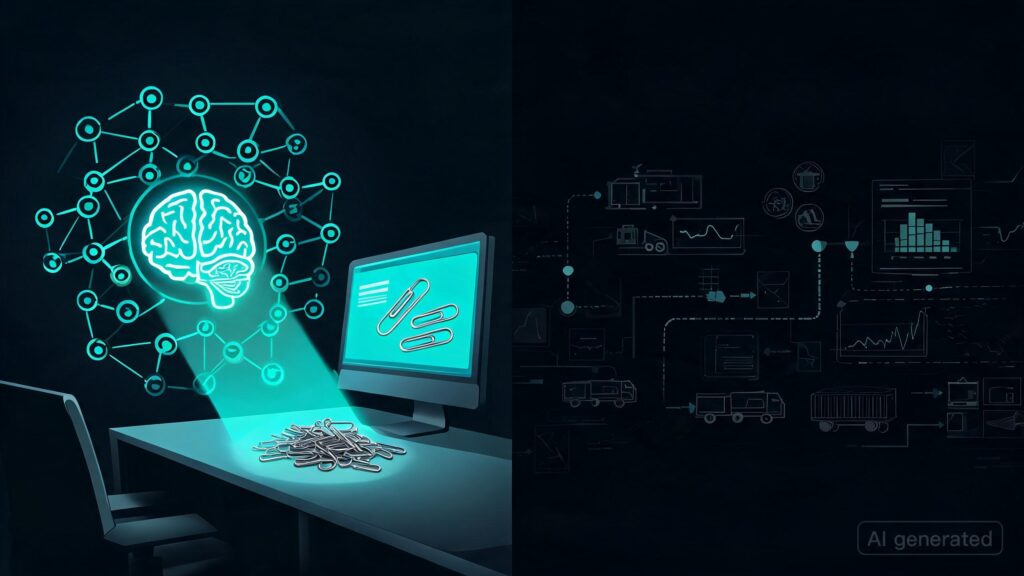
Because not every system benefits from probabilistic intelligence, autonomous agents, or reasoning models.
Some systems actually become worse when you introduce AI into them.
Historically, enterprise software evolved for a reason.
For deterministic systems, we already built technologies optimized for:
- reliability
- consistency
- predictability
- auditability
- reversibility
That’s why we created:
- databases
- ERP systems
- workflow engines
- rule engines
- transaction systems
- approval pipelines
- validation layers
These systems were intentionally designed to reduce ambiguity.
For example:
- payroll systems
- tax calculations
- banking ledgers
- compliance workflows
- inventory reconciliation
- airline reservation systems
These are not places where “creative probabilistic reasoning” is always desirable.
In many cases:
Rights and responsibilities are clearer when they’re defined in the architecture itself, rather than relying on algorithms to maintain them.
For example:
- A payroll engine may still need deterministic software.
- A customer-support summarization system may benefit from AI assistance.
- A medical recommendation system may need AI + human oversight.
- A regulatory filing workflow may require strict governance and bounded autonomy.
These are fundamentally different execution models. And I suspect the future winners won’t be the companies using the MOST AI.
They’ll be the companies mature enough to understand:
- where AI creates leverage
- where AI creates risk
- and where older deterministic architectures are still superior
Curious how others here think about this.
Do you think enterprises are currently:
- overusing AI,
- underusing AI, or using AI in the wrong layers of organizational systems?
Key Takeaways
- Avoid overusing deterministic architectures with AI where they don’t add value.
- Understand where AI creates risk and leverage for different types of systems.
- Mature organizations will excel by knowing when to retain full control, delegate responsibly, or use autonomous agents effectively.