Apple has released a beta version of its rebuilt Siri assistant. The software runs on Google’s Gemini models but will not launch in the European Union or China at this time.
The rollout and technical setup
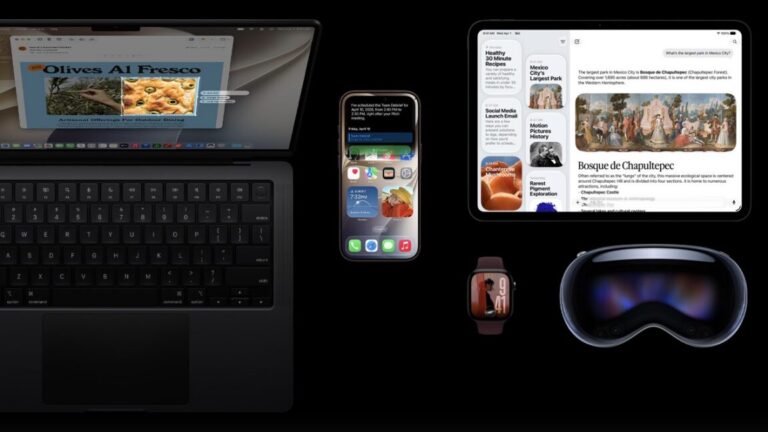
The update arrives after years of postponement. Apple states that the new system, branded as Siri AI, is currently available in English only. Support for French, Japanese, Korean, Portuguese, and Spanish will follow next month. These features are part of the 2027 software releases for iOS 27, iPadOS 27, macOS 27, watchOS 27, and visionOS 27.
The models operate partly on the device and partly through Private Cloud Compute. Apple claims personal data is neither stored nor made accessible to the company.
A different foundation than before
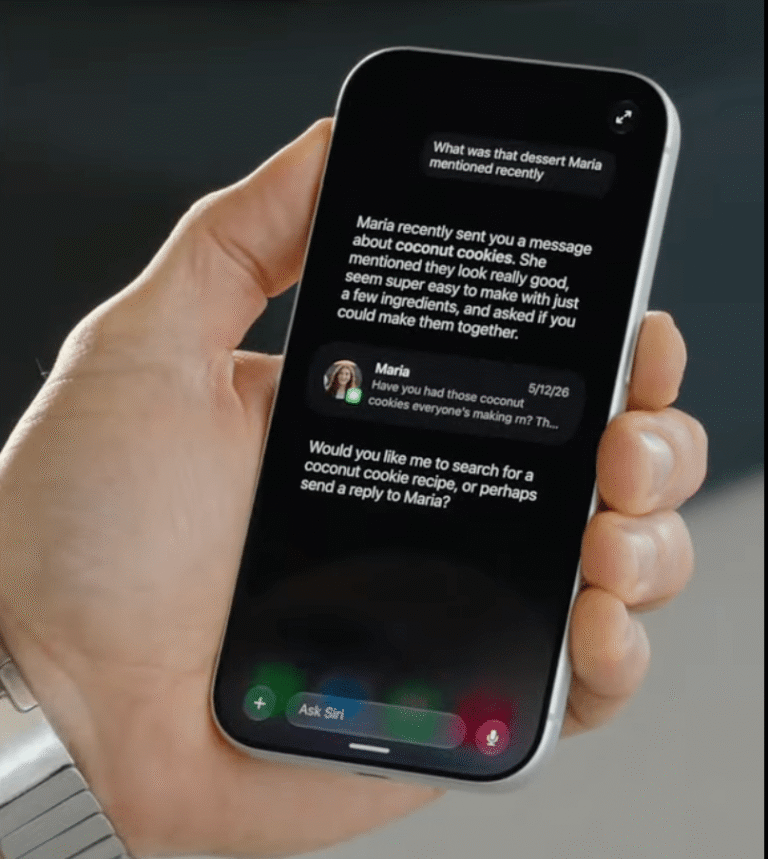
The new assistant is designed to understand personal context from messages, emails, and photos. It can read screen content and pull information from the web. Through system-wide actions, it can draft emails or edit and share photos. Apple cites an example of searching for a family recipe mentioned in Messages, then having Siri move the ingredients into the Reminders app.
Beyond Apple’s own apps, Siri works with third parties like WhatsApp and Audible, and soon Outlook, Notability, and Tripsy.
Users can invoke the assistant with “Hey Siri,” the side button, the Dynamic Island, and on iPad and Mac through Spotlight. A dedicated Siri app syncs chat histories over iCloud. Apple is also adding new voices and a reworked dictation feature that the company says runs on the on-device model AFM Core Advanced.
AI features spread across the system
Beyond Siri, Apple is scattering AI features across the system. The Photos app gets tools like Spatial Reframing, Extend, and a reworked Clean Up. Image Playground now creates photorealistic images through Private Cloud Compute and is set to support the SynthID standard for labeling AI images.
Safari sorts tabs by topic and flags website changes. Shortcuts can be described in plain language. Later this year, Apple will add Audio Intelligence features for the Apple Watch Series 12 and Ultra 4, along with a redesigned Health app.
Reports from early testers
TechCrunch editor Ivan Mehta, who has been testing iOS 27 since the beta, describes the new Siri as a step forward. He now uses the assistant again for multi-step requests and screen context, after giving up on Siri like many users before. Early developer builds did have hiccups, though, such as filing notes in the wrong place.
Six Colors reaches a similar verdict. Dan Moren reports everyday wins, like the time Siri found an older podcast episode over CarPlay based on its topic alone. He still warns about misunderstandings and hallucinations, and finds the constantly offered writing help a bit pushy at times. Overall, he says Siri AI mostly lives up to Apple’s promises, just several years late.
MacStories is more critical on a core feature. Federico Viticci praises how Siri reads screen content, but reports that it repeatedly failed to answer questions about personal context, even though the information was sitting in his messages. Some of the answers were out of date.
The EU and China are left out for now
Siri AI and every feature built on it won’t be available in the EU on iOS, iPadOS, and watchOS at first, Apple says. The company says it’s working on a path that protects users’ privacy and security. The feature also won’t launch in China while regulatory requirements remain open.
Certain server-side features come with daily usage limits, and expanded access is set to cost money down the line.
What it means
For people making things, the change is that the assistant can now act on context found within your own apps and messages. This allows for tasks like moving recipe ingredients to a reminder list without manual input. However, the reliance on cloud processing means the service is unavailable in regions with strict data laws, such as the EU, until Apple resolves those concerns.