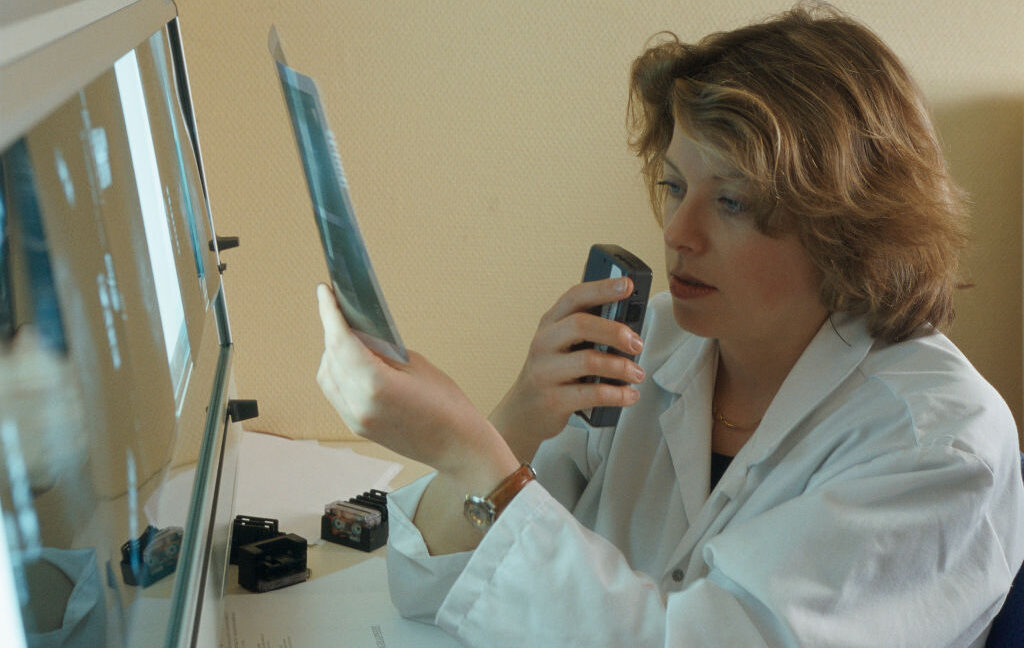
Geoffrey Hinton predicted in 2016 that computers would replace radiologists within five years. That forecast has not come to pass, yet the profession is undergoing a significant shift in how work gets done. Radiology remains the primary sector for artificial intelligence adoption in healthcare, with roughly three-quarters of Food and Drug Administration-approved AI medical devices as of early 2026 dedicated to reading scans. While the number of radiologists is expected to grow by 26 percent over the next three decades, the nature of their daily tasks is changing because software now matches or exceeds human performance on specific imaging tasks.
The practical impact lies in efficiency gains and the detection of abnormalities that might escape human observation. Some tools draft reports to save time, while others flag urgent cases for immediate attention. Advanced systems can identify polyps during colonoscopies more effectively than conventional methods, suggesting a future where physicians spend less time on routine screening and more time on complex decision-making. This dynamic positions radiology as a bellwether for how expert systems will integrate into other medical fields.
* Three-quarters of cleared AI medical devices target radiology as of early 2026
* Software now matches or exceeds human performance on specific imaging tasks
* AI-assisted colonoscopies reveal more polyps than conventional procedures