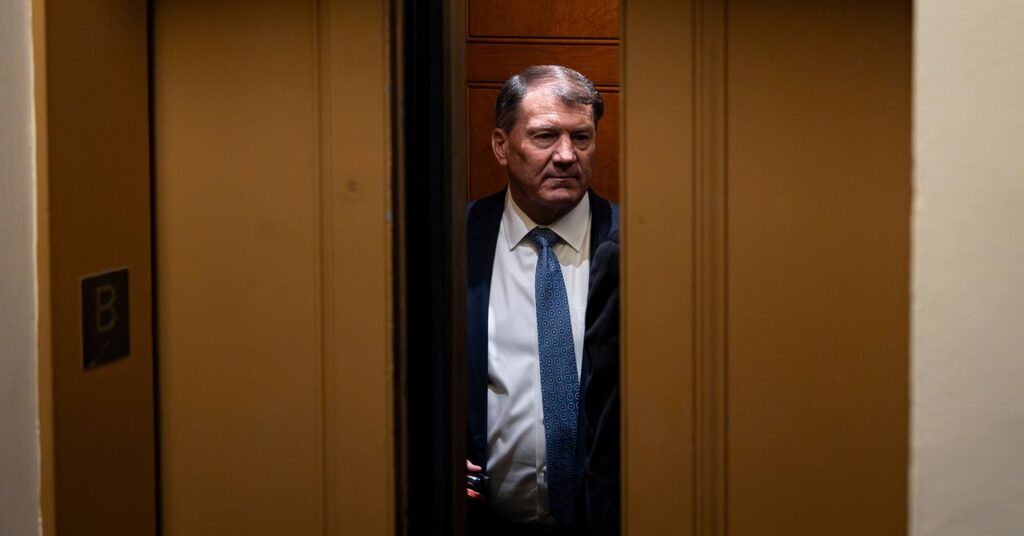
Super PACs linked to artificial intelligence laboratories and venture capital investors have spent nearly $1 million backing incumbent Republican Mike Rounds in his South Dakota Senate bid.
Rounds has received approximately $600,000 from outside groups during this election cycle. The majority of that sum came from Defend American Jobs, a super PAC funded by Andreessen Horowitz. Another $215,000 arrived directly from employees and super PACs connected to AI labs, notably Anthropic, alongside contributions from Google and Microsoft, according to Federal Election Commission filings.
With fewer than 50 days remaining before the November midterms, polls show Rounds ahead of independent candidate Brian Beng. The independent field shrank after Democratic candidate Julian Beaudion dropped out last month.
Rounds has secured more money from technology groups than from donors within South Dakota. This spending marks a new attempt by AI labs to deploy large war chests to influence difficult questions regarding AI and the data centres that power it. Congressional aides familiar with the matter say AI executives view Rounds as a top supporter of the industry. That relationship could prove crucial in the next Congress when AI regulation is expected to become a priority.
The spending also reflects how AI labs are focused on keeping allies. Such support has been in short supply on Capitol Hill as lawmakers introduce a raft of bills in response to public anxiety around AI safety.
A spokesperson for Rounds did not respond to a request for comment.
On Thursday, Leading the Future, a super PAC funded in part by OpenAI president Greg Brockman, investors Ben Horowitz and Marc Andreesen, announced it would spend $2 million supporting a list of Senate Republicans supportive of the AI or crypto industry. Rounds was on that list.
In South Dakota, AI regulation is already a live issue. The state legislature passed a bill earlier this year forcing hyperscalers to bear a larger share of the water and energy costs associated with powering data centres.
Data centres have been the subject of a bitter fight among Republicans in the state legislature. They voted against giving tax breaks for equipment and software purchases required by data centres earlier this year. That move stalled construction of a planned development by Applied Digital, a company that builds and designs data centres.
Rounds ultimately endorsed adding restrictions on data centres. However, his senior aide and former chief of staff, Robert Skjonsberg, is a registered lobbyist for Meta for matters before the South Dakota legislature. Meta operates a network of data centres, though there is not currently a Meta-affiliated centre in South Dakota. Rounds’ office told Politico that their general counsel consulted with the Senate ethics committee about the unusual arrangement and was told there was no conflict of interest.
Concerns about data centres have been bipartisan across the country. A recent Gallup poll found seven out of 10 Americans are opposed to data centre development. This opposition stems from the outsized draw upon water and energy resources that local communities often end up subsidizing.
What it means
For people making things, this money signals that AI companies are willing to fund politicians who protect their operational interests. The focus is shifting from abstract safety debates to concrete issues like water usage and energy costs. If Rounds wins, he may have more leverage to block local restrictions on data centre construction.