A paper in the Journal of the American Medical Association asserts that AI will soon surpass human doctors in five core medical tasks. The authors, including Ezekiel Emanuel and Vinod Khosla, argue that autonomous systems will deliver superior outcomes by 2030. They state that humans in the loop degrade AI performance and that clinicians should step back to let algorithms handle medical histories, diagnoses, test identification, prescriptions, and chronic disease management.
The authors’ background
Emanuel, chair of the Department of Medical Ethics and Health Policy at Penn, admits he dismissed the idea for years. He believed medical work was too complicated for machines. Khosla, a venture capitalist, had been predicting that AI would perform 85 percent of doctor duties by 2035. Khosla wrote a 2012 piece in TechCrunch asking if doctors were needed and published a 101-page treatise in 2016 supporting that view.
Robert Wachter, head of medicine at UCSF, sent Emanuel galleys for his book A Giant Leap. Wachter outlined a future where first-class medicine involved collaboration between AI and doctors, while economy-class care relied on AI alone. Emanuel began to wonder what would remain for physicians if machines took over the core functions.
The study
Emanuel and Khosla, along with Neal Khosla and Emanuel’s researcher, reviewed all available studies on AI in medicine from January 2024 to the present. Neal Khosla runs Curai Health, an online company that uses AI to treat patients. The paper discloses potential conflicts of interest, including Khosla’s investments and Emanuel’s grants.
The coauthors concluded that superior autonomous AI will likely outperform humans using AI by 2030. Emanuel noted that less than four years had passed since ChatGPT was introduced. He argued that AI would be significantly more advanced than a doctor within four years.
Opposition
John Whyte, CEO of the American Medical Association, challenged the paper’s findings. He noted that some studies were simulations rather than blind experiments. A February 2026 Nature article found that most patients could not effectively converse with large language models to access their expertise.
Whyte stated that the AMA sees potential in these tools but they must be used within a care plan governed by a physician. Wachter conceded the authors had a point. He acknowledged that while AI and humans together are currently better, there will be times when humans muck up the performance.
Human value
Wachter insisted that unique human attributes are vital. AI may never be as effective as a human when breaking news of a grim prognosis. Patients are more likely to be guided to the best path of treatment by a real-life clinician.
Wachter invoked the doorman fallacy. He compared the fear of automated doors to the fear that doormen would lose their jobs. Doormen perform myriad tasks and remain an invaluable presence in white-glove buildings. They accept packages, feed pets, and lend a sympathetic ear. Wachter believes doctors will find a similar role where they accept AI diagnoses but perform other functions with value.
De-skilling
What is displaced is hard-won expertise gained through years of training. Scenes in The Pitt where Dr. Robby relentlessly puts residents on the spot will no longer be necessary when AI provides instant answers. Physicians are on a path to relying so much on AI that their own judgment becomes less relevant.
This de-skilling process could accelerate the takeover of medicine. New generations of doctors may not find it necessary to spend years learning what they can find by querying an always-on AI expert. The AMA’s Whyte admitted that medical schools are debating whether physicians in training can use these tools. He questioned how one learns to take a medical history and do a physical if never taught those skills. Conversely, ignoring such a compelling tool could be seen as malpractice.
What it means
Khosla stated that doctors will be needed in the short term for surgery and emergency rooms. He argued they are largely expendable regarding expertise and judgment, except perhaps as debaters to improve AI systems. Neal Khosla expects regulatory permission to allow AI to prescribe medicine in coming years.
In the world of AI medicine, a Dr. House would be rendered homeless. AI will routinely apply its vast knowledge base to obscure ailments. The value of human clinicians will lie in elements where House was lacking, such as empathy and high-EQ communication. Hands-on procedures remain safe from AI encroachment, until robots figure that out.
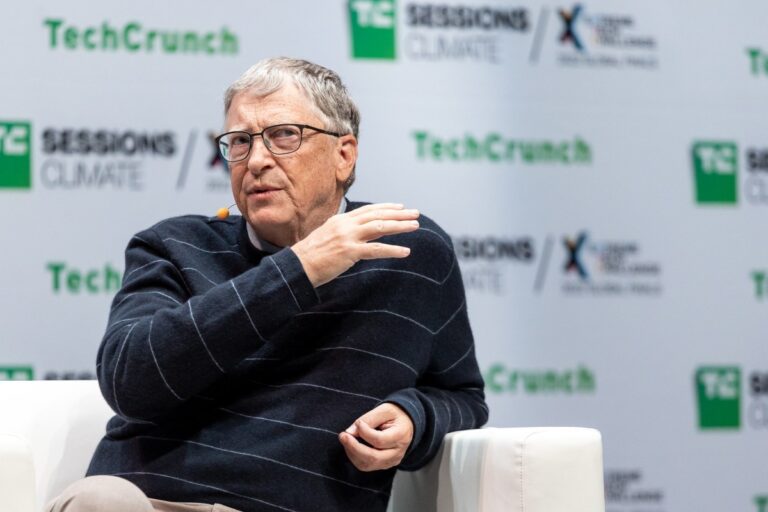
The question of what is left for doctors may expand to what is left for humans to do. Bill Gates suggested society might designate some tasks, like counselling patients on AI prognoses, as human-reserved to stave off economic ruin. At least the misery of the unemployed masses will be mitigated by first-class medical advice that is one click away.