A new theoretical study warns that artificial intelligence could degrade the quality of scientific research even as it increases output volume. Researchers from Princeton, the University of Washington and other institutions argue that because AI reduces the time required for tasks, scientists will prioritise starting new projects over finishing existing ones thoroughly.
The obvious hope is that if AI handles routine work, researchers will have more time to think. The assumption is that saved hours flow automatically into deeper analysis. The paper pushes back on that idea by treating language models as tools that cut time costs without introducing errors or significant financial expense. This setup isolates the pure effect of time savings from the technology’s known weaknesses.
A foraging model for scientific effort
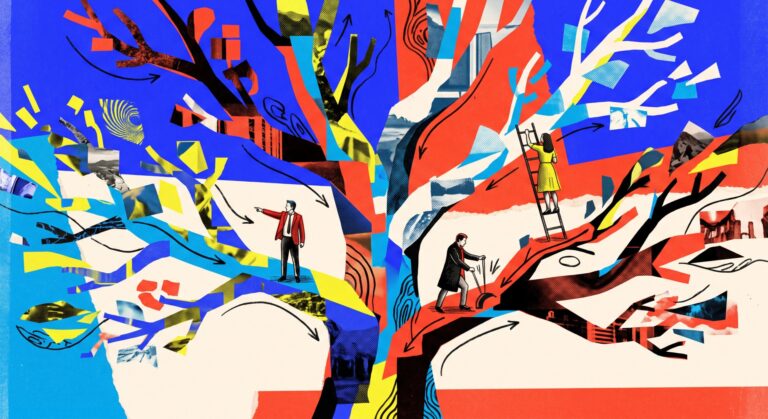
The authors built a mathematical model based on optimal foraging theory from behavioural ecology. This framework describes how organisms allocate effort across competing opportunities. Adapted to science, the model simulates how researchers distribute their labour across projects and what happens when language models shorten different phases of the project lifecycle.
In the model, a research project unfolds in two phases. The researcher first checks whether an idea is even viable, then decides whether to abandon it or push forward. Moving forward involves a mandatory part like creating figures, formatting text, and submitting, plus a voluntary part like running extra experiments, doing deeper analysis, or polishing the prose. That voluntary part is what gets sacrificed when time becomes scarce, they argue.
Two out of three scenarios lead to worse research
The paper lays out three scenarios depending on where AI gets applied in the research process. In the first, AI helps evaluate early ideas. Researchers become pickier because starting over is cheaper, so only the most promising projects move forward. But even those get less thorough treatment, since the time saved is better spent launching something new. The authors say this pattern is typical of technical fields.
In the second, AI helps with publishing by speeding up writing, formatting, and analysis. Because getting a paper out the door takes less effort, weaker projects become worth pursuing. More papers enter circulation, but each one ends up shallower. This pattern is typical of fieldwork-based disciplines.
Only in the third scenario does AI actually improve quality. Here, it speeds up the voluntary deep-dive phase, things like extra experiments or more careful analysis. Because AI targets the exact stage where researchers have always cut corners due to time pressure, the time savings translate into more thorough work.
In two out of three cases, then, thoroughness drops. When time becomes more valuable, polishing a paper that is already publishable no longer makes sense. That time is better spent on the next project.
The fallacy of saved time
“As a labor-augmenting technology, LLMs increase the opportunity cost of our time, impelling us to do more, less well—rather than the same amount, better,” the authors write. The idea that saved time automatically flows into deeper analysis does not hold up.
What the model describes in theory is already showing up in practice. A field report from OpenAI covering eight scientific case studies found up to 60x speedups when rewriting research software, but the bottleneck just shifted from coding to validation and long-term maintenance. The perceived time savings do not even have to be real to change behaviour. A METR study found that experienced open-source developers using AI tools actually took 19 percent longer to finish tasks, even though they felt 24 percent faster.
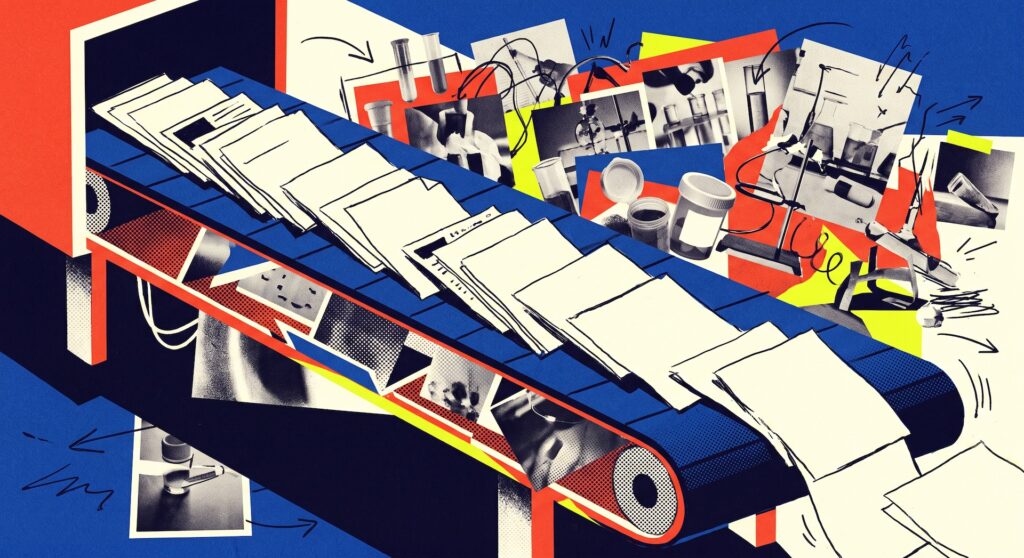
The friction is visible in the publication system, too. In fields where LLMs speed up writing, submissions are already climbing fast and straining the already overloaded peer review system. Sakana AI’s “AI Scientist-v2” pushed a fully AI-generated paper through an ICLR workshop, citation errors and all. Arxiv responded with tougher penalties, threatening a one-year submission ban for hallucinated sources or AI meta-commentary left in the text.
Institutional responses need to be discipline-specific, the paper argues, because AI’s effect on research is not a uniform acceleration. It depends on which phase of the process gets sped up. A recent study on software development describes a similar dynamic as a tragedy of the commons, where individual productivity gains come at the expense of the people who have to review and maintain the output later.
What it means
For scientists, the implication is that efficiency gains might not lead to better science. If tools make the initial steps cheaper, researchers may abandon the careful work that usually happens at the end. The system rewards speed, which incentivises quantity over quality unless institutions change how they value deep, voluntary phases of research.