For creators and developers, the latest moves from Anthropic signal a shift from experimental tinkering to industrial-scale deployment. As the company prepares for a public listing, the message is clear: the era of building models is giving way to the era of powering them. This transition means that the tools you use for coding, design, and content generation are about to become significantly more robust, backed by capital markets rather than just private pockets. The focus is moving toward reliable, high-volume inference that can handle the demands of professional workflows without the friction of limited compute.
Capital is the new bottleneck
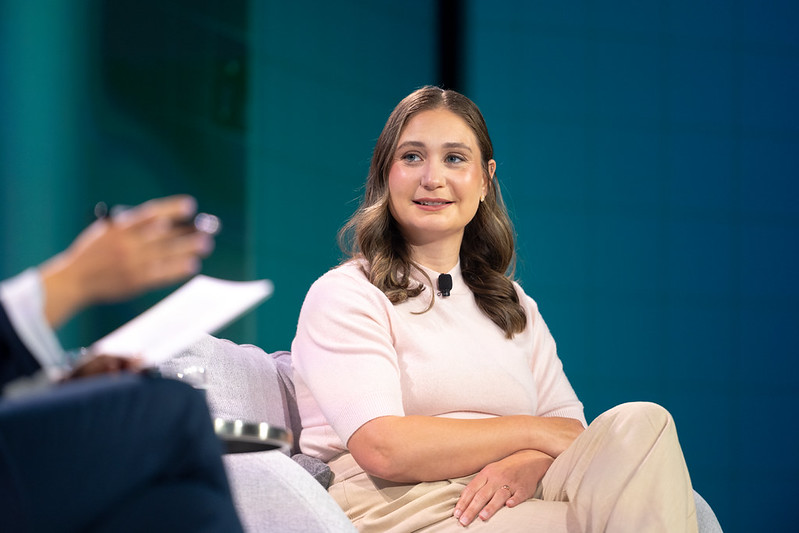
Private capital has been flooding in, with multiple investors reporting that Anthropic’s recent $65 billion raise at a $965 billion valuation was heavily oversubscribed. Despite this private enthusiasm, the company has filed confidentially for an initial public offering. Co-founder Daniela Amodei explained at the Bloomberg Tech conference on Thursday that the move is driven by the sheer cost of training models and serving inference. She noted that the core companies advancing the frontier will eventually require access to public markets to sustain their operations.
Growth trajectory faces a reality check
The company’s expansion has been rapid. Annualised revenue surpassed $47 billion in May, a massive jump from roughly $9 billion at the end of 2025. However, this growth faces scrutiny. Firms like Uber have admitted that while AI offers returns, not every dollar spent has been productive, suggesting corporations might start tightening budgets and slowing sector-wide expansion.
Amodei remains unfazed, arguing that businesses are still in the early stages of mastering effective AI deployment. “The use cases today, I expect will continue to be the primary driver of efficiency or creativity, whether that’s coding, financial services, legal, [or] health care,” she said. “But as the business community gets more familiar with the tools, we’re all going to learn together. My hope is that over time it’ll be more incorporated into the day-to-day of how humans do our work, and there will actually be a lot more value realised.”
A pragmatic approach to compute
Unlike competitors such as OpenAI or Elon Musk’s xAI, Anthropic does not operate its own data centres. Amodei explained that the company prefers to avoid overextending on compute purchases that might not yield productive returns. “Anthropic’s view has always been wanting to plan for the best outcome but not overextend ourselves such that we’re buying more compute than we could productively use,” she said. “It’s really hard to predict that perfectly. We would much prefer to be on the side of having a little bit more demand for the product than we’re able to serve than the inverse.”
This strategy recently took a surprising turn when the company partnered with xAI for compute capacity. The agreement, revealed in SpaceX’s S-1 filing last month, costs Anthropic $1.25 billion per month.
Key takeaways
- Anthropic’s shift to an IPO reflects a maturing industry where public capital is essential for sustaining the high costs of model training and inference.
- Revenue growth has been explosive, jumping from $9 billion to over $47 billion annually, yet corporate spending on AI remains under scrutiny for actual productivity gains.
- The company’s reliance on external compute partners, specifically a $1.25 billion monthly deal with xAI, highlights a pragmatic strategy to avoid over-investment in infrastructure.