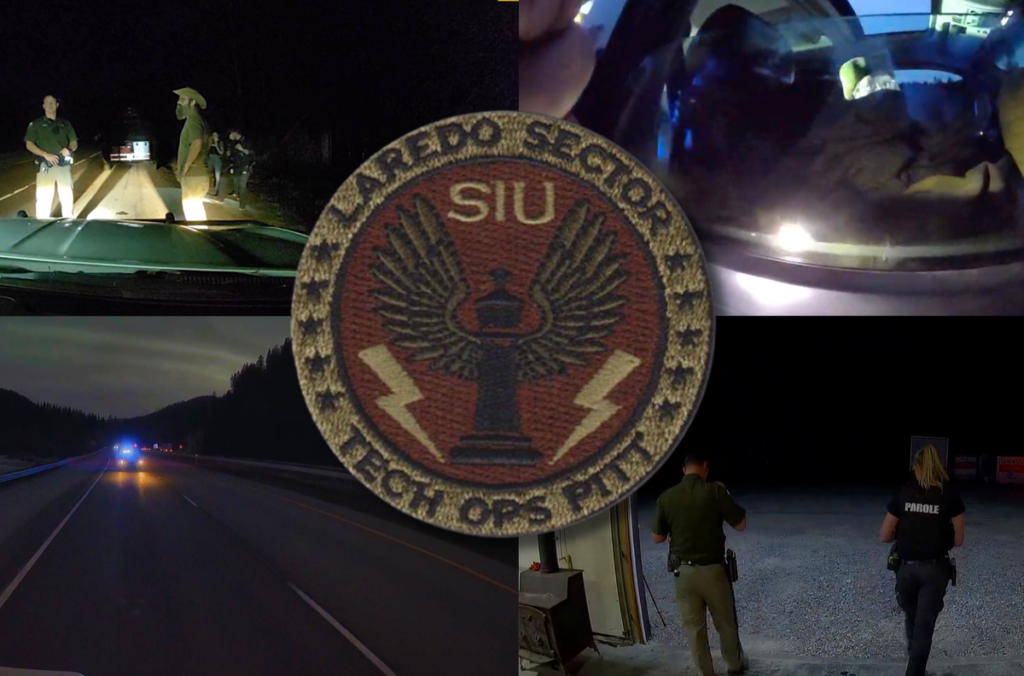
Border Patrol units are now analysing the financial habits of American drivers to decide who gets pulled over for traffic stops. 404 Media has identified these secretive Predictive Intelligence Targeting Teams (PITT) and secured documents showing how they operate.
How the stops work
One case involves Kyle William Olson, who was driving a black Chevy SUV across Montana in May. He was transporting marijuana edibles, cuttings, and butane hash oil from a licensed farm in California back to Wisconsin. His dog, Ducky, sat in the backseat.
At 9:30pm, Montana Highway Patrol Sergeant James Beck noticed the vehicle’s plate. Beck described it as obstructed by a tinted cover and a luggage holder. He pulled Olson over.
During the stop, officers asked Olson to step out and tested his blood. They charged him with a DUI. Later, authorities added possession with intent to distribute to the list of charges.
Bodycam footage shows Beck telling Olson the stop was due to the obstructed plate. “Just so you know, that’s our reason for stopping you,” Beck said.
That explanation was not the full story. During discovery in Olson’s case, he received a Department of Homeland Security document. It explained that Border Patrol Agent Matthew Phelps had instigated the stop. Phelps worked for the Spokane Sector Border Patrol Targeting & Intelligence Division (TID) — Predictive Intelligence Targeting Team (PITT).
The document states Phelps reviewed “law enforcement-sensitive databases” to build intelligence before passing it to local police. Specifically, he examined Olson’s financial activity. Phelps noted patterns in the data that he associated with illicit narcotics activity. He also checked Olson’s prior arrest record and criminal history.
Phelps sent this intelligence to Sergeant Beck to support interdiction efforts. In his own report, Beck wrote that Phelps had identified indicators of possible narcotics trafficking in the vehicle. Beck used the obstructed plate as the pretext to pull Olson over.
The Associated Press previously reported that Border Patrol uses automatic license plate readers as part of this same predictive policing programme. A CBP spokesperson said the agency uses intelligence-informed analysis to identify threats. They declined to answer what specific financial data is being monitored or whether warrants are obtained. The spokesperson added that operational security prevents the discussion of specific analytical methods or data sources.
Other sectors involved
The documents reveal a second unit exists in the Laredo Sector, which polices the border with Mexico. In a 2022 case, Alek Schott was pulled over on Interstate 35. Authorities claimed he drifted between lanes and tore apart his vehicle. The Institute for Justice, which represented Schott, said they found nothing.
Dockets for that case show conversations between law enforcement officials. One participant’s phone number leads to a WhatsApp profile with a law enforcement patch. The patch reads “Laredo Sector Tech Ops PITT,” confirming the team’s presence there.
Border Patrol operates 20 sectors. Customs and Border Protection declined to say if the other sectors also run PITT units.
What it means
Jake Laperruque, deputy director of the Security and Surveillance Project at the Center for Democracy & Technology, told 404 Media that the government cannot create genuine probable cause. “Here Border Patrol seems to be ‘using parallel construction to cloak the reason behind its car stops in secrecy,'” he said. Laperruque added that without the ability to review and evaluate these systems, public trust is impossible.
Rob Frommer, a senior attorney at the Institute for Justice, called the increasing use of mass surveillance a recipe for tyranny. He argued that these schemes treat all Americans as potential suspects. Frommer stated the practice is unconstitutional and said the Institute for Justice will continue to push courts and Congress to end it.