For creators and artists working in digital biology and evolutionary visualization, this discovery signals a shift in the foundational imagery used to depict life’s history. For decades, educational media and creative tools have relied on the frog-and-tadpole model to explain how vertebrates conquered land. The new data suggests that the earliest pioneers did not undergo a dramatic metamorphosis, meaning future visualisations of these ancient creatures should reflect a more consistent anatomy from hatchling to adult rather than a radical transformation.
A century and a half of biology needs updating
Modern humans and all land-dwelling vertebrates trace their lineage back to four-limbed tetrapods that migrated from the oceans. Standard biology curricula have long taught that these early animals adapted to terrestrial life through a life cycle mirroring modern amphibians: an aquatic larval stage, such as a tadpole, followed by metamorphosis into an amphibious adult.
Researchers at the Field Museum in Chicago sought direct evidence of this process by examining extremely rare fossils of hatchlings that bridge the “fin-to-limb” transition. They looked specifically for markers like external gills, which appear on tadpoles and are absorbed as the animal develops lungs. To their surprise, the team found no evidence of a transient larval phase in these early animals, effectively disproving the hypothesis that metamorphosis is an ancestral trait.
“There’s still this sense that these [tetrapods] had this gilled larva that is fundamentally and anatomically different from the terrestrial adult,” said Jason Pardo, a research associate at the Field Museum and a postdoctoral fellow at Vilnius University in Lithuania, who co-led the study.
Pardo noted that while the idea of a fish-like baby transitioning to land makes intuitive sense, the assumption has never been backed by direct evidence. He explained that the lack of information previously prevented scientists from confirming the direction of this evolutionary shift.
Unearthing the hatchlings
To close this gap in knowledge, Pardo and Arjan Mann, the Field Museum’s assistant curator of early tetrapods, combed through public museum archives and private collections. They were looking for fossils that captured the early hatchling phase of primordial tetrapods.
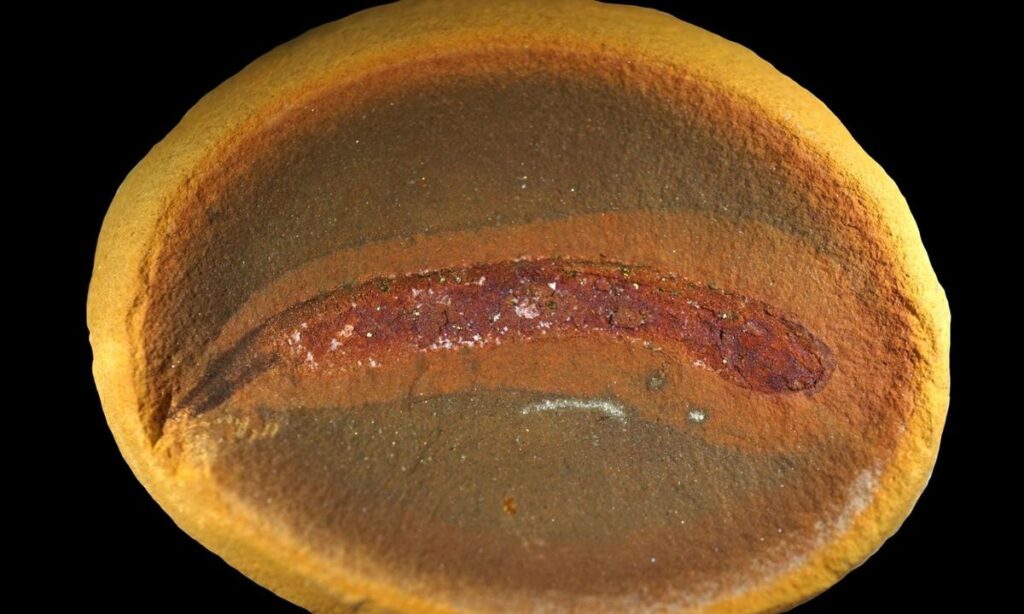
These specimens are exceptionally rare because the baby animals were small with developing bones, requiring perfect conditions to survive fossilisation. However, the pair located a handful of significant finds sourced from the Mazon Creek fossil beds in northern Illinois. This site preserves incredibly detailed snapshots of life from approximately 310 million years ago, marking the tail end of the fin-to-limb transition.
- Two embolomeres, which were crocodile-like predators.
- A snake-like aïstopod.
- Several megalichthyid fish.
Some of these tetrapods were so young when they died that their fossils retain abdominal yolk, proving they were still feeding off their egg reserves before becoming independent. The study describes this collection as “the most phylogenetically extensive sample of stem tetrapod early developmental stages to date.”
“We’ve been trying to look at the smallest animals that we can get out of these sites, where we can actually get very early stage babies,” Pardo said. “This is after the initial transition from water to land, but we have animals that span that transition.”
When the team began analysing the fossils, they expected to see clear signs of metamorphosis. Instead, they found none. External gills, for instance, are a hallmark of the metamorphosis seen in frogs and toads, appearing on freshly hatched tadpoles before being absorbed. The hatchlings showed no signs of these gills or any other features on the checklist for a transient larval phase.
Implications for evolutionary theory
The findings suggest that early tetrapods possessed roughly the same basic anatomy throughout their entire life cycle. This evolutionary strategy likely delayed the transition to land for much longer than previously assumed, as the animals slowly acclimated to a terrestrial habitat.
Amphibian-style metamorphosis probably emerged well after tetrapods had established a foothold on land. It may have evolved later to help them maximise their colonisation of diverse new environments, rather than being a necessary condition for leaving the seas in the first place.
In addition to overturning conventional wisdom, the fossils offer a glimpse of the ancient trailblazers that took the first steps into a new realm hundreds of millions of years ago. These tetrapods became the progenitors of all vertebrate land animals. The exquisite preservation in some cases includes eyes, skin, and even colour patterns, providing intimate details of living animals from a long-lost past.
“They look like they were around yesterday,” Pardo said. “You can see skin. Sometimes the animals have color patterns preserved. You can see the lenses in their eyes. You can see these really intricate and intimate details of these animals. You can understand this was a living animal. It’s there.”
Key takeaways
- The discovery of rare hatchling fossils from 310 million years ago disproves the long-held theory that early land vertebrates underwent a frog-like metamorphosis.
- Research from the Field Museum indicates that these ancient tetrapods likely maintained a consistent body plan from birth to adulthood, challenging 150 years of evolutionary teaching.
- Amphibian-style metamorphosis appears to be a later evolutionary adaptation rather than the original mechanism that allowed vertebrates to leave the water.
- The Mazon Creek fossil beds provided the definitive evidence needed to visualise the true anatomy of these primordial creatures, offering a more accurate picture of life’s history.