For creators and artists, the reliance on unverified algorithmic matches in law enforcement mirrors the dangers they face when using generative AI tools that hallucinate facts. Just as a digital sketch can misidentify a subject, flawed police software can destroy a life, turning a simple mistake into a career-ending arrest. The case of Robert Dillon illustrates how easily these systems can derail reality, leaving victims to rebuild their reputations from the ground up.
A 93 per cent match that wasn’t him
Robert Dillon, a 52-year-old commercial crabber based in Fort Myers, Florida, found himself at the centre of a legal storm after being detained for allegedly trying to lure a child. The accusation stemmed from an incident in Jacksonville Beach, more than 300 miles from his home, where Dillon claims he had never set foot. Despite this geographical disconnect, police relied on a facial recognition match that proved fundamentally flawed.
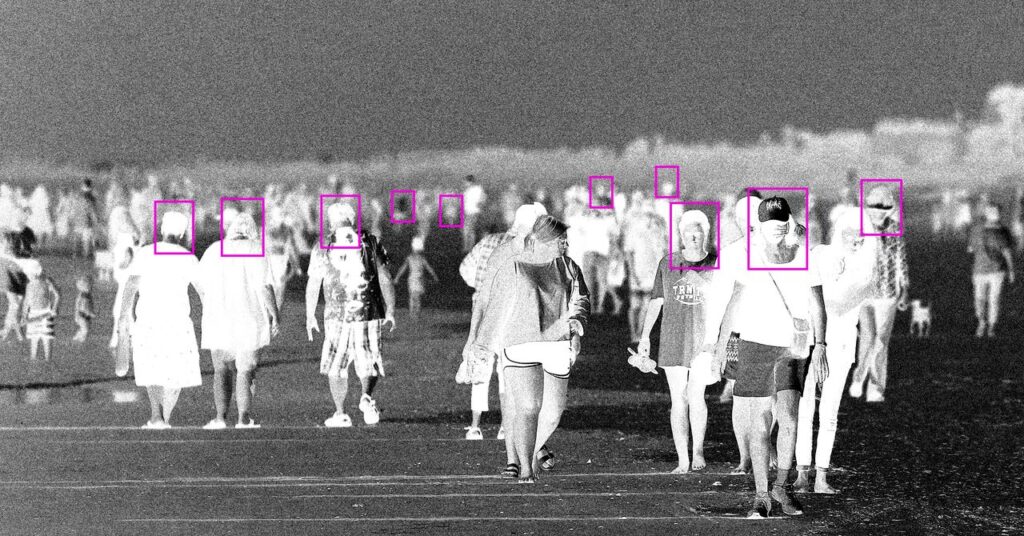
The identification was generated by FACES, a system operated by the Pinellas County Sheriff’s Office. According to internal investigatory notes, the software returned a “93 per cent match on facial features” between a photo of Dillon and surveillance footage of a man seen on a cellphone. It is crucial to understand what that number actually signifies: it measures visual similarity between two images, not the probability that they depict the same individual.
FACES is a massive repository holding tens of millions of mugshots and driver’s license photos across Florida. As one of the longest-running police face recognition databases in the United States, it has been in continuous operation since 2001. At its height in 2021, the system was accessible to over 260 agencies, including the FBI and ICE.
The human cost of an algorithmic error
The consequences for Dillon were immediate and severe. The American Civil Liberties Union (ACLU), which filed the lawsuit on his behalf, describes a night where he was arrested at his home in front of his wife, held overnight in a cold cell, and transported in a dark, caged van. To secure his release, he pledged the title to his truck as bond.
The timing of the arrest coincided with peak stone crab season, a critical period for his income. The disruption caused him to fall behind on rent and nearly lose his home. The digital stigma was equally damaging; his mugshot remained online for nearly a year, only being removed after a television reporter intervened.
The emotional toll has lingered. Dillon now reports that strangers approach him in public to ask about the case, and he has become uncomfortable interacting with children. In a statement released by his attorneys, he expressed the lingering trauma of the event: “I will never get over how terrified and worried I was, wondering if I’d ever go home to my wife and daughter again.” He added that over a year later, he is still picking up the pieces of his life, all because police relied on dangerous technology instead of conducting a proper investigation.
Facts that were ignored
The incident occurred shortly before midnight on 2 November 2023, at a McDonald’s in Jacksonville Beach. A man allegedly approached a girl under 12 and repeatedly asked her to leave with him. When she refused, he approached her a second time, prompting her to call for her mother. The suspect fled before police arrived.
Several pieces of evidence pointed away from Dillon, yet they never reached the judge who authorised the arrest warrant. A McDonald’s manager told investigators that the suspect was a “regular customer” she had seen multiple times. Dillon, however, had never visited Jacksonville Beach, living hundreds of miles away.
Despite this, a Jacksonville Beach police officer sent an attempt-to-identify bulletin to surrounding agencies using cellphone photos from the surveillance footage. A sergeant with the Jacksonville Sheriff’s Office (JSO) ran the images through FACES and returned the “93 per cent match” for Dillon. The investigating officer subsequently requested a search of license plate readers for two vehicles registered to Dillon, covering the days surrounding the incident. Neither vehicle appeared in the county, according to the complaint, yet these results were omitted from the warrant application.
Six months passed with no further investigation. In July 2024, the officer submitted the warrant, which a judge signed. Dillon was arrested the following month. He retained a criminal defence attorney and pleaded not guilty in October. The State Attorney’s Office dropped all charges a few weeks later. Despite the exoneration, the investigating officer was promoted by the end of the year.
Systemic failures and lack of accountability
The lawsuit names the investigating officer and the JSO sergeant individually, as well as the City of Jacksonville Beach, the Jacksonville Sheriff, and the Pinellas County Sheriff in their official capacities. It seeks compensatory and punitive damages and requests a court order for all three agencies to overhaul their face recognition policies.
When contacted, a Jacksonville Sheriff’s Office spokesperson stated: “Due to pending litigation, we would be unable to comment further on the incident.” The Pinellas County Sheriff’s Office did not immediately respond to a request for comment.
Ironically, Jacksonville Sheriff T.K. Waters told local news station Action News Jax after the charges were dropped that a facial recognition hit alone does not constitute probable cause in his office. He stated: “If you came to me with a facial recognition hit and that was your probable cause, I would probably kick you out of my office.”
However, the lack of oversight remains a critical issue. A 2016 study by Georgetown Law’s Center on Privacy and Technology found that the Pinellas County Sheriff’s Office conducted no audits of how the database was searched and required no reasonable suspicion to run a query. When asked whether the office audited searches for misuse, Sheriff Bob Gualtieri replied, “No, not really.” Reporting by the Sun Sentinel and Pulitzer Center indicates that Florida agencies have also used FACES to scan peaceful protesters.
A pattern of harm
The ACLU asserts that Dillon’s case is one of at least 15 known wrongful arrests in the United States attributed to face recognition technology. Earlier this year, the same Jacksonville Sheriff’s Office wrongfully arrested a man from North Carolina in an auto theft investigation. According to Action News Jax, he spent nearly three months in jail after an 85 per cent match led to his arrest. By the time charges were dropped, he had lost his home, his job, and custody of his two children.
Nate Wessler, deputy director of the ACLU’s Speech, Privacy, and Technology Project, emphasised the broader implications: “No one should lose their freedom or be scared to leave their house because an algorithm got it wrong.” He called on Florida police departments to make amends and adopt safeguards to prevent future wrongful arrests.
Wessler added that police across the country are on notice: “Unreliable face recognition technology is hurting people, and we will keep fighting to hold them accountable for these abuses.”
Key takeaways
- Robert Dillon was wrongfully arrested and nearly lost his home due to a 93 per cent facial recognition match that failed to account for his location or lack of prior presence in the area.
- Despite the exonerating evidence of license plate readers showing no matches and the sheriff’s own admission that such hits do not equal probable cause, the investigating officer was promoted.
- The FACES system, one of the oldest in the US, has operated with little oversight since 2001, contributing to at least 15 known wrongful arrests across the country.
- Legal action seeks to hold individual officers and agencies accountable while demanding a complete overhaul of facial recognition policies to prevent future abuses.