Integrating cameras into Apple’s next generation of earbuds would fundamentally alter the dynamic between users and their devices. For any maker or artist relying on these ubiquitous accessories, the presence of lenses would introduce a constant, intrusive question: am I being recorded right now? This shift moves beyond simple audio capture into the realm of passive surveillance, challenging the core trust that underpins the Apple ecosystem.
Reports from Bloomberg’s Mark Gurman suggest that Apple is currently testing camera-equipped AirPods to grant Siri visual capabilities, allowing the assistant to “see” the wearer’s environment. These prototypes are reportedly in the final stages of internal trials as part of a broader corporate push toward artificial intelligence hardware.
Despite this progress, a source who declined to speak publicly due to non-disclosure agreements indicates that Apple is likely to postpone the launch of camera-enabled earbuds. While the physical hardware appears ready, the software intelligence driving the cameras is not yet sufficient. Furthermore, executives are concerned about the significant privacy risks introduced by earbuds with lenses, noting a lack of compelling use cases that justify the intrusion. Apple has not yet commented on these reports.
Why Cameras? Navigation, Shopping, and Smarter Siri
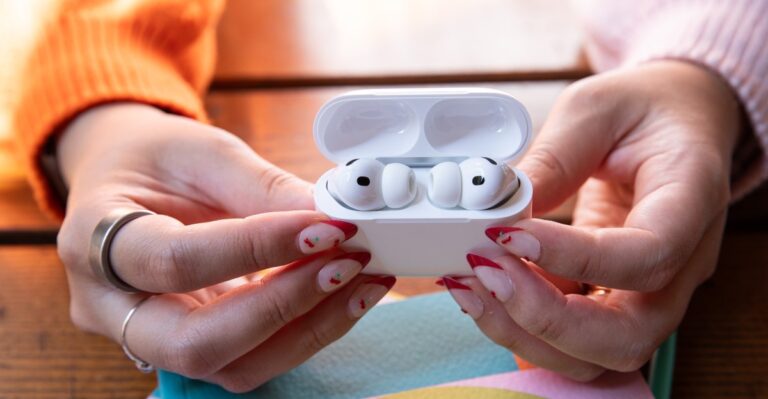
The primary motivation for adding cameras lies in creating a more context-aware assistant. According to Gurman, these devices would feature larger stems to accommodate low-resolution cameras, effectively acting as eyes for Siri to provide visual context for spoken commands. Unlike smart glasses, these are not designed to record video or take photographs. Potential applications include landmark-based navigation and identifying food items to assist with grocery shopping.
“Vision-based location is the most obvious one,” explains Anshel Sag, principal analyst at Moor Insights & Strategy. “It’s got to be a very passive kind of experience, and that’s why I think using it for location-based accuracy, to rectify GPS, makes sense.” Google is similarly employing cameras in its upcoming smart glasses to determine a user’s bearing when navigating via Google Maps.
Other features would likely mirror those found in current smart glasses. Peter Richardson, vice president at Counterpoint Research, highlights the utility of standing before a refrigerator and asking an AI assistant for dinner suggestions, a scenario where data from multiple devices converges.
“That’s something that requires visual information,” Richardson notes. “There’s lots of context: Is it the middle of the week? Have I got training in the morning? Is it a Friday when maybe I like to have a glass of wine? Are my friends over?” When paired with the Apple Watch, visual data could make Siri significantly more intuitive. “If I’m in Paddington Station and I’m running, maybe I’m late for a train, so maybe don’t send a call to me,” he adds.
There are also notable accessibility applications. 9to5mac suggests that an all-seeing Siri via AirPods, potentially incorporating infrared capabilities, could enhance Image Explorer and Voice Over features for visually impaired users. A critical detail still missing is whether the cameras would face forward or outward toward the world. Gurman does indicate that a small LED light would illuminate when visual data is being transmitted to the cloud.
Visual Data for AI Training
At first glance, the strategy might seem like a straightforward data collection effort. As major technology firms and startups advance beyond text-based large language models into imaging, mapping, and robotics, Apple’s affordable accessory could become a mass-market equivalent to Google’s StreetView cars.
“Getting information in, visual or even acoustic, that’s new information that’s never really been used to train AI,” Richardson says. “But it’s only useful if it can then be used to train it.”
Apple currently lacks a foundational model to rival OpenAI‘s GPT or Google’s Gemini, relying instead on partnerships with those companies. “I actually think that they will still develop their own models, so this could give them the data to do that,” Sag observes. “For most intelligent AI devices, having vision is extremely important. But Apple is so privacy-conscious, and that’s been a big part of their marketing for quite some time now, that it’s a very difficult tightrope for them to balance.”
If Apple were to share visual data with Google-following their agreement to embed Gemini into Apple products-Richardson suggests that privacy policies would require rigorous anonymization and “radical cleaning” of personal data from future AirPods. An alternative would be to process low-resolution camera feeds entirely on the earbuds or the user’s iPhone for basic contextual cues, though the technical feasibility of this approach remains uncertain.
Then there is Private Cloud Compute, Apple’s server-based AI system utilising a more complex LLM for heavier requests. This infrastructure operates via Apple’s cloud, running on custom Apple Silicon servers within PCC-specific data centres with end-to-end encryption. The trajectory of this Private Cloud Compute infrastructure over the next five years, relative to the speed and scale of hyperscalers, will be a key decision-making factor for Apple CEO John Ternus, impacting everything from artificial intelligence to privacy and climate commitments.
A Stepping Stone to Glasses
The final rationale for experimenting with camera-laden earbuds is to prepare designers, engineering teams, and customers for the long-rumoured Apple glasses, which could launch with two built-in cameras. With AirPods representing one end of the spectrum and the Vision Pro the other, Apple might be approaching the smart glasses problem from both directions: a low-cost accessory and a high-end home system.
The AirPods would serve as “the entry level for what they would consider a multimodal AI,” Sag says. “Just having the sensors, for even Gemini to have access to, will become more useful. I think smart glasses continue to be the right target because they have that vision aspect, but also they’re close to your ears and mouth.”
Qiran Ju, a senior analyst at Omdia, is more optimistic, viewing this as a logical step in research and development. AirPods are “more context-aware than a phone, but potentially lighter and more familiar than glasses,” he notes. He sees them fitting naturally into Apple’s “broader spatial computing strategy.” He points out that Apple has promoted spatial photos and videos for the Vision Pro, and camera-enabled AirPods could capture “first-person immersive image and video”-provided this functionality is enabled.
There is a more cynical perspective that Apple is spending capital to secure patents on various wearable and post-smartphone designs to block competitors. The biggest mystery remains what will emerge from the collaboration between Jony Ive and OpenAI. Aside from a rumored OpenAI phone with an advanced image signal processor, will we see a smart GPT earbud? An AI pendant? An audio product? Smart glasses? Or all of the above in one ecosystem?
The Copycats
Apple has the ability to legitimise whole categories of consumer technology before a product is even released; rumours and leaks alone can shift global hardware roadmaps. If we do not see a cohort of copycat camera-enabled AirPods this year, they will likely appear at next year’s CES, predicts Sag.
For Ju, based in Shanghai, the concept was already in the air during a recent trip to Shenzhen. “This exact topic came up in several meetings,” he says. Chinese companies, including the Lenovo-backed Guangfan Technology, VibeLens (Shenzhen Ruibao Intelligent Technology), and Mozin have “already launched or explored camera-enabled earbuds” and headsets.
There are practical reasons why adding cameras to AirPods may not be the smartest move. One is battery life: AirPods already lag behind their closest competitors on stamina, favouring lighter, more comfortable designs. Adding camera sensors requires more space within the chassis and more power to run.
“There’s no room in there at all, and you have a very limited battery,” Sag says. “So you’re not going to want that camera to be on more than it needs to be, which then defeats the purpose. I would nix it, target the Max first, and see how that works.” In a University of Washington paper published in April, researchers added cameras to Sony WF-1000XM3 and AirPods Pro 2 earbuds and tested them out. The results: The battery life was roughly halved, with a run time of just over three hours for the AirPods 2.
After years of delays, we will likely see talk of an enhanced Siri at WWDC next week, with more to come in September at the annual iPhone event. Keep an eye on whether Apple execs start to lay the groundwork for a tweaked accessory that might not be obviously helpful on day one.
“The idea of cameras in AirPods is a bit odd,” Richardson says. “If you’ve got long hair, they’d be useless.” And Sag says he’s against the idea. “It never really made a lot of sense to me.”
Key takeaways
- Apple is reportedly delaying camera-equipped AirPods because the visual intelligence software is not yet mature enough to justify the significant privacy risks involved.
- The primary use cases focus on passive navigation and contextual shopping assistance rather than recording video, though the hardware constraints are severe.
- Adding cameras could halve battery life on current models, forcing Apple to either target the Pro Max line or rely on on-device processing to maintain user trust.
- This initiative likely serves as a research step toward future Apple glasses and a way to gather visual data for training Apple’s own artificial intelligence models.