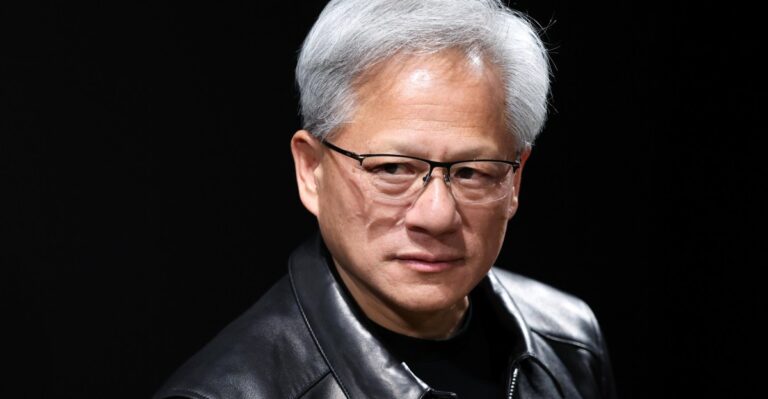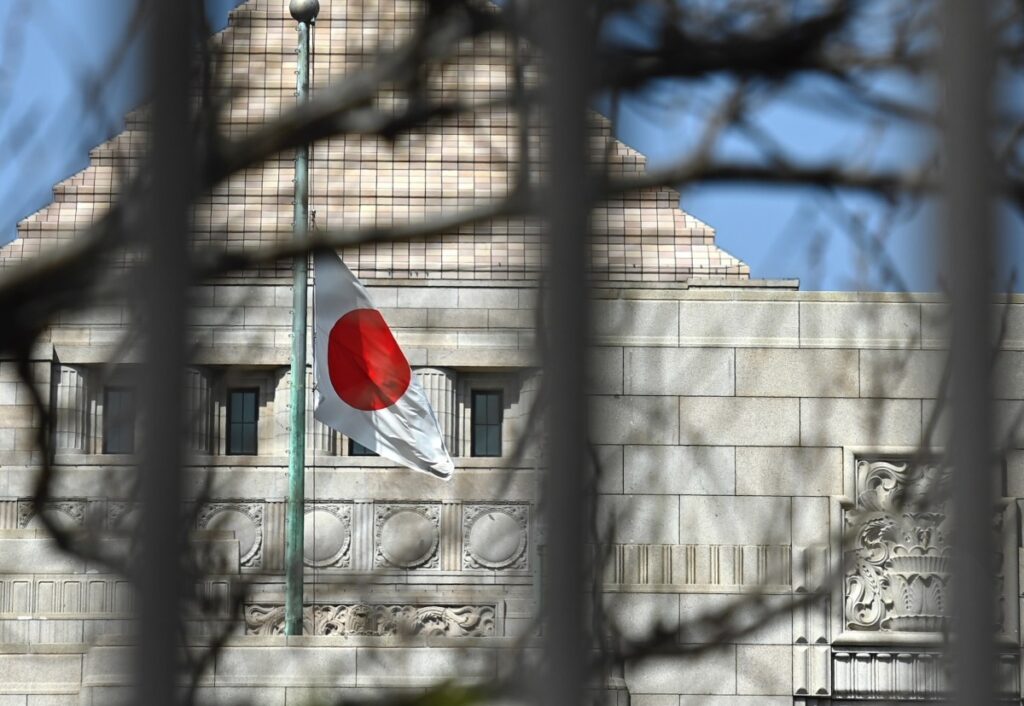
Jensen Huang spent July 15 and 16 in Tokyo to secure deals across the Japanese industrial sector, including a national AI factory, partnerships with leading robotics firms, and agreements with chip-material suppliers.
The visit followed a keynote in Taiwan and a trip to South Korea. Huang stated that the next phase of artificial intelligence belongs to factory floors, robots, and machinery. He wants Japan to build it.
Thirty years ago, a $5 million investment from Sega kept a near-bankrupt Nvidia afloat. Today, Nvidia and Japan’s industrial giants require one another to build the physical-AI era. Three projects define this partnership:
Noetra — Japan’s sovereign-AI play
The government has gathered roughly 44 domestic firms, with SoftBank, Sony, NEC, and Honda at the core, to build AI for robots, vehicles, and factory floors. Tokyo is committing up to 1 trillion yen ($6.2 billion) over five years to this homegrown “physical AI” initiative. The goal is to own the software brain, though the hardware remains sourced from Nvidia.
The U.S. chip giant is constructing a Vera Rubin AI factory. This data center will launch in 2028 with 13,750 Vera CPUs and 27,500 Rubin GPUs, delivering 140 megawatts. Noetra will oversee the effort and build the facility.
The plan operates in three stages. Fiscal 2026 launches a reasoning model emphasising Japanese-language skills. By 2028, an omni-modal version handles text, images, video, and audio. By 2030, “Real-world Native AI” built to run robots will be released to external developers in phases.
The robotics coalition
Fanuc, Yaskawa, Kawasaki Heavy, Fujitsu, Hitachi, NEC, Sony, SoftBank, Kubota, and robotics group AIRoA plan to build on Nvidia’s Cosmos models. Nvidia launched this open-model effort in May with several global AI labs.
During the visit, Nvidia unveiled Cosmos 3 Edge, a version of the model running on Jetson Thor chips inside machines. Some partners are already testing a shared control system. Honda R&D and Omron are building on the tools currently available.
Huang issued a company statement. “The next frontier of AI is in the physical world, and this is a once-in-a-generation opportunity for Japan,” he said. “Japan invented modern manufacturing. Now, it has the opportunity to reinvent it for the age of intelligent industries.”
Toyota — cars and physical AI
Toyota uses Nvidia chips across much of its stack. In January 2025 at CES, the company committed its next-generation vehicles to Nvidia’s Drive platform. This newer work extends Nvidia into manufacturing simulations, vehicle software, and road-traffic reading systems.
Toyota’s cars will run advanced driver assistance that steers and brakes but still requires a driver. This is a more conservative approach than Waymo and Tesla, which are developing systems that rely less on a human operator.
Why it matters
Huang’s visit placed physical AI at the centre of Japan’s industrial strategy. Tokyo is spending to back it. Facing a shrinking workforce, Japan aims for 10 million AI-equipped robots across 18 sectors by 2040, backed by $65 billion in public and private physical-AI investment.
The longer game is bigger. Japan’s AI Robotics Strategy, released in March, aims to capture more than 30% of the global AI robotics market by 2040. Tokyo values this market at roughly ¥20 trillion, or about $133 billion. METI is funding a domestic foundation model to run the machines. Noetra’s Nvidia-powered factory is where models of that scale, into the trillions of parameters, would be trained.
Underneath the industrial pitch is a sovereign one. As the U.S. and China pull ahead in large-scale AI, Tokyo wants its own data, its own compute, and less dependence on infrastructure it does not control. Huang appeared on July 16 alongside trade minister Ryosei Akazawa at the government’s physical-AI launch. Prime Minister Sanae Takaichi joined by video.
The Takaichi administration has made AI and semiconductors the centerpiece of a growth plan chasing ¥370 trillion ($2.3 trillion) in public and private investment by 2040. Noetra’s factory, which Nvidia bills as “the world’s first national AI infrastructure”, is the clearest bet yet. Japan’s push for independence, at least for now, rests on American chips.
Working the whole room
In two days, Huang sat across from nearly every name that matters in Japanese tech. He met with the CEOs of Toyota, Fanuc, Yaskawa, Fujitsu, and Kawasaki over lunch. He also met dozens of supply-chain chiefs over skewers and whisky in a Kanda izakaya.
It is the same playbook he ran weeks earlier: a homecoming keynote in Taiwan, fried chicken, and a 50,000-GPU deal in Seoul last fall. This time, it was Tokyo’s turn, with the robots, the supply chain, and the chips underneath.