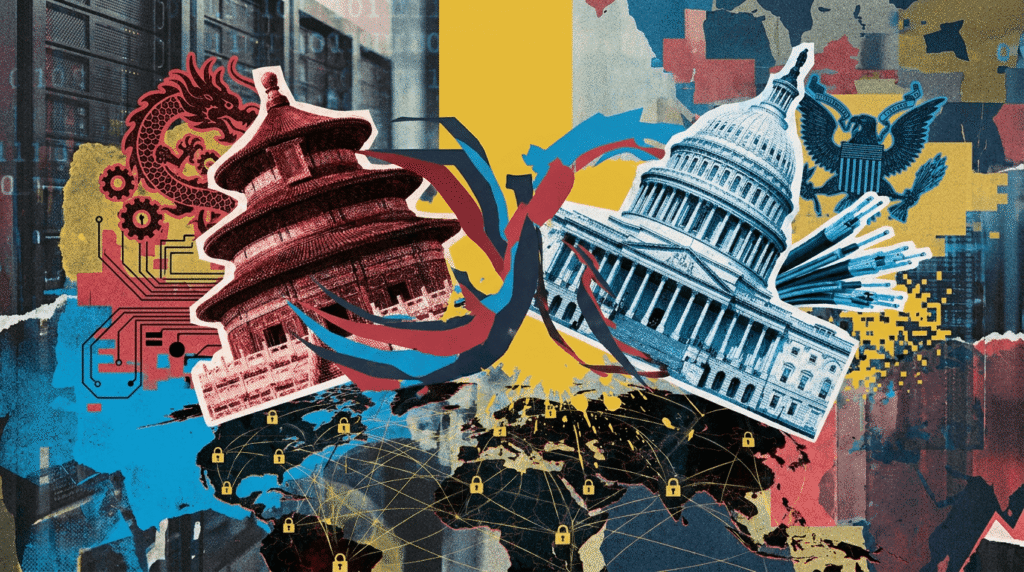
A State Department draft reviewed by Reuters warns that to be part of everything is to be part of nothing. Washington plans to send this letter to partner nations, effectively demanding they choose between the US-led Pax Silica coalition and Beijing’s competing framework. The initiative, launched last year, aims to secure supply chains for AI models, semiconductors, and critical minerals. About two dozen countries have signed on, alongside the EU. Kazakhstan currently belongs to both groups, holding large reserves of minerals vital for high-tech supply chains. In July, Chinese President Xi Jinping launched the rival World Artificial Intelligence Cooperation Organization. This body promotes China’s open-weight AI models as an alternative to US systems from OpenAI and Anthropic. China’s embassy in Washington pushed back on these plans, arguing such moves would slow global AI progress and serve no one’s interests.
The friction highlights how geopolitical strategy is reshaping technical infrastructure. Access to advanced chips and raw materials now depends on diplomatic alignment rather than just market demand. Nations risk isolation if they attempt to maintain relationships with both rivals. The US seeks to consolidate control over the hardware required for large language models. Beijing offers an alternative ecosystem for developers seeking to avoid US export restrictions. This split creates a binary choice for countries with limited strategic bandwidth.
* Kazakhstan remains the only known state in both coalitions.
* The draft letter explicitly excludes nations joining China’s initiative.
* China’s new organisation promotes open-weight models against closed US systems.