Ted Cruz’s Senate Commerce Committee meets on Wednesday morning to review five bills focused on age verification and child safety. The partisan Republican SCREEN Act stands out as the most aggressive, imposing requirements that effectively target the entire internet rather than just adult sites.
The scope of the legislation
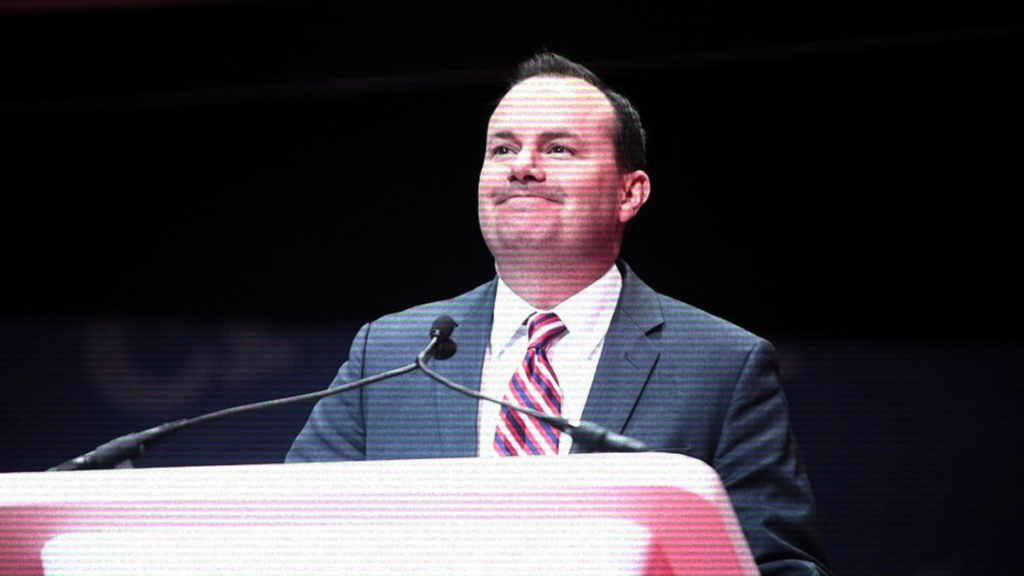
Utah Senator Mike Lee introduced the Shielding Children’s Retinas from Egregious Exposure on the Net (SCREEN) Act in February 2025. He brought along Republican cosponsors John Curtis, Jim Banks, and Representative Mary Miller.
The bill mandates that any website hosting content deemed “harmful to minors” must verify visitor ages. The definition of harmful content is broad, covering material that depicts or describes sexual acts, lewd exhibitions of genitals, or content appealing to prurient interests in nudity, sex, or excretion. It also includes material described as obscene or child pornography.
Current laws generally apply to sites where at least one third of the content is adult material, such as dedicated porn sites or some social platforms. The SCREEN Act changes this by placing the burden and risk of age verification on every website falling under the law. This includes most platforms with user-generated content and mainstream entertainment services like Netflix.
The legislation also attacks virtual private networks (VPNs). It requires sites to verify users based on IP addresses. Many people currently use VPNs to avoid submitting sensitive personal data, such as government IDs or biometrics, to third-party verification services. Critics argue this move creates a privacy and free speech disaster.
The ideological drivers
The stated goal of the sponsors is clear. Jim Banks said in a press release: “Internet pornography has infected our culture and corroded the vulnerable minds of America’s kids, with the average age of initial exposure being 12 years old. That’s appalling.”
A number of religious, conservative, and Christian nationalist groups support the bill. The National Center on Sexual Exploitation is among them; the group recently represented a Kansas mother who sued multiple porn sites after her son watched Chaturbate on her old laptop. Other supporters include the National Decency Coalition, the Ethics and Public Policy Center, the Family Policy Alliance, and the Family Research Council.
Heritage Action, a conservative lobbying group listed as a supporter, is a sister organization to the Heritage Foundation. The Heritage Foundation authored Project 2025, a playbook that has influenced right-wing leadership and lawmaking in recent years. This influence ranges from attacks on diversity and equity programs to measures affecting trans and queer people, and efforts to turn the FBI into a political entity.
Project 2025 explicitly states a goal to redefine and eradicate pornography. The document argues that pornography has no claim to First Amendment protection and calls for the imprisonment of pornographers, educators, and librarians. It also suggests that telecommunications and technology firms facilitating its spread should be shut down.
Related bills and the broader context
The Senate Commerce Committee will also debate the Youth AI Privacy Act, which would require chatbots to disclose they are not human. The committee will review the CHATBOT Act, mandating “family account” systems for parents to monitor children’s activity, and the Children’s Artificial Intelligence Toy Safety Act, which would fund a federal study of AI components in toys.
The committee will also tackle the Kids Online Safety Act (KOSA). KOSA would impose a legal duty of care on social media platforms to prevent and mitigate issues such as suicide, eating disorders, substance abuse, and sexual exploitation. Introduced multiple times since 2022, the bill has bipartisan lawmaker support but remains extremely unpopular among free speech advocates due to its potential to increase censorship.
The Electronic Freedom Foundation noted that when platforms face liability for content that contributes to harms like anxiety or substance use, the safest response is to remove lawful speech or shut down forums discussing those topics altogether.
A partisan effort
Unlike KOSA and other age verification laws spreading across the country, the SCREEN Act lacks bipartisan support. It is the latest in Lee’s repeated attempts to criminalize content his co-sponsors consider immoral. Last year, Lee introduced the Interstate Obscenity Definition Act (IODA) for the third time. IODA would update the 1973 “Miller Test” to make all pornography illegal at the federal level.
“Obscenity isn’t protected by the First Amendment, but hazy and unenforceable legal definitions have allowed extreme pornography to saturate American society and reach countless children,” Lee said. “Our bill updates the legal definition of obscenity for the internet age so this content can be taken down and its peddlers prosecuted.”
What it means
For people making content or running websites, the SCREEN Act introduces a high-stakes compliance burden. If a platform hosts even a single piece of content that fits the broad definition of “harmful,” it must implement age verification for all users. This forces mainstream entertainment services and social platforms to collect sensitive user data or risk heavy liability. The requirement to verify by IP address complicates this further, potentially forcing users to abandon privacy tools like VPNs or face access blocks. For creators, the risk of having accounts shut down or content removed under the threat of obscenity laws creates a chilling effect on expression.