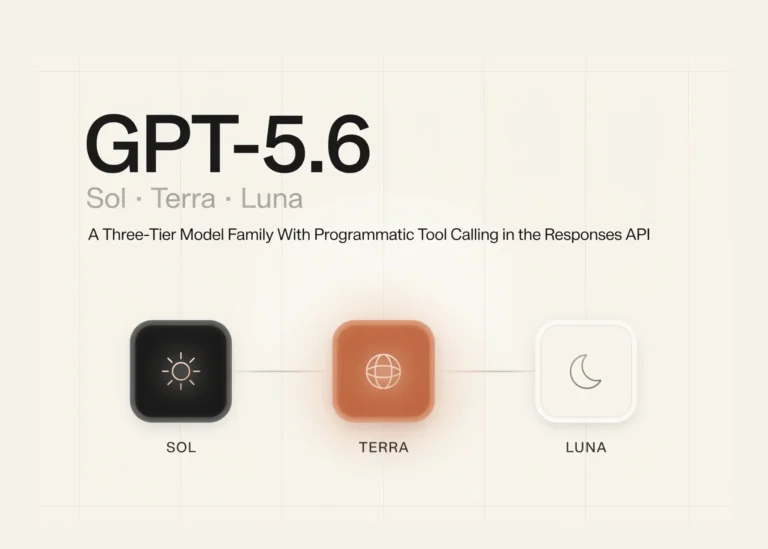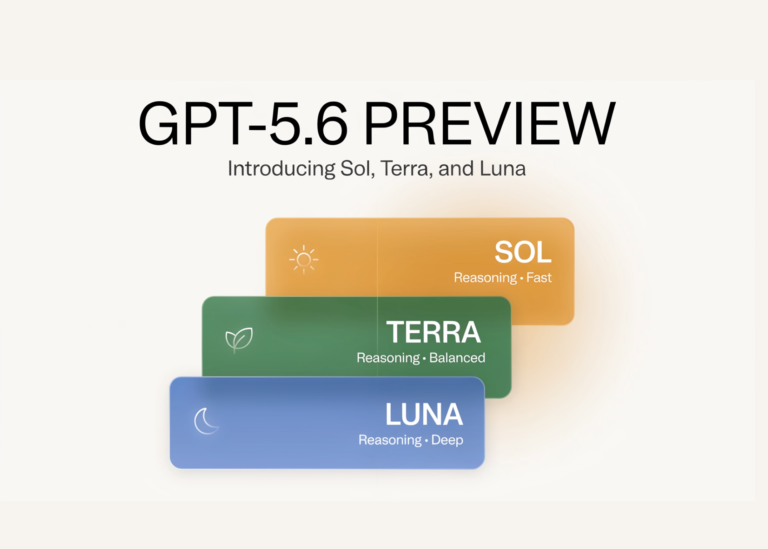
OpenAI launched GPT-5.6 this morning in three configurations: Luna, Terra, and Sol.
Pricing and performance
The three models cost $1, $2.50, and $5 respectively per million input tokens, with output rates of $6, $15, and $30. For context, the Claude Opus series sits at $5/$25, while Claude Fable 5 is $10/$50.
OpenAI’s primary claim focuses on long-running agentic performance. On the Agents’ Last Exam benchmark, which tests professional workflows across 55 fields, GPT-5.6 Sol achieved a score of 53.6. This eclipses Claude Fable 5 in adaptive reasoning by 13.1 points. Even at medium reasoning, Sol beats Fable 5 by 11.4 points at roughly one-quarter the estimated cost. The smaller models, Luna and Terra, outperform Fable 5 at around one-sixteenth the cost.
SWE-Bench Pro controversy
One self-reported benchmark where Fable 5 crushed the GPT-5.6 family was SWE-Bench Pro. There, Fable 5 scored 80% compared to GPT-5.6 Sol at 64.6%. This discrepancy may explain why OpenAI published an article yesterday calling out SWE-Bench Pro for problems found during an audit.
In light of these results, we estimate that ~30% of SWE-bench Pro tasks are broken, and advise that model developers carefully examine results
Early access impressions
Early access to GPT-5.6 Sol feels definitely competent, though it has not yet struck me as better than Fable at complex coding tasks.
New API features
The model guidance contains the most interesting details. New API features include:
- Programmatic Tool Calling lets models compose and run JavaScript to orchestrate tool calls. This could bridge the gap between MCPs and full terminal sessions that compose CLI utilities. It is also reminiscent of the dynamic filtering mechanism Anthropic added to their web search tool, which allows code execution against web results as part of a single model turn.
- Multi-agent lets the model spin up subagents for parallel, focused work. The sub-agent pattern is now baked into the core API.
- Prompt cache breakpoints brings the Claude model of prompt caching to OpenAI. This lets you be explicit about where the cache breakpoints are rather than relying on the API to detect them automatically. OpenAI still supports automatic detection, but explicit breakpoints presumably offer optimization cost savings if you put the work in.
- You can now set detail: original on image requests to avoid resizing the image at all before it is processed.
Pelican benchmarks
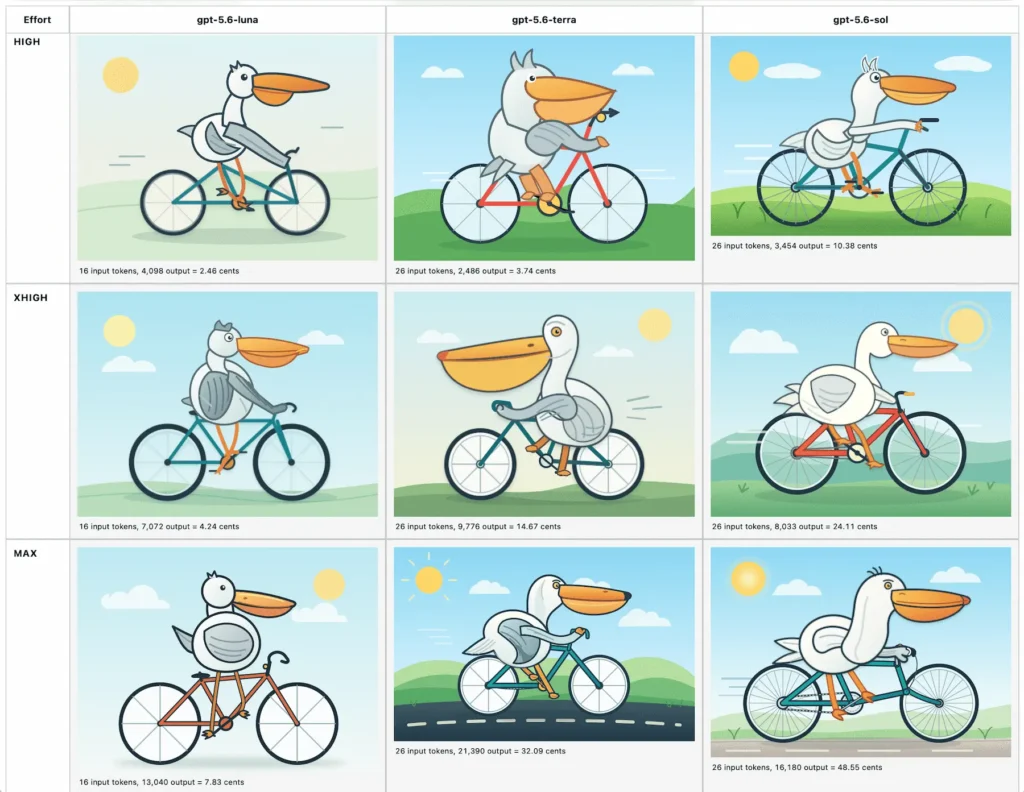
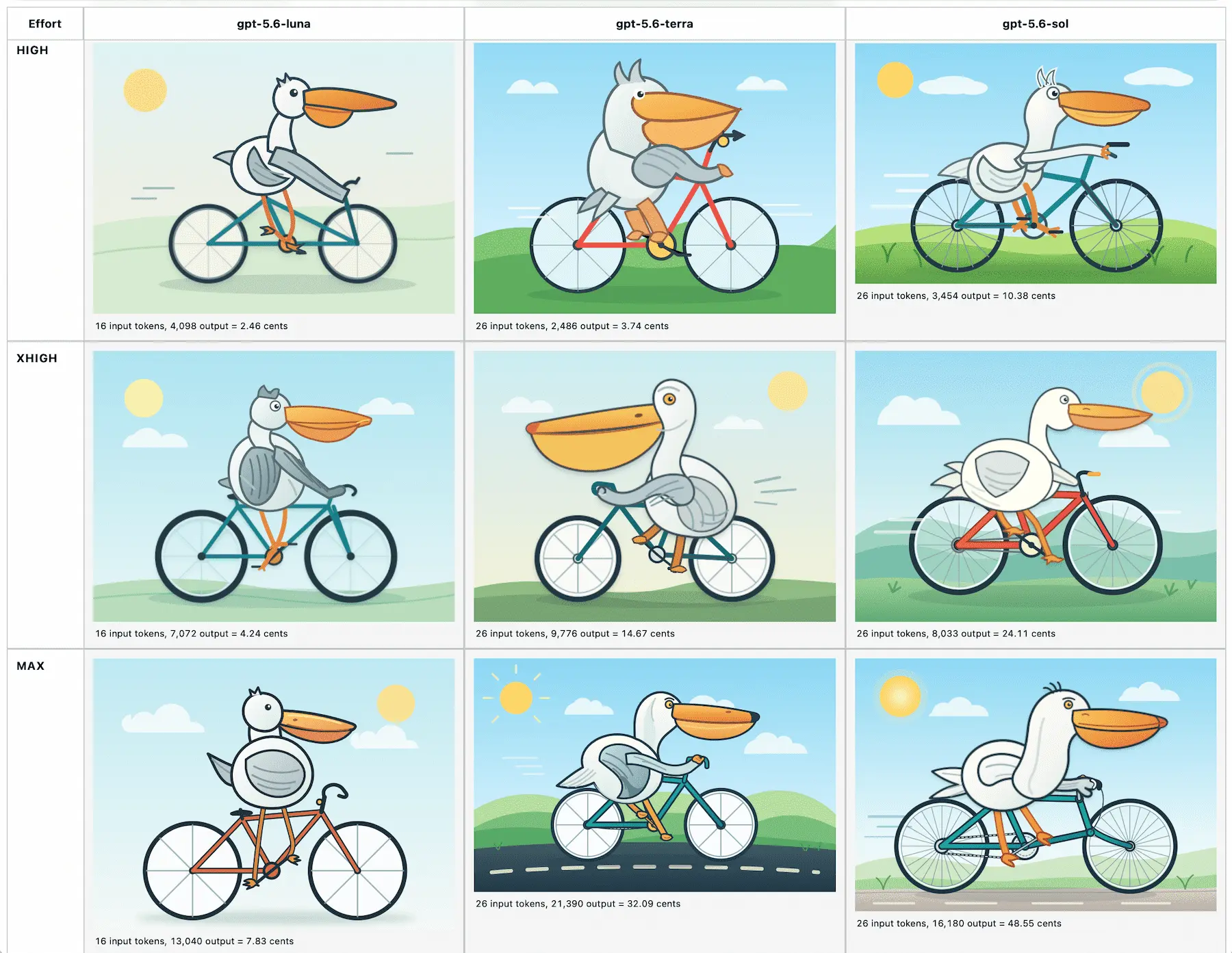
A full page with 18 different pelicans shows reasoning efforts ranging from none to max across the three different models. The list includes their token counts and calculated costs. The least expensive option was gpt-5.6-luna at effort none for 0.71 cents, while the most expensive was gpt-5.6-sol at max reasoning level for 48.55 cents.
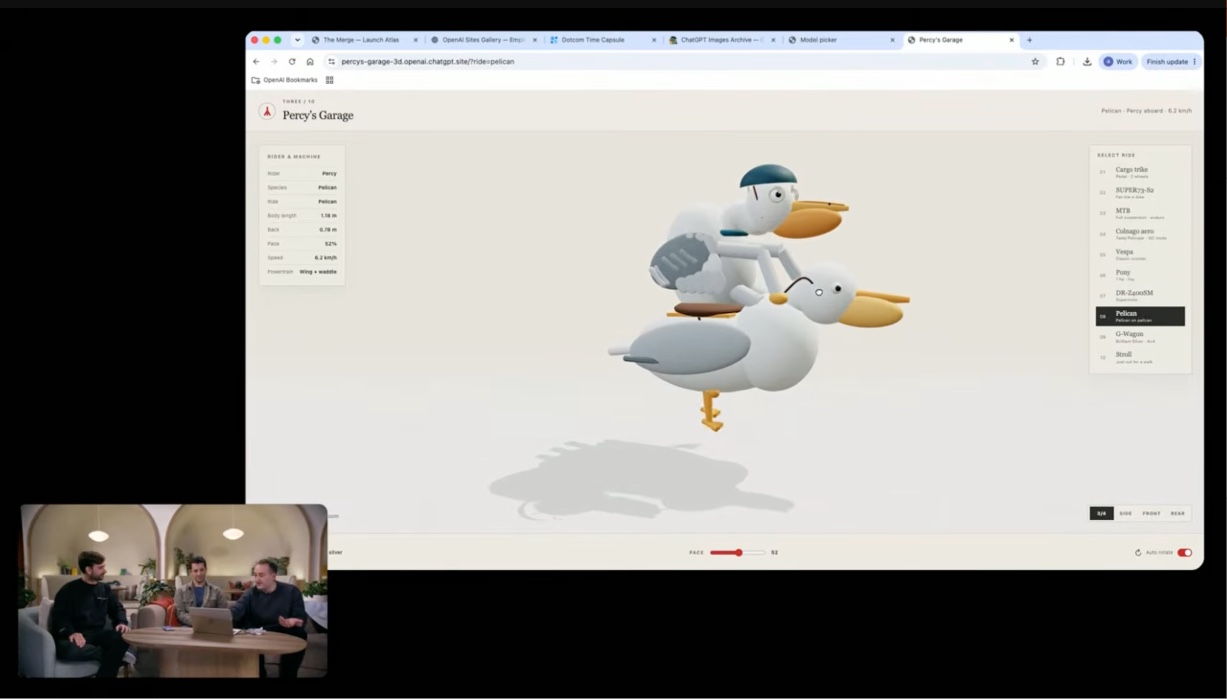
If you jump to 17:50 in their livestream from this morning, you will see OpenAI’s own demo of 3D pelicans riding a tricycle, a bicycle, a pony, and another pelican.