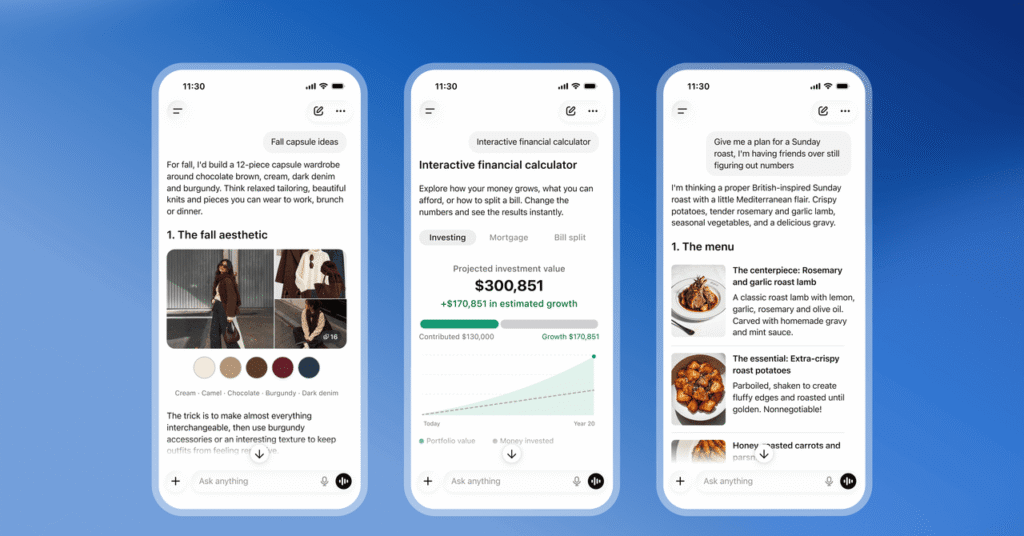
OpenAI is rolling out an update that changes how ChatGPT answers questions by adding custom visual elements instead of just text.
The update
The change arrived on Wednesday. It uses the GPT-6 model to build visual interfaces when they help explain a topic. Paid subscribers receive access today. Free users get it tomorrow.
I tested the feature before the public launch. Asking for a slug diagram produced an anatomy graphic with buttons for each section, including the tentacles and foot. A request for housing costs in San Francisco returned a calculator with sliders for income and expenses to show percentage costs against take-home pay.
The most useful test was an airplane seat explorer. I asked for a comparison of cabin layouts on four Alaska and Delta planes. The output let me tap any seat on a map for details. Exit rows appeared highlighted in green. I avoided the exit rows because I dislike sitting there.
Not every answer will include a chart or graphic. Aarush Selvan, a product manager at OpenAI, says a design team decided when visuals add value versus when they cause clutter. Users can ask ChatGPT to generate fewer visual outputs if they do not want them.
This approach mirrors Google’s generative UI feature announced earlier this year for Search. Google’s tool can output adjustable graphics, such as one breaking down black holes with multiple sliders for users studying deep space.
Chatbot experiences are becoming multimodal, blending text, images, and voice into a single interface. OpenAI’s launch signals that this era is here for over a billion users. A larger shift toward generative user interfaces may cause identity issues for designers, as AI dictates more of what software looks like for individual users.
Custom software generation is now quick. The future of chatbots is more personalised. Users will see slug diagrams instead of walls of text.