
The commission in Hernando County, Florida, voted unanimously to ban new data center construction for one year. This decision marks a rare moment of agreement between the left and right on the issue of artificial intelligence infrastructure.
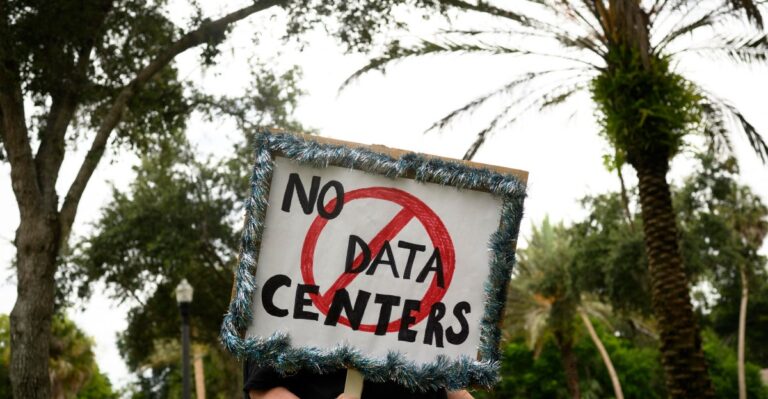
The move follows a protest organised by Humans First, a conservative group dedicated to stopping the build-out of these facilities. The site of the demonstration highlights a wider trend: opposition to data centers is no longer confined to one political side. It is a bipartisan pushback against the physical expansion of AI.
The physical reality
Protesters are targeting the buildings themselves because they offer a tangible target for public frustration. These structures represent the hardware powering an AI boom that many fear will erode local employment and flood the internet with low-quality content.
Community organising has proved effective enough to halt projects. In Florida, residents argued that the humid climate makes the energy-intensive cooling required for data centers impractical. They also raised concerns about groundwater contamination and the dumping of PFAS chemicals.
Opposition in other regions takes a different form. In the dry heat of Arizona, locals argued that building massive cooling systems in a desert was a poor use of resources. The common thread is localised resistance to infrastructure that feels disconnected from community needs.
Breaking party lines
These protests are scrambling traditional political alignments. Voters who usually align with big business are now joining forces against it. Diehard supporters of Donald Trump are attending rallies focused on environmental issues like water pollution, concerns often coded as left-wing priorities.
The divide is not between left and right, but between populists and technocrats. Earlier this year, the Abundance Conference drew a crowd ranging from center-right to center-left, with attendees generally supporting nuclear power and AI development. They viewed these technologies as inevitable and argued for smart implementation.
Conversely, populist groups on both sides of the aisle are now sceptical of rapid technological expansion. The backlash is rooted in a belief that tech development is out of control and threatening to the social fabric.
Fear and misinformation
Conspiracy thinking plays a significant role in the opposition. The sheer size of the projects allows people to attach various anxieties to them. Concerns range from 5G interference to foreign government interference. The data center becomes a focal point for a desire to regain a sense of control.
Locals can attend town board meetings and vote no. This power is attractive to those feeling overwhelmed by digital forces.
Some claims are factually incorrect. Reports suggest data centers use less water than previously believed. Yet, misinformation spreads quickly. One farmer in Texas claimed cattle born near a facility were stillborn. A single anecdote was amplified through social media to suggest a broader pattern of harm.
Beyond the physical site, there is a broader backlash against generative AI. One protester shared a story of a friend who was told by a chatbot that they could no longer be friends. There are accounts of people harming themselves or going off medication after engaging with these systems.
The data centers are seen as housing the “scary thing” that is fracturing communities. The opposition is not just about the building, but about the technology it enables.
Jobs and output
People dislike the output of these facilities. The internet is increasingly filled with low-quality content. There are also fears that the promised job growth is a myth.
In Tucson, residents noted that a proposed facility might house Amazon Web Services, which works with immigration enforcement agencies. This technology is seen as fueling mass deportations through the infrastructure of surveillance.
There is a distinction between the construction boom and the long-term reality. A short-term construction spike and the need for HVAC maintenance create some temporary work. However, maintaining the facilities does not require large numbers of people.
The promise that the AI boom will lead to substantial local employment is not holding true. Most facilities create only a few hundred jobs at most.
What it means
Political alliances are shifting as voters prioritise local environmental and economic concerns over party loyalty. The data center has become a symbol for a larger distrust of unregulated technology.
![Do you agree with Judea that learning from data is not everything? [D]](https://ai-maestro.online/wp-content/uploads/2026/05/do-you-agree-with-judea-that-learning-from-data-is-not-every-ai-1-768x768.jpg)