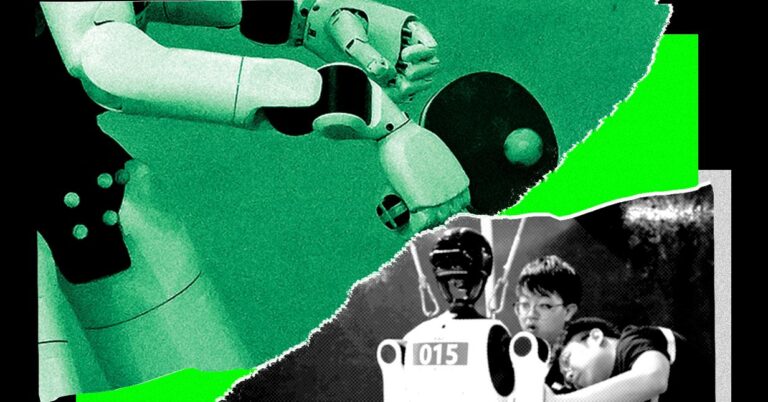
For creators and makers looking to build the next generation of physical AI, the landscape is shifting towards a hybrid reality where American computing power meets Chinese hardware manufacturing. The future of humanoid robotics is no longer defined by a single national origin, but by a strategic fusion: a 6-foot, 150-pound chassis built by Unitree, a Chinese startup, paired with the neural processing capabilities of Nvidia’s American silicon.
A blueprint for the next generation
During a recent announcement, Jensen Huang, CEO of Nvidia, outlined a comprehensive framework for these machines. This approach integrates the H2 Plus unit from Unitree with the Thor T5000 chip, a sophisticated humanoid hand supplied by Sharpa, and a new software suite designed to simplify programming and training. The goal is to empower researchers, particularly those in US academic institutions, to assemble and train advanced humanoids using their own custom algorithms.
The hardware and software synergy
The Thor chip acts as the brain, executing powerful AI models that interpret the environment and dictate movement, while Unitree provides the physical form with its motors, actuators, and sensors. The system includes a dexterous hand from Singaporean firm Sharpa, capable of fine motor tasks ranging from card manipulation to peeling fruit. Dexterity remains one of robotics’ most persistent challenges, yet this combination aims to solve it.
Spencer Huang, director of product for robotics at Nvidia, explained that the company intends to supply its silicon intelligence to as many humanoid firms as possible. “Unitree is the first, but they’re not going to be the last by a long shot,” he stated. He noted that the technology could enhance the capabilities of other Chinese robots, including standard industrial arms.
Navigating geopolitical tensions
Collaboration between US tech giants and Chinese manufacturers is somewhat surprising given the current climate. Robotics has become a focal point of US-China technological competition, with some politicians advocating for a total ban on Chinese humanoids. Last year, security researchers even flagged potential risks, suggesting Unitree’s bots could capture and transmit data.
However, the partnership also makes strategic sense. Scott Singer, a fellow at the Carnegie Endowment for International Peace, described the development as fascinating. He pointed out that while the US leads in AI chip production, China’s supply chain offers a distinct hardware advantage. “Both sides have key parts of the supply chain that they might be able to weaponize, but here they are working together,” Singer observed.
Nvidia appears to acknowledge these security concerns. Alongside the nimble fingers and new processing power, the H2 Plus blueprint includes specific security features intended to reassure users regarding the safety of their data and models.
Economic stakes and policy responses
Nvidia’s chips are currently the industry standard for training large AI models, and the company is aggressively expanding into robotics through specialized tools and hardware. Although US regulations previously barred the sale of Nvidia’s most advanced chips to China, restrictions were loosened late last year to permit the export of more capable units.
Singer emphasises that robots and AI are vital for manufacturing productivity, future military capabilities, and AI advancement itself. He argues it is essential for the US to cultivate its own robotics industry, which may require finding ways to collaborate with Chinese manufacturers.
Unitree’s robots are already ubiquitous in China and globally, known for being affordable and relatively easy to program. A base model of the G1 humanoid costs approximately $15,000, a fraction of the hundreds of thousands competitors charge. Videos frequently show these bots performing parkour, kung-fu, and other acrobatics, while they are featured in research from numerous Western laboratories.
Not all industry leaders welcome this rapid growth in Chinese robotics. Gavin Kenneally, co-founder and CEO of Ghost Robotics, believes Unitree has relied heavily on innovations from Western labs. He warns that it is crucial for the US to prevent China from dominating the humanoid market. “Without a serious near-term policy response, including a national robotics strategy, the US risks ceding the commercial robotics market to Unitree and other Chinese companies, as we’ve already seen happen in the drone space with DJI,” he said.
Despite the risks, Jensen Huang sees significant potential. “Humanoid robots will bring physical AI to the world’s largest industries, opening a multitrillion-dollar economic opportunity,” he declared.
Key takeaways
- The future of humanoid robotics relies on a strategic split of labour: American silicon for intelligence and Chinese manufacturing for cost-effective hardware.
- Security concerns regarding data transmission from Chinese robots persist, prompting Nvidia to include specific safety features in its new blueprint.
- Industry leaders warn that without a robust national strategy, the US risks losing dominance in the commercial robotics sector to Chinese competitors.
- The convergence of these technologies promises a multitrillion-dollar market opportunity, making collaboration between rivals a pragmatic economic necessity.