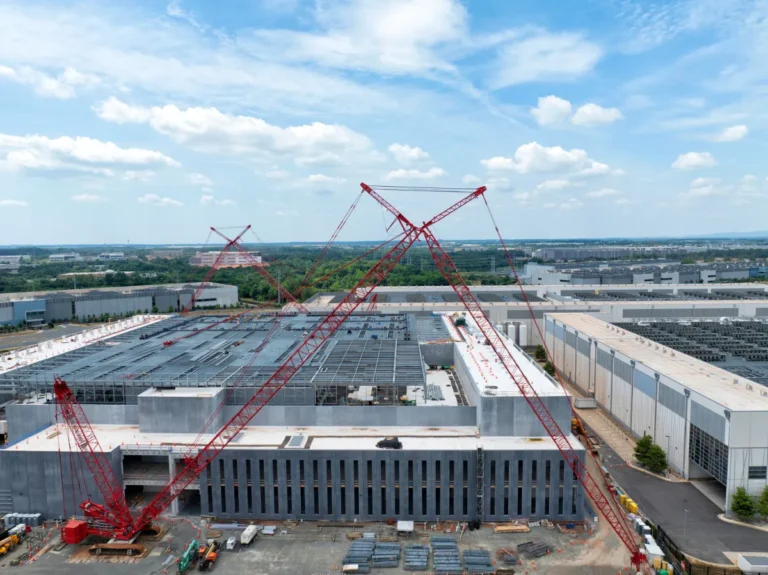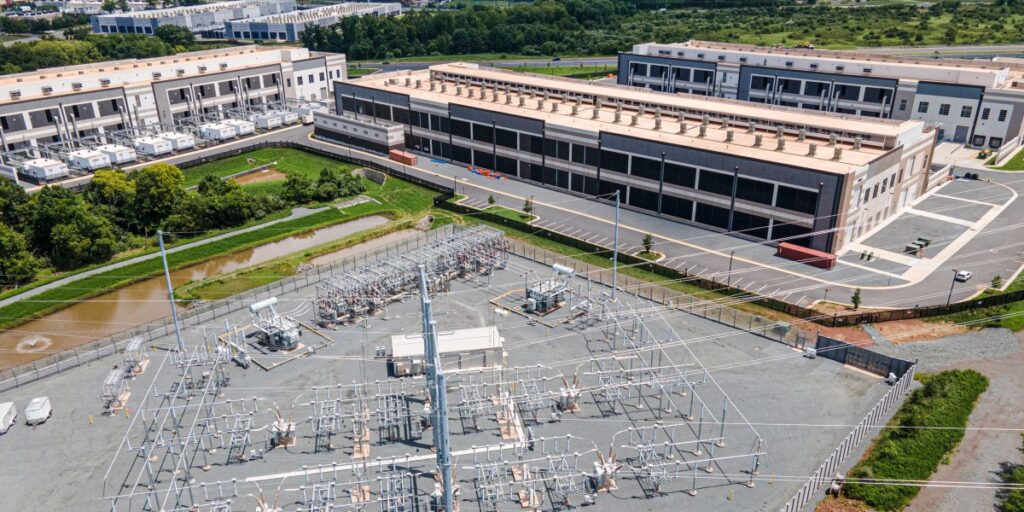
AI data centers consume vast quantities of electricity, and the backlash against them is driven by that physical reality rather than just abstract cultural fears. As voters cast ballots in the US last week, I was in Ashburn, Virginia, the hub known as Data Center Alley where this resistance first gained momentum.
Driving through the area is surreal. Concrete monolithic buildings loom along every major road, with names like Skybox and CloudHQ.
Big Tech accepts that the opposition must represent something larger than the facilities themselves. Two days after the midterms, OpenAI’s chief global affairs officer, Chris Lehane, wrote that data centers “have become a proxy for public unease about affordability, corporate power, and people losing control over their futures.” It is a culture war, in other words.
Spending a few days in Data Center Alley left me wondering if that proxy is the true story. I came away convinced that the backlash is more about electricity than the industry admits. The sector can improve its image, but it cannot escape the physical consequences of its enormous appetite for power.
There are two ways to power the sort of data center that AI companies want: connecting to the grid, or generating electricity onsite. In Virginia’s Loudoun County, where data centers are ubiquitous but have been built at a steadier pace than the breakneck expansion now underway elsewhere in the country, most are connected to the existing grid.
One facility I went inside, operated by Equinix, has massive diesel generators onsite for backup but gets its power from the local utility, Dominion Energy. Much of Dominion’s electricity is generated by natural gas. This is cleaner than coal or oil, but worse than renewables.
The average data center operating in this part of Virginia today has a power capacity of 54 megawatts. That is more than the power draw of the Denver International Airport.
Elena Schlossberg, a prominent activist against data centers in Virginia, told me she is “always banging my head against the wall” when the industry paints the fight as a culture war. “It was always about power,” she says—that is, electricity.
Some Virginia protesters appear more animated by a broader anti-tech populism than Schlossberg, to be fair. But it is the particular consequences of drawing so much power from the grid that have done the most to shape how the backlash has played out.
Recent protests have led to new rules from the state that data centers must pay fully for the cost of new transmission lines to the grid and make sure they are not spread among everyone else. Data center developers told me they are preparing for new rules that would cut them off from grid power during peak demand. Schlossberg also worries about the downstream effects of a strained grid—for example, that data centers will run more diesel generators or that Dominion Energy will expand fossil fuel inputs rather than renewables to meet demand.
The overwhelming majority of AI data centers being built elsewhere in the country are not designed this way. The scale desired is so massive that companies are setting up in rural areas where there is virtually no grid infrastructure to connect to. Building there means bringing your own power, in the form of natural-gas-powered turbines. Companies also build diesel generators for backup. Anthropic, for example, has reportedly agreed to pay $3.4 billion for gas turbines in what is described as the largest power generation purchase by an AI company.
Even if grids were nearby, they would be unlikely to serve the amount of power demanded. The smallest data centers attractive for AI training are 300 megawatts. It is a lot of power for one industrial site, but not unprecedented: One data center developer told me he is eyeing a former steel mill already equipped to draw that much electricity from the grid.
But the ideal facilities are more like 6,000 megawatts. That is the estimated draw of the city of Chicago, which is powered by more than 20 power plants within the city alone and dozens farther out.
The notion of data center companies bringing their own power might seem attractive at first, because they would not be straining the grid. But generating electricity at this scale inevitably affects surrounding communities, and when public utilities build infrastructure of this magnitude, communities have traditionally expected a say in where it goes. Now, private companies are undertaking projects on a similar scale.
Natural-gas turbines of any scale release air pollutants. When diesel generators are used, it is even worse. And in the unprecedented rush to get these facilities operating, companies have become horrible neighbors. Recall that Elon Musk violated air quality laws when he set up dozens of turbines to power a data center in Memphis, according to the Environmental Protection Agency.
Big Tech’s tendency to chalk the backlash up to a culture war obfuscates one simple fact: There is only so pleasant you can make a small city of computers to live around. Sure, companies can pursue better deals that raise tax revenues, hire local workers, and get more community involvement, as the protests are leading them to do. But if a small town is asked to welcome a Walt Disney World, an international airport, a steel plant, and the power plants to run them all, should we be surprised by its trepidation?
Again, that is not to say this is the sole reason for opposition to data centers. Fears of job losses, existential risks, and concentrated corporate power all fuel the backlash, as does misinformation (most facilities use far less water than many people think). Nor is consuming enormous amounts of electricity inherently bad: Many of the advances that have improved modern life have required just that.
But as one developer recently told me, industry insiders see their ambitions as constrained less by public opposition than by a lack of electricity. That should tell us something.
What happens next
It is possible that newly elected politicians’ actual stances on data centers will not be as negative as the ones they campaigned on. But what seems true regardless is that if new data centers need their own power generated onsite, they will go where there are the fewest people able to resist them. That might mean the Permian Basin, where a network of natural-gas lines can be easy for developers to connect to and populations are sparse. Companies might also try their chances abroad; Google, in fact, announced the day after the elections that it will spend $15 billion on data center projects in Malaysia.
But there is one place where Big Tech may find virtually no limits at all, as Elon Musk posted just hours after the midterms results came rolling in: “Data centers in space looking pretty appealing right now.”