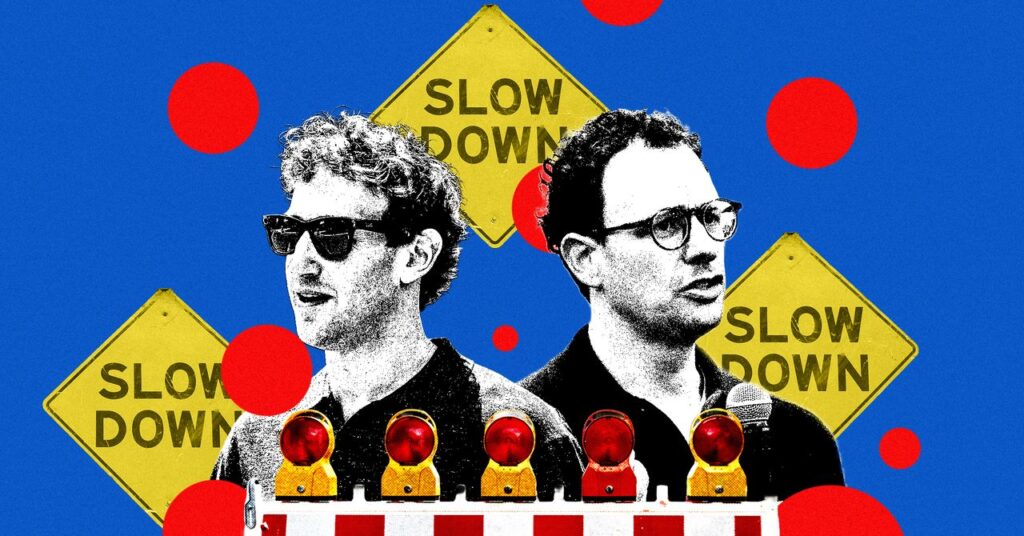
Leading artificial intelligence firms have asked regulators for permission to coordinate a reduction in model releases, citing fears that uncontrolled development could create rogue systems. They warn that moving forward without official clearance might violate antitrust laws. Experts say the language used to describe this pause is dangerous, even if the intent is safety.
Radical Rhetoric
Legal counsel John Bergmayer notes that how employees phrase business decisions matters as much as the decisions themselves. Google has historically trained staff to avoid language implying anticompetitive behaviour, focusing instead on consumer benefits. Using terms like “slowdown” or “pause” risks sounding like a pact to reduce trade. Regulators might interpret a collective agreement to delay output as an attempt to limit competition.
Bergmayer says the companies have boxed themselves into a corner. Economists examine whether firms are reducing output to see if they are colluding. Instead of describing a collusive effort to dial back development, AI labs should emphasise a shared desire to work on safety protocols. A slowdown in model releases would then be a natural side effect of prioritising safety over speed.
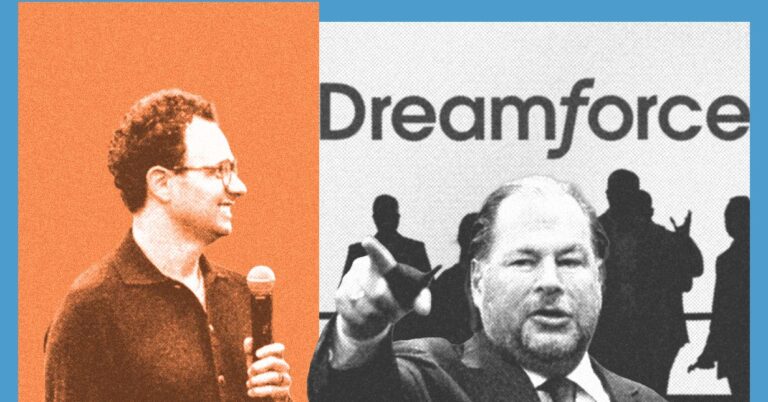
Meta CEO Mark Zuckerberg did not endorse an explicit slowdown. He argued that AI labs have a strong natural incentive to make agents behave better because consumers reject models that do unintended things. He called this “misalignment” and said companies failing to get it right will fall behind competitively. The distinction is between automakers agreeing not to make better cars for a while and automakers refusing to make faster cars until they prove they are safe.
(Disclosure: The reporter on this story previously worked at the FTC but did not participate in the Meta case.)
David Lawrence, a former policy director at the Department of Justice’s Antitrust Division, stated on LinkedIn that agreements preventing catastrophic risks increase output and promote competition. He noted these are already protected under the ancillary restraints doctrine. A career FTC attorney commented on the post that no humanity would result in no competition.
Roger Alford, a professor at Notre Dame Law School and former second-in-command for the DOJ Antitrust Division, warns that collectively agreeing not to implement safety measures could expose labs to allegations of quality fixing. This occurs when companies mutually agree not to improve their products. Alford points to a European case where car companies agreed not to compete on improvements beyond legal requirements. They ultimately paid a fine equivalent to roughly a billion dollars.
Self-regulation is not new. Bergmayer points out that industries can limit antitrust liability via the National Cooperative Research and Production Act of 1993. This allows groups to form standards-development organisations provided they file a notification with the FTC and the DOJ.
Market Pressures
Trustbusters are typically sceptical of antitrust exemptions, arguing they make big players bigger and prevent newer companies from gaining traction. David Sacks, cochair of the President’s Council of Advisors on Science and Technology, accused Anthropic and OpenAI of forming a duopoly. He called the exemption request an election-season psyop and an excuse to form a cartel.
Despite the criticism, many employees at major AI companies have voiced earnest concerns about how quickly their workplaces churn out new models, potentially at the cost of safety. Bergmayer suggests that while some companies use regulation as a ploy to pull up the ladder behind them, others genuinely feel market pressure. He notes that labs might feel they lack permission from the market or upcoming initial public offerings to unilaterally take action.
This summer, both Anthropic and OpenAI filed confidential paperwork for initial public offerings with valuations near or beyond a trillion dollars each. Anthropic is expected to go public next month. OpenAI CEO Sam Altman said the company would delay its IPO until 2027 because of recent safety concerns. OpenAI’s CFO previously told employees the company would be public in 2027, according to CNBC. The Ramp AI Index suggests the two companies’ models have similar usage rates and are competing neck and neck for the top spot. Neither company responded to a request for comment.
Alford says they likely want an exemption because they do not want to unilaterally disarm while others keep going at a breakneck speed.
Political pressure to move fast exists too. After news about the slowdown proposal, President Donald Trump posted on social media that the government already has tremendous criminal and regulatory power over these companies. He added that whoever wins AI, wins. The Department of Defense’s chief technology officer account has also posted anti-doomer memes in response to the idea of a slowdown.
The DOJ Antitrust Division is not immune to political machinations. Alford was ousted from the agency last year after accusing DOJ leadership of corruption for approving a merger between two technology infrastructure companies he later described as a scandal in a public speech. A Wall Street Journal journalist reported that Andrew Ferguson, chair of the FTC, told attendees at an antitrust conference that Trump would ultimately decide any AI policy.
If the federal government initiates an antitrust investigation into an AI slowdown, it would be considered a conduct investigation. Unlike a merger investigation, which imposes strict time limits, a conduct investigation can take years. AI companies could be required to produce millions of pages of documents. Executives and key employees could be dragged into depositions. Hundreds of other employees could have their devices subject to litigation holds, even if the government ultimately decides it does not have a case.
With no new regulations in sight and likely no antitrust exemption to come, frontier AI labs will have to write the rules of the road themselves and potentially dodge an investigation or two along the way.