A Bloomberg developer used OpenAI‘s GPT-6 Astra to decrypt a 1941 Wehrmacht message in ten hours
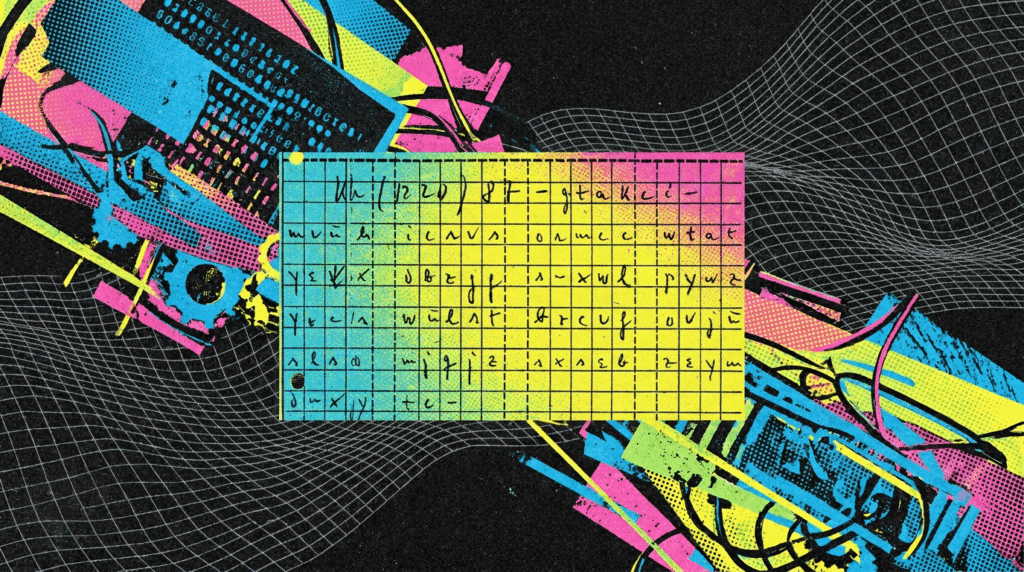
Carter Leffen, a product development coach at Bloomberg LP, has decrypted an 82-character Enigma message from the German army that remained unsolved for 83 years. The transmission was sent on July 10, 1941, from a soldier in Rosenow who requested immediate marching orders.
Leffen says the GPT-6 Astra Extra High variant spent about ten hours on the task. The system handled searching historical archives, comparing uncertain letters, building an Enigma simulator, writing cryptanalysis code, running parallel experiments, testing competing keys, and cross-checking results.
The message, tagged MVUEH, was listed in an archive of intercepted German army messages as unsolved. The Enigma machine was one of the most important encryption devices of its era and was first broken in 1932 by Polish mathematician Marian Rejewski.
A known town name cracked the puzzle open
The Enigma machine offered roughly 159 quintillion possible daily settings. Brute-forcing all of them was never an option. Several approaches failed early on. Known keys from the same day did not fit, and automated searches returned nothing useful.
The breakthrough came from an already-decrypted message sent the same day, which contained the town name “Rosenow” twice in a row. Leffen and his AI agents guessed that name might also appear in the unsolved message and used it as a search term.
A well-known Enigma weakness helped, too. The machine never encrypts a letter as itself, so if the plaintext contains an R, the ciphertext at that position can be anything except R. That alone let them rule out many positions right away.
At one position, everything lined up. The team calculated the matching machine settings, and the remaining 68 characters produced coherent German text, including “Sofort Funkantwort” (“immediate radio reply”) and “Angabe des Marschweges” (“specify the march route”). A message header preserved separately in the archive confirmed the settings.
The decrypted text even contains typos that likely came from the radio operator himself, like “BTTE” instead of “BITTE” and “WASCHBBSCH” instead of what was probably “Waschbusch,” the sender’s name. Leffen sees these mistakes as evidence the decryption is authentic, because a fabricated result would more likely be error-free.
AI didn’t do it alone, but Leffen says it wasn’t much work
GPT-6 Astra and several specialised AI agents served as Leffen’s tools throughout the process. Some analysed historical sources, others wrote search programs, and others compared results against already-solved messages. Leffen set the goals and made the calls on how to proceed. By his own account, the codebreaking was not even the hard part. He says he put “99 times more effort into building the website that describes the problem and the solution than into actually cracking the code.”
All code, search data, and a working 3D Enigma simulator are available for download on the project page. The provided packages verify the calculations and replicate the key search sequence, but they do not prove the message’s historical identity or that the solution is the only possible one. The work builds on cryptanalytic contributions by Frode Weierud, Geoff Sullivan, and Olaf Ostwald. Whether the decryption holds up to independent review will depend on experts evaluating the published materials.
What it means
For historians and cryptographers, this case study shows how large language models can act as rapid assistants for data synthesis and hypothesis testing. Leffen did not replace human oversight; he directed the workflow while the AI handled the heavy lifting of simulation and comparison. The result is a faster path to testing old hypotheses, though the final verification still rests with domain experts.